

Installing a kitchen lever mixer in a commercial property requires more care than a basic residential tap installation. A commercial kitchen may have higher daily usage, frequent cleaning, demanding staff routines, and little tolerance for leaks or downtime.
The most common problems come from incorrect measurements, poor mixer selection, ignored water-supply conditions, misaligned connections, unsuitable fittings, poor sealing, overtightening, and skipping leak tests. Proper installation protects the sink area, supports reliable water flow, and can reduce avoidable maintenance.
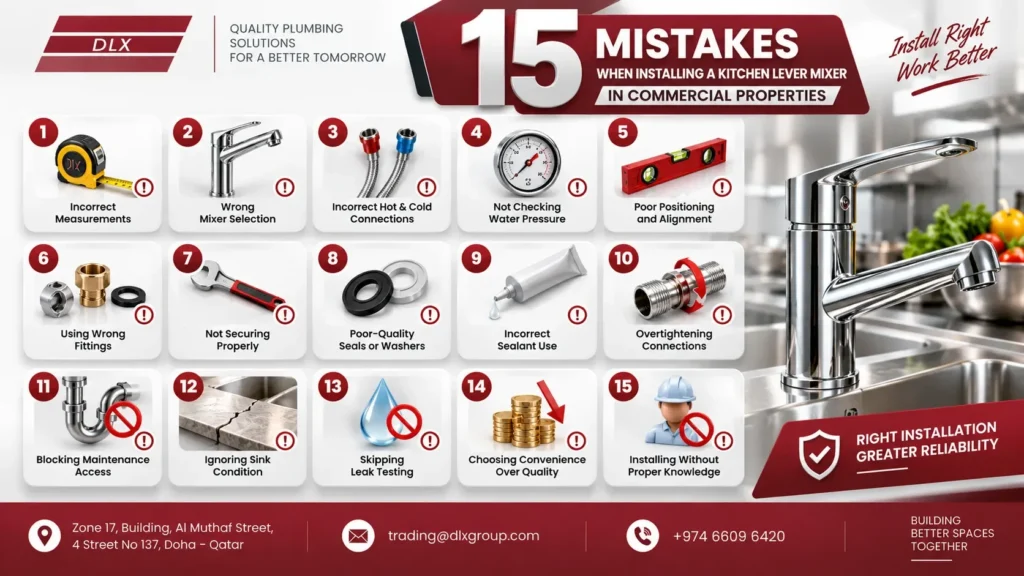
This guide explains the top 15 mistakes when installing a kitchen lever mixer in commercial properties, from choosing the wrong mixer to failing to test the finished installation. These principles also reflect the installation priorities in professional plumbing guidance: correct measurements, alignment, quality accessories, secure connections, leak testing, and proper sealing.
What Are the Most Common Kitchen Lever Mixer Installation Mistakes?
The most common mistakes include incorrect measurements, selecting an unsuitable mixer, ignoring water-supply conditions, poor alignment, using incompatible fittings, overtightening connections, and failing to test for leaks.
For commercial properties, these mistakes can become more disruptive because a faulty kitchen mixer may affect staff workflow, cleaning routines, hygiene, and daily operations.
Here are the 15 key mistakes to avoid.
1. Taking Incorrect Measurements
Incorrect measurements are one of the easiest ways to create installation problems. Before fitting the mixer, check the sink mounting hole, available clearance, mixer height, spout reach, and space underneath the sink. A mixer that does not match the sink or countertop can be difficult to secure and may create awkward water flow.
Avoid it: Measure the mounting area and compare it with the manufacturer’s requirements before installation.
2. Choosing the Wrong Kitchen Lever Mixer
Not every kitchen mixer is suitable for commercial use. A property such as a restaurant, hotel, catering facility, or workplace kitchen may need a mixer designed for frequent operation. Consider the installation environment, expected usage, sink configuration, spout movement, connection requirements, and cleaning needs before choosing a product.
Avoid it: Select a mixer based on the actual commercial application rather than appearance alone.
3. Ignoring Hot and Cold Water Connections
A lever mixer normally depends on correct hot and cold water connections. Connecting the supplies incorrectly can affect temperature control and normal operation. Before connecting the mixer, identify the hot and cold supply lines and confirm the inlet arrangement of the product.
Avoid it: Verify the connection markings and follow the manufacturer’s installation instructions.
4. Failing to Check Water Pressure and Supply Conditions
Water pressure affects mixer performance. If the supply conditions are unsuitable, the mixer may deliver poor flow or behave differently from what users expect. Commercial properties can also have more complex plumbing networks than small residential systems.
Avoid it: Check the available water supply and make sure the mixer is appropriate for the installation conditions.
5. Installing the Mixer Out of Alignment
A mixer should sit correctly on the sink or mounting surface. Poor alignment can make the fixture look untidy and may place unnecessary stress on the connections. Alignment also affects the position of the spout and handle, which matters in busy commercial kitchens.
Avoid it: Position the mixer carefully before fully securing the mounting assembly.
6. Using the Wrong Fittings or Accessories
Incompatible fittings can create leaks, connection problems, or difficult servicing. The fitting must match the mixer connection and the existing plumbing arrangement. The same principle applies to hoses, adapters, washers, valves, and other accessories.
Avoid it: Use compatible, quality components instead of forcing mismatched parts together.
7. Failing to Secure the Mixer Properly
A mixer that moves during use is a warning sign. Repeated movement can place stress on connections and may eventually contribute to leaks or damage. Commercial users operate kitchen fixtures frequently, so the mounting assembly needs to remain stable.
Avoid it: Secure the mixer firmly according to the manufacturer’s instructions without damaging the mounting hardware.
8. Using Poor-Quality Seals or Washers
Seals, washers and gaskets play an important role in preventing water from escaping around connections. A poor-quality or incorrectly positioned seal can cause a slow leak. Even a small leak underneath a commercial sink should not be ignored because moisture can affect surrounding cabinets and components.
Avoid it: Use the correct sealing components and inspect them before final assembly.
9. Applying Sealant Incorrectly
Sealant is not a substitute for a correctly designed connection. Using too much, too little, or the wrong product can create installation problems. The correct approach depends on the connection and manufacturer’s instructions. Threaded connections, mounting surfaces, and other joints should not automatically be treated in the same way.
Avoid it: Use the correct sealing method for each connection rather than relying on excessive sealant.
10. Overtightening Plumbing Connections
More tightening does not always mean a better connection. Excessive force can damage threads, fittings, washers, or other components. Professional installation guidance also highlights overtightening as a common cause of damaged connections and future leaks.
Avoid it: Tighten connections securely but follow the manufacturer’s recommended method and torque requirements where specified.
11. Blocking Access for Future Maintenance
Commercial plumbing should be installed with maintenance in mind. If valves, hoses or mixer connections become difficult to reach, even a simple repair can take longer. Maintenance access is especially important in busy kitchens where downtime can disrupt operations.
Avoid it: Keep important connections accessible for inspection, cleaning and future servicing.
12. Ignoring the Sink and Countertop Condition
The mounting surface must be suitable for the mixer. A damaged, weak, uneven, or unsuitable surface can make it difficult to achieve a stable installation. Before fitting the mixer, inspect the sink or countertop around the mounting area.
Avoid it: Repair or prepare the mounting surface before installing the fixture.
13. Skipping the Final Leak Test
Never assume an installation is successful simply because the mixer operates. Water should be run through the system and the connections should be checked carefully. Look underneath the sink while the mixer is operating. Check both hot and cold connections, supply hoses, valves and the mixer base.
Avoid it: Test the complete installation before putting the kitchen back into normal commercial service.
14. Choosing Convenience Over Product Quality
The cheapest mixer or fitting may not always provide the best value for a commercial property. Frequent use makes durability, compatibility and maintainability important selection factors. A quality plumbing product should be considered as part of the property’s long-term operating requirements.
Avoid it: Compare product quality, application, specifications, components and expected usage before buying.
For businesses sourcing reliable plumbing components, Deluxe Plumbing Supplies can be considered when planning a commercial kitchen installation, particularly where product selection and compatible accessories need to be coordinated.
15. Installing Without Proper Plumbing Knowledge
A commercial kitchen installation is not the ideal place for guesswork. Incorrect connections, poor sealing, damaged fittings or inadequate testing can lead to costly remedial work. Professional installation is especially important when the plumbing system is complex or the mixer must integrate with existing commercial infrastructure.
Avoid it: Use a suitably qualified plumber or experienced installer when the installation requires technical plumbing work.
How Can Businesses Prevent Kitchen Mixer Installation Problems?
Businesses can prevent most installation problems by using a simple pre-installation and commissioning checklist. The goal is to verify the mixer, mounting surface, water connections, fittings, seals and final performance before the fixture enters regular service.
Commercial Kitchen Mixer Installation Checklist
- Confirm the mixer is suitable for the application.
- Measure the sink and mounting area.
- Check hot and cold water connections.
- Confirm supply conditions.
- Inspect the sink and countertop.
- Check all fittings and accessories.
- Position and align the mixer.
- Secure the mounting assembly.
- Install the correct seals and washers.
- Tighten connections correctly.
- Keep service connections accessible.
- Turn on the water supply gradually.
- Check for leaks.
- Test water flow and temperature control.
- Record or address any installation issues before handover.
This checklist follows the same practical installation philosophy found across the uploaded plumbing materials: measure correctly, align properly, use quality accessories, secure connections, seal correctly and test before completion.
Why Does Correct Installation Matter in Commercial Properties?
Correct kitchen mixer installation helps a commercial property maintain reliable water service while reducing avoidable leaks, repairs and interruptions. It also makes future maintenance easier when components are correctly installed and accessible. The benefit is not simply a better-looking tap. A correctly installed mixer supports daily kitchen operations, easier cleaning, safer maintenance and more predictable plumbing performance.
Whether the property is a restaurant, hotel, catering facility, office, school, healthcare site, or other commercial building, the installation should match the demands of the environment.
What Should You Look for When Buying a Commercial Kitchen Lever Mixer?
Choose a commercial kitchen lever mixer based on application, installation requirements, construction quality, connection compatibility, usability, maintenance access and expected frequency of use.
Before purchasing, consider:
- Sink and mounting compatibility
- Hot and cold inlet configuration
- Spout reach and clearance
- Handle operation
- Required fittings and accessories
- Water supply conditions
- Cleaning requirements
- Maintenance access
- Product quality and durability
- Availability of compatible replacement components
If you also need related components, consider linking this page naturally to commercial plumbing supplies, kitchen mixer products, and plumbing installation accessories within the Deluxe Plumbing Supplies website.
Why Choose Deluxe Plumbing Supplies for Commercial Plumbing Needs?
Deluxe Plumbing Supplies focuses on plumbing products and practical solutions for commercial and building applications. Choosing the right mixer is only one part of a successful installation; compatible fittings, valves, connectors and other plumbing components also matter. For commercial projects, a supplier can add value by helping buyers identify suitable products and components for the intended installation rather than treating every kitchen mixer application as the same.
When planning a new installation or replacement, consider the complete system: mixer + mounting + connections + fittings + sealing + testing + future maintenance.
Frequently Asked Questions
Can a kitchen lever mixer be used in a commercial property?
Yes, but the mixer should be suitable for the specific commercial application and expected level of use. Check its installation requirements, connection arrangement, construction, mounting compatibility and maintenance needs before purchase.
Why is my newly installed kitchen mixer leaking?
A new mixer may leak because of an incorrectly positioned washer, loose or overtightened connection, incompatible fitting, damaged seal, poor alignment, or another installation issue. Turn off the supply and inspect the affected connection rather than continuing to operate a visible leak.
Should hot and cold connections be checked before installation?
Yes. Identify and verify the hot and cold supplies before connecting the mixer. Incorrect connections can affect temperature control and normal operation.
Is overtightening a mixer connection a problem?
Yes. Excessive tightening can damage threads, fittings, washers or other components. Connections should be secured using the manufacturer’s recommended installation method.
Why is leak testing important after installation?
Leak testing confirms that the mixer, hoses, valves and connections remain watertight under operating conditions. Testing before handover can identify problems before they cause water damage or interrupt commercial operations.
What fittings are needed for a kitchen lever mixer?
The exact fittings depend on the mixer and existing plumbing. Common components can include flexible supply hoses, isolation valves, adapters, washers, seals and compatible connectors. Always confirm the product’s connection specifications first.
Final Takeaway
The biggest kitchen lever mixer installation mistakes are usually preventable. Correct measurements, suitable product selection, proper alignment, compatible fittings, secure connections, effective sealing and thorough leak testing create a stronger installation.
For commercial properties, the best approach is to treat the mixer as part of the wider plumbing system—not as an isolated fixture. Selecting the right product and supporting components from a reliable plumbing supplier such as Deluxe Plumbing Supplies can help make installation, maintenance and future replacement more straightforward.