Installing toilets in a commercial property requires more planning than simply connecting a toilet to a water supply and drain. Commercial washrooms often serve many people every day, so poor installation can lead to leaks, flushing problems, instability, difficult repairs, and unnecessary downtime.
The most common problems start with incorrect measurements, poor plumbing alignment, unsuitable fixtures, weak support, and improper sealing. Other mistakes can appear later when maintenance access is limited or the finished installation is not tested properly. A reliable commercial toilet installation should therefore consider the fixture, drainage, water supply, flushing system, connections, surfaces, and long-term maintenance together.
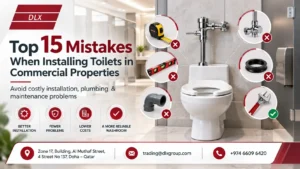
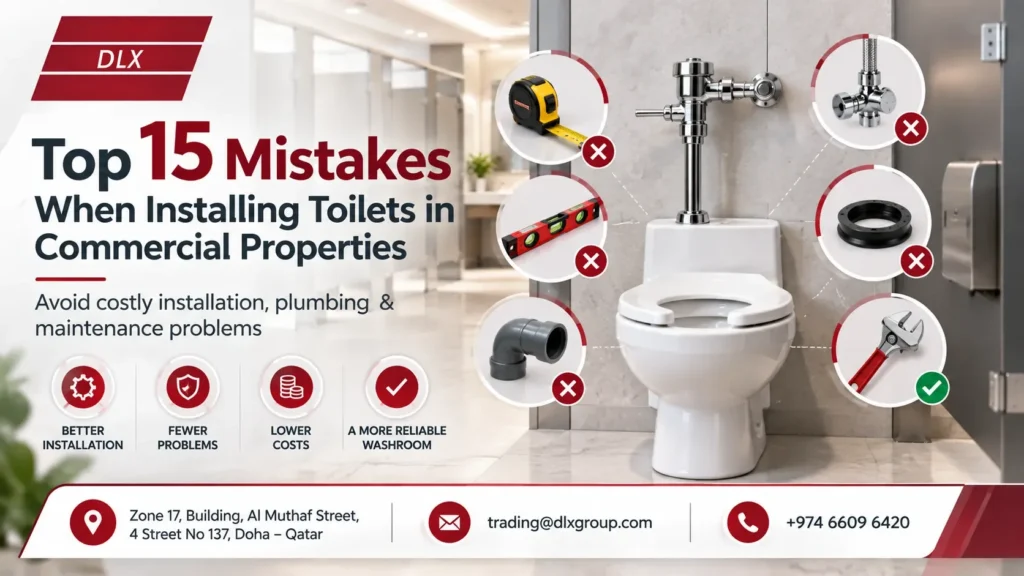
This guide covers the 15 most common mistakes when installing toilets in commercial properties, along with practical ways to prevent them.
What Are the Top 15 Mistakes When Installing Toilets in Commercial Properties?
1. Using Incorrect Measurements
Incorrect measurements are one of the easiest ways to create problems before installation even begins. The available space, toilet dimensions, rough-in position, drain location, water supply, and required clearances should all be checked before selecting or positioning the fixture.
A toilet that does not fit the planned space can create alignment and access problems. In a commercial washroom, this can also affect cleaning and user movement.
Before installation, measure the installation area carefully and compare those measurements with the toilet manufacturer’s requirements. Accurate planning can prevent unnecessary modifications and rework.
2. Choosing the Wrong Commercial Toilet
Not every toilet is suitable for every commercial property. Choosing a fixture based only on appearance or price can result in poor performance or an unsuitable installation.
Commercial toilets should be selected according to the property’s expected traffic, available space, flushing requirements, maintenance needs, and plumbing configuration. Wall-hung and floor-mounted toilets may also have different installation requirements.
The right toilet should work with the existing or planned plumbing system and provide the durability needed for regular commercial use.
3. Ignoring Water and Drain Locations
Ignoring existing water supply and drain locations can make installation more complicated than necessary. If the toilet outlet and drainage connection do not align correctly, installers may need additional fittings or modifications.
The water supply should also be positioned correctly for the selected flushing system. Poor planning at this stage can lead to awkward pipework, additional labour, and potential connection problems.
Check both the water and drainage layout before the toilet is fixed in place.
4. Providing Inadequate Structural Support
A commercial toilet needs secure support because it may be used frequently throughout the day. This is particularly important for wall-hung toilets, which depend on a suitable support frame and secure fixing system.
Weak or unsuitable support can cause movement, stress on connections, or damage to surrounding finishes. The installation structure should therefore be prepared according to the fixture and manufacturer’s requirements.
Strong support helps maintain stability and protects the plumbing connections during long-term use.
5. Installing the Toilet Without Proper Leveling
An unlevel toilet can create both practical and visual problems. Incorrect positioning may affect drainage, stability, sealing, and the overall appearance of the finished washroom.
Use an appropriate level during installation and check the fixture before final tightening. The toilet should sit securely without rocking or shifting.
Proper alignment is especially important in commercial environments because repeated daily use can make a poorly secured fixture more noticeable over time.
6. Making an Incorrect Drain Connection
The drain connection is one of the most important parts of commercial toilet installation. Incorrect alignment or a loose connection can result in leaks, poor drainage, or blockages.
The waste outlet must connect correctly with the building’s drainage system. Connections should be properly supported and installed according to the relevant product instructions.
Do not rely on excessive force or improvised fittings to solve an alignment problem. It is better to identify drainage issues during planning than after the toilet has been installed and the washroom is in use.
7. Using the Wrong Water Supply or Flushing Components
Commercial toilets may use different flushing arrangements, including flush valves and concealed systems. Using incompatible components can reduce flushing performance or create connection problems.
The flushing system should match the selected toilet and the property’s plumbing requirements. Check the required water supply and compatible components before installation.
A properly planned flushing system should provide reliable operation while supporting the commercial property’s performance and maintenance requirements. Commercial installation guidance also highlights reliable flushing as a core part of a high-performance washroom.
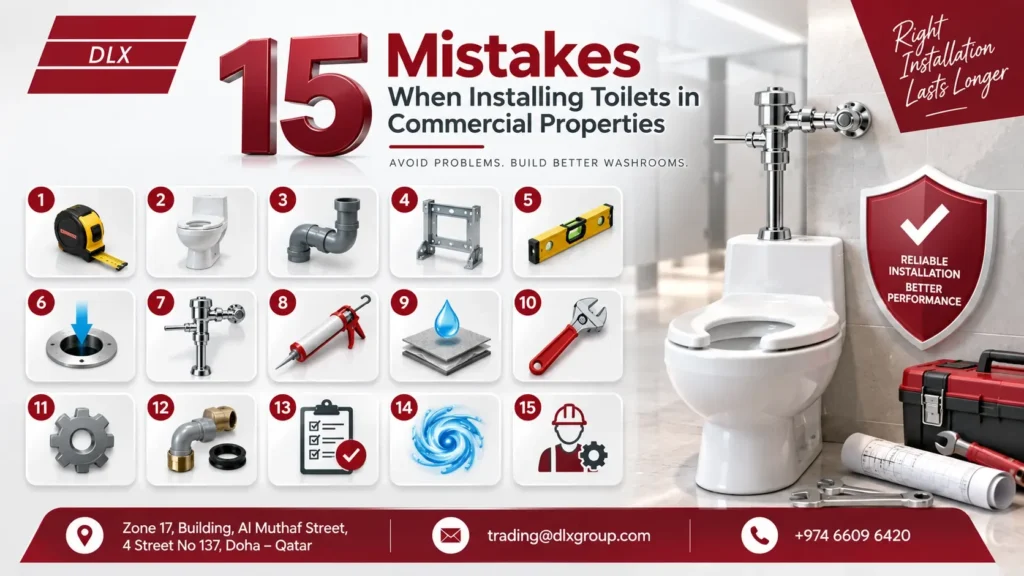
8. Applying Sealant Incorrectly
Poor sealant application can leave gaps around connections or fixture areas where moisture can enter. Using an unsuitable sealant or applying too little can reduce protection against leaks.
However, using too much sealant is not automatically better. The product should be appropriate for the application and applied according to the manufacturer’s instructions.
The aim is a clean, secure, properly sealed installation that protects vulnerable areas without creating problems for future maintenance.
9. Skipping Waterproofing Where Required
Commercial washrooms are exposed to regular water and cleaning activity. Where the installation requires waterproofing, skipping this step can leave walls, floors, and surrounding structures vulnerable to moisture.
Waterproofing should be considered as part of the wider washroom installation rather than as an optional finishing detail. The correct approach depends on the building, surface, installation design, and applicable requirements.
Preventing moisture problems is much easier than repairing water damage after a finished commercial washroom has been opened.
10. Overtightening Plumbing Connections
Overtightening is a common mistake because installers may assume that a tighter connection is automatically safer. Excessive force can instead damage threads, fittings, seals, or other components.
Connections should be tightened correctly and according to the relevant installation instructions. Avoid forcing fittings beyond their intended position.
A secure connection should provide reliable performance without placing unnecessary stress on the plumbing components.
11. Ignoring Maintenance Access
Maintenance access is particularly important in commercial properties because plumbing components may eventually require inspection, adjustment, or replacement.
If valves, flush components, concealed cisterns, or other serviceable parts are difficult to reach, even a simple repair can become disruptive and expensive.
Plan access before closing walls or installing permanent finishes. Good commercial washroom design should balance appearance with practical serviceability.
12. Using the Wrong Fittings or Accessories
Wrong or incompatible fittings can cause leaks, poor performance, and installation difficulties. This can happen when components are selected separately without checking whether they work together.
Fittings, seals, connectors, valves, and other accessories should be compatible with the toilet and plumbing system.
For commercial projects, buying suitable components together can make installation more straightforward and reduce the risk of discovering compatibility problems during the job.
13. Skipping Leak Testing
Skipping leak testing can allow a small installation problem to remain hidden until the washroom is already in use. A loose connection or defective seal may not always produce an obvious problem immediately.
After installation, inspect the relevant water and waste connections and test the system before the area is handed over. Look for visible leakage and check that connections remain secure during operation.
Early testing is a simple way to identify problems before they become expensive commercial repairs.
14. Ignoring Wall and Floor Conditions
The condition of the wall or floor can directly affect toilet stability and installation quality. Uneven, weak, damaged, or unsuitable surfaces may prevent the fixture or support system from sitting correctly.
Inspect the installation area before fitting the toilet. Any surface problems should be addressed as part of the preparation process.
This is particularly important for commercial renovations, where existing surfaces may have been exposed to years of moisture, traffic, repairs, or previous plumbing work.
15. Attempting Installation Without Proper Knowledge
Commercial toilet installation involves several connected systems, including drainage, water supply, flushing, sealing, support, alignment, and testing. Treating the job as a simple fixture replacement can result in costly mistakes.
A lack of installation knowledge may lead to incorrect connections, damaged components, poor sealing, or problems that are difficult to diagnose later. It can also affect warranties where manufacturer installation requirements are not followed.
For commercial projects, installation should follow the product instructions, project requirements, and appropriate professional practices.
How Can Businesses Prevent Commercial Toilet Installation Mistakes?
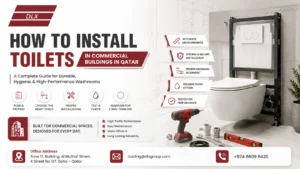
Businesses can reduce installation problems by following a clear preparation and inspection process. The uploaded commercial toilet installation guide follows a similar sequence: confirm measurements, prepare support, prepare drainage and water supply, install the fixture, connect the flushing system, seal connections, check alignment, test the installation, and complete a final inspection.
A practical checklist includes:
- Confirm the toilet dimensions and available space.
- Check the drain and water supply locations.
- Select a suitable commercial toilet.
- Prepare the required support structure.
- Inspect wall and floor conditions.
- Use compatible plumbing fittings and accessories.
- Connect the drainage correctly.
- Prepare the water supply.
- Install the flushing system correctly.
- Seal the required connections.
- Level and align the toilet.
- Maintain access to serviceable components.
- Test flushing performance.
- Check for leaks.
- Complete a final inspection before handover.
This approach supports the commercial priorities of high-traffic performance, easy maintenance, water efficiency, and long-lasting reliability identified in the supplied commercial toilet material.
What Should Businesses Look for in Commercial Toilet Plumbing Supplies?
The right plumbing supplies can make commercial toilet installation more reliable and easier to maintain. Businesses should consider compatibility, durability, installation requirements, flushing components, seals, fittings, and the expected level of daily use.
It is also important to avoid selecting components in isolation. A toilet, flush system, water connection, drain connection, seal, and fittings should work together as a complete installation.
For projects that require dependable commercial plumbing components, Deluxe Plumbing Supplies can be considered as part of the sourcing process. The brand’s supplied commercial materials emphasize quality, reliability, durability, water efficiency, and suitability for commercial spaces.
Why Is Proper Commercial Toilet Installation Important?
Proper installation helps protect the performance and reliability of a commercial washroom. Correct measurements, secure support, proper drainage, reliable flushing, effective sealing, and final testing all work together to reduce avoidable problems.
For businesses, this matters beyond the toilet itself. A plumbing failure can interrupt washroom availability, increase maintenance costs, and create inconvenience for staff, customers, visitors, or tenants.
Choosing suitable commercial toilets and compatible plumbing supplies is therefore only part of the process. Correct preparation, installation, testing, and ongoing maintenance are equally important.
Deluxe Plumbing Supplies can support commercial plumbing projects by helping businesses source the products and components needed for reliable washroom installations. Choose the right supplies, plan carefully, and install correctly to build a commercial washroom designed for dependable everyday performance.
Frequently Asked Questions
Why is correct drain alignment important for commercial toilets?
Correct drain alignment helps create a secure waste connection and supports reliable drainage. Poor alignment can place stress on fittings, increase the risk of leaks, and may require additional modifications during or after installation.
Can an unlevel toilet cause problems?
Yes. An unlevel toilet may be unstable and can affect the quality of the finished installation. Proper leveling helps the fixture sit securely and supports correct alignment with the drainage and surrounding surfaces.
Should commercial toilets be tested after installation?
Yes. The completed installation should be checked for leaks and tested for proper flushing and operation before the washroom is handed over. Testing helps identify installation problems before they become more disruptive or expensive.
Why is maintenance access important in a commercial washroom?
Maintenance access allows serviceable components to be inspected, adjusted, or replaced more easily. Poor access can make routine repairs more difficult, increase labour requirements, and cause longer washroom downtime.
What plumbing supplies are needed to install a commercial toilet?
The exact requirements depend on the toilet and plumbing system, but may include compatible drainage connections, water supply fittings, flushing components, seals, gaskets, fixings, and other installation accessories. Components should be selected for compatibility with the complete system.
How can businesses avoid commercial toilet installation mistakes?
Businesses can reduce mistakes by checking measurements, plumbing locations, fixture compatibility, support, drainage, sealing, and alignment before installation. The completed toilet should also be tested for leaks and flushing performance before use.
When should a business replace or upgrade commercial toilet plumbing components?
Replacement or upgrades may be appropriate when existing components are damaged, incompatible, unreliable, difficult to maintain, or no longer suitable for the property’s requirements. The complete toilet and plumbing system should be assessed before selecting replacement components.