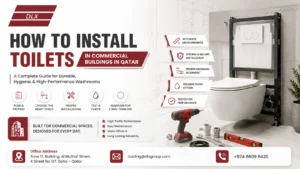
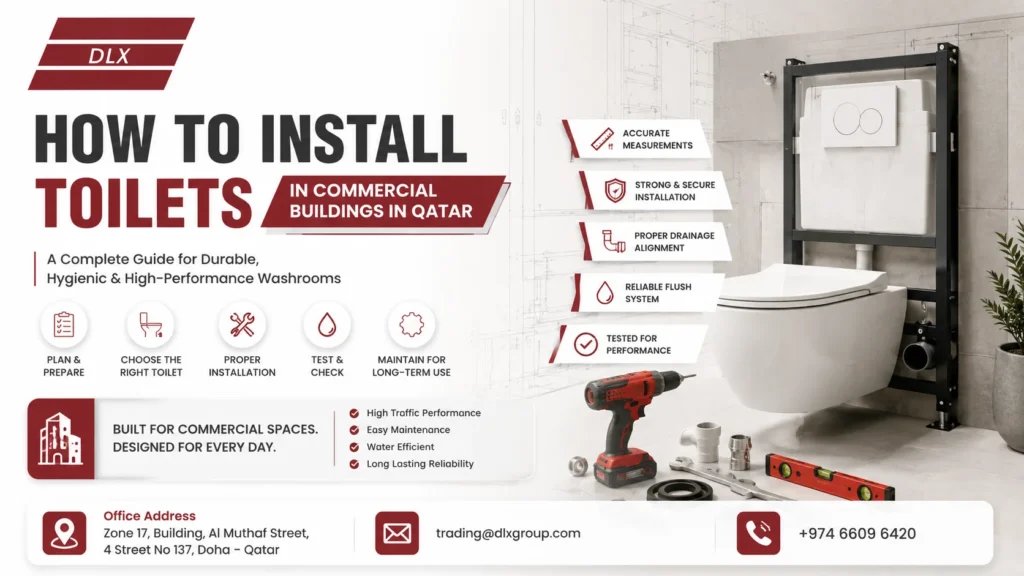
Installing toilets in a commercial building requires more than fixing a ceramic fixture to the floor or wall. The installation must suit the building layout, drainage system, water supply, structural support, expected traffic, cleaning needs, and long-term maintenance plan. In Qatar, commercial projects may include offices, hotels, malls, hospitals, schools, and other high-use facilities, so reliability matters.
This guide explains the main considerations for commercial toilet installation in Qatar, how to choose between different toilet types, how to prepare the installation area, and what to check after installation. It also covers flush systems, common installation mistakes, maintenance, and how businesses can choose suitable commercial plumbing supplies.
What Should You Consider Before Installing Toilets in a Commercial Building?
Before installing a commercial toilet, check the available bathroom space, drainage position, water connection, structural support, expected usage, cleaning requirements, and maintenance access. These factors help determine which toilet design and flushing system will provide practical performance for the building.
Commercial washrooms often have higher traffic than residential bathrooms. A toilet that works well in a private home may not be the best choice for an office, hotel, shopping mall, hospital, or industrial facility.
Important factors include:
- Bathroom size: Measure the available space before selecting the fixture.
- Structural support: Wall-hung systems need suitable wall or frame support.
- Drainage: The waste outlet must match the planned toilet position.
- Water connection: The supply connection must suit the selected flushing system.
- Cleaning: The fixture should allow practical floor and surface cleaning.
- Traffic: High-use washrooms need durable, dependable systems.
- Maintenance: Service components should be accessible when repairs are required.
- Installation cost: Include the fixture, support system, fittings, labour, and related plumbing work.
The supplied toilet-selection material highlights bathroom size, structural wall support, cleaning requirements, guest expectations, and installation costs as key decision factors for commercial hospitality applications.
Which Toilet Type Is Best for Commercial Buildings in Qatar?
There is no single toilet type that suits every commercial building. Wall-hung toilets can provide a clean, space-saving appearance and easier floor cleaning, while floor-standing toilets offer a conventional installation approach and strong floor support. The right option depends on the building design, wall construction, maintenance plan, and project budget.
Wall-Hung Toilets
Wall-hung toilets are fixed to a suitable wall support or concealed frame. The bowl is raised from the floor, creating an open area underneath.
They can be useful where:
- Floor cleaning is important.
- A modern appearance is preferred.
- Space efficiency is valuable.
- Concealed plumbing is part of the bathroom design.
- The building requires a clean and contemporary washroom appearance.
The supplied hotel toilet material associates wall-hung systems with premium aesthetics, space-saving design, and practical cleaning benefits.
Floor-Standing Toilets
Floor-standing toilets sit directly on the floor and are supported by the finished floor structure. They can be suitable for projects where conventional installation and straightforward access are priorities.
Quick Comparison
| Factor | Wall-Hung | Floor-Standing |
| Floor cleaning | Easier around the base | More surface around base |
| Appearance | Modern, floating look | Conventional |
| Support | Requires suitable wall/frame | Floor-supported |
| Plumbing | Often concealed | Can be more accessible |
| Space | Can create an open floor area | Uses floor footprint |
| Installation | Requires careful support planning | Generally conventional |
The supplied materials also distinguish commercial flush-valve systems from tank toilets, noting direct supply, fast operation, commercial-building suitability, replaceable parts, and high-traffic handling as characteristics of flush-valve systems.
How Do You Prepare the Plumbing and Installation Area?
Prepare the installation area by confirming the toilet position, waste outlet, water connection, mounting requirements, finished floor or wall condition, and access for future maintenance. Accurate preparation reduces alignment problems and helps prevent leaks, unstable fixtures, and difficult servicing later.
Start with the project drawings and actual site measurements.
Check:
- The toilet centreline and final position.
- The drainage outlet location.
- The water supply position.
- The required mounting or fixing points.
- Wall strength for wall-hung systems.
- Finished floor levels.
- Clearance around the fixture.
- Access to service components.
For wall-hung installations, structural support is especially important. The supplied wall-hung urinal installation guide identifies strong wall support, proper drainage alignment, secure water connection, leak-proof sealing, and performance testing as key installation considerations.
The same installation logic applies broadly to commercial sanitary fixtures: measure first, establish the connections, provide adequate support, secure the fixture, and test the finished system.
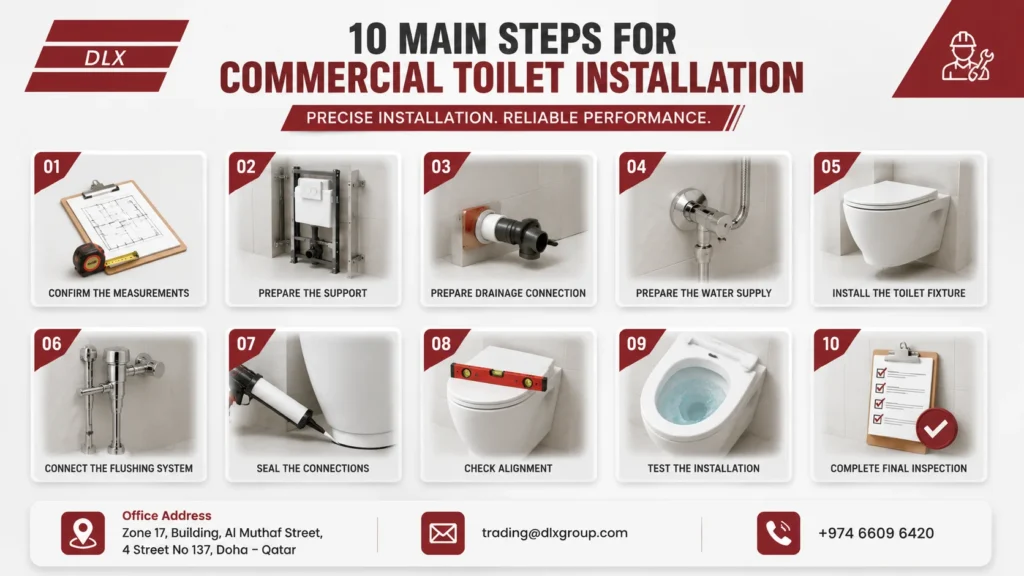
What Are the Main Steps for Commercial Toilet Installation?
Commercial toilet installation normally involves measurement, support preparation, drainage connection, water connection, fixture installation, flushing-system connection, sealing, alignment, and testing. The exact procedure varies by toilet model and manufacturer’s instructions, so installers should always follow the approved product documentation.
1. Confirm the Measurements
Verify the toilet position, centreline, drainage location, water connection, and available clearance. Do not rely only on assumed dimensions.
2. Prepare the Support
For a wall-hung toilet, install the appropriate support frame or approved mounting structure. The support must be suitable for the fixture and building construction.
For a floor-standing toilet, confirm that the finished floor is level, stable, and ready for the fixture.
3. Prepare the Drainage Connection
The waste connection should align correctly with the toilet outlet. Poor alignment can place stress on connections and may contribute to leaks or drainage problems.
4. Prepare the Water Supply
Confirm that the water inlet is positioned correctly for the selected toilet and flushing system. Use suitable fittings and connections specified for the installation.
5. Install the Toilet Fixture
Position the toilet carefully and secure it using the appropriate fixing method. Avoid forcing the fixture into alignment because excessive pressure can damage components.
6. Connect the Flushing System
Connect the flush valve or tank-based system according to the manufacturer’s requirements.
Commercial projects often favour flush-valve systems where high traffic and fast operation are important. The supplied comparison material identifies direct supply, fast operation, commercial buildings, replaceable parts, and high traffic as notable flush-valve characteristics.
7. Seal the Required Connections
Use suitable seals and connection components. The aim is to create secure, leak-resistant joints while maintaining access to components that may need future servicing.
8. Check Alignment
Confirm that the toilet is level, stable, correctly positioned, and visually aligned with the surrounding bathroom finishes.
9. Test the Installation
Check the water connection, flushing performance, drainage, stability, and visible joints. Inspect the area after testing for signs of leakage.
10. Complete the Final Inspection
Once the system performs correctly, inspect the finished installation and make sure service areas remain accessible.
A commercial toilet should not be considered complete simply because the fixture is physically installed. Correct connection, stability, flushing performance, drainage, sealing, and testing all form part of a successful installation.
How Can the Right Flush System Improve Commercial Toilet Performance?
The right flushing system can improve reliability, maintenance, and performance in a busy commercial washroom. Flush valves use a direct water supply rather than storing flush water in a conventional tank, making them particularly relevant to many high-use commercial applications.
A flush-valve system can offer:
- Fast flushing operation
- Direct water supply
- Replaceable service parts
- Suitability for commercial buildings
- High-traffic handling
- Practical maintenance
By comparison, tank toilets store water before flushing and are more commonly associated with residential applications in the supplied comparison material.
The choice should still be based on the complete building plumbing design, available water supply, fixture compatibility, maintenance requirements, and manufacturer’s specifications.
What Installation Mistakes Should Commercial Projects Avoid?
The most common commercial toilet installation problems come from inaccurate measurements, weak support, poor drainage alignment, incorrect fittings, inadequate sealing, and skipped testing. Avoiding these problems during preparation is usually easier than correcting them after a washroom is operational.
Watch for these mistakes:
- Installing without checking final measurements
- Ignoring structural support requirements
- Misaligning the waste connection
- Using unsuitable fittings
- Leaving water connections under stress
- Poorly sealing joints
- Failing to level the fixture
- Blocking future maintenance access
- Testing only the flush and not the surrounding connections
- Ignoring minor leaks during commissioning
The supplied installation materials repeatedly emphasize correct measurements, connection locations, support, sealing, and testing as important elements of reliable plumbing installation.
How Do You Test a Commercial Toilet After Installation?
After installation, test the toilet by checking flushing, drainage, water connections, stability, alignment, and visible seals. Testing should confirm that the complete fixture and connected plumbing perform as intended before the washroom is opened for regular use.
A practical inspection includes:
- Check the water connection.
- Operate the flushing system.
- Observe drainage.
- Inspect visible joints for leakage.
- Confirm that the fixture remains stable.
- Check the surrounding floor or wall for moisture.
- Confirm that service components can be accessed.
- Repeat the inspection after the system has been operated.
Testing is particularly important in commercial buildings because a small installation problem can become a repeated maintenance issue when many users rely on the same washroom.
How Should Commercial Toilets Be Maintained After Installation?
Commercial toilets should be inspected and cleaned regularly, with attention to flushing components, water connections, drainage, seals, and fixture stability. Planned maintenance can identify worn components or small leaks before they cause larger service problems.
Maintenance should include:
- Routine fixture inspection
- Regular cleaning
- Flush-system checks
- Leak monitoring
- Drainage inspection
- Replacement of worn components
- Checking fixing points
- Maintaining access to service components
Wall-hung and rimless designs can also support easier cleaning in suitable commercial applications. The supplied hotel material highlights easy cleaning, hygiene, water efficiency, and premium design as key benefits associated with rimless toilets.
How Can Businesses Choose a Reliable Toilet Supplier in Qatar?
Businesses should choose a commercial plumbing supplier based on product suitability, quality, availability, technical knowledge, replacement components, and support for project requirements. A reliable supplier can help the project team select suitable fixtures and related plumbing products instead of treating the toilet as an isolated item.
When evaluating a supplier, consider:
- Commercial sanitaryware options
- Flush valves and compatible components
- Wall-hung and floor-standing choices
- Product availability
- Installation-related accessories
- Replacement parts
- Technical guidance
- Project quantity requirements
- Long-term support
For Qatar commercial projects, Deluxe Plumbing Supplies can be positioned around this complete plumbing-supply approach, helping businesses evaluate toilet systems and related commercial plumbing requirements.
Final Checklist for Commercial Toilet Installation
Before handing over a commercial washroom, confirm:
- Correct toilet type selected
- Measurements verified
- Structural support confirmed
- Drainage correctly aligned
- Water connection secured
- Flushing system compatible
- Fixture level and stable
- Seals checked
- Flush tested
- Drainage tested
- No visible leaks
- Maintenance access available
A well-planned toilet installation combines the right fixture, correct plumbing connections, suitable support, dependable flushing, and proper testing. For commercial buildings in Qatar, these details help create washrooms that are practical, hygienic, maintainable, and ready for frequent use. Businesses planning a new project or refurbishment can work with Deluxe Plumbing Supplies to evaluate suitable commercial plumbing and sanitaryware solutions.
Frequently Asked Questions
What type of toilet is best for a commercial building?
The best commercial toilet depends on the building layout, expected traffic, structural support, cleaning requirements, maintenance needs, and budget. Wall-hung toilets can provide a modern, space-saving design with easier floor cleaning, while floor-standing toilets offer conventional floor support and installation.
Are wall-hung toilets suitable for commercial buildings?
Yes, wall-hung toilets can be suitable for commercial buildings when the wall or mounting frame provides adequate structural support. They can also make floor cleaning easier and create a clean, modern washroom appearance. The installation should follow the fixture manufacturer’s specifications and approved mounting requirements.
What should be checked before installing a commercial toilet?
Before installation, check the toilet position, bathroom dimensions, drainage outlet, water supply, structural support, fixing points, floor or wall condition, clearance, and future maintenance access. Accurate measurements and proper preparation help reduce alignment, connection, sealing, and servicing problems.
Is a flush valve better than a tank toilet for commercial buildings?
A flush valve can be well suited to high-traffic commercial washrooms because it uses a direct supply line and provides fast operation. The supplied comparison also identifies replaceable parts and commercial-building suitability as key flush-valve characteristics. The final choice should match the building’s plumbing design and manufacturer’s requirements.
How do you test a toilet after installation?
Test the water connection, flushing system, drainage, fixture stability, alignment, seals, and visible joints. Operate the toilet several times and inspect the surrounding area for leaks or other problems. Any issue should be corrected before the washroom is placed into regular commercial use.
What are common commercial toilet installation mistakes?
Common problems include inaccurate measurements, poor drainage alignment, inadequate structural support, unsuitable fittings, poor sealing, incorrect leveling, and limited maintenance access. Skipping the final performance and leak checks can also allow small installation problems to become recurring maintenance issues.
How often should commercial toilets be maintained?
Commercial toilets should be inspected and cleaned regularly because they experience frequent use. Maintenance should include checking the flush system, water connections, seals, drainage, fixing points, and other service components. The exact maintenance schedule should reflect building traffic, fixture type, and the manufacturer’s recommendations.