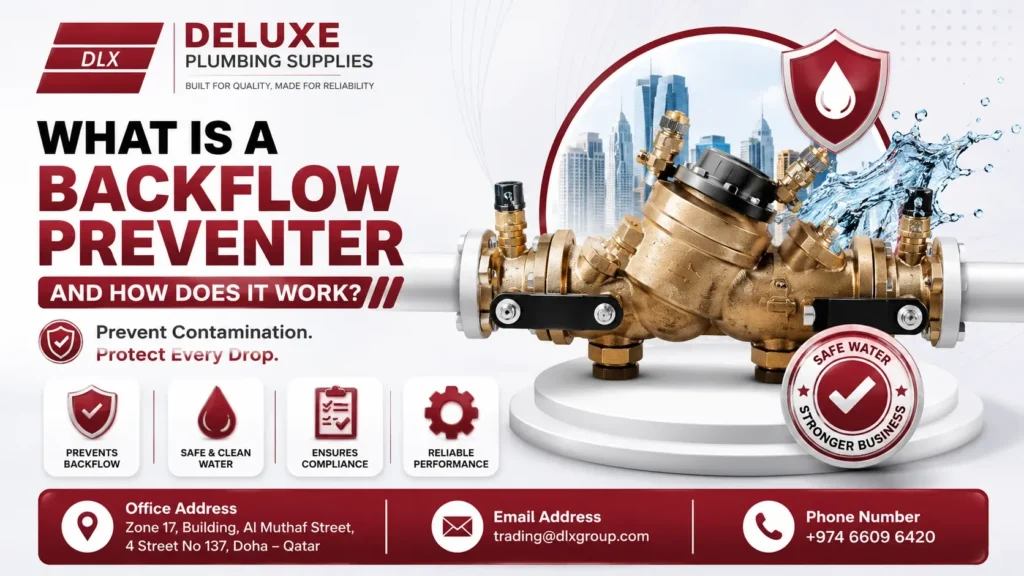
A backflow preventer is a plumbing device designed to stop contaminated or unwanted water from flowing backward into a clean water supply. It helps protect drinking water and other water systems when pressure changes could reverse normal flow.
Understanding how backflow happens, which type of preventer is suitable, and where each device is used can help property owners, contractors, facility managers, and buyers make better plumbing decisions. For commercial projects, choosing the correct backflow preventer is especially important because different systems can create different levels of backflow risk.
What Is a Backflow Preventer and Why Is It Important?
A backflow preventer is a mechanical plumbing device that allows water to move in the intended direction while helping prevent reverse flow. It is important because backward-flowing water can carry unwanted substances into a clean water supply.
Normally, water moves from the supply toward fixtures, equipment, irrigation systems, or other points of use. A backflow preventer adds a protective barrier when that normal direction is threatened.
Backflow can create problems when water from areas such as irrigation, industrial equipment, chemical processes, or other connected systems enters the potable water network. In commercial plumbing, this protection can support safer and more reliable water distribution.
How Does a Backflow Preventer Work?
A backflow preventer works by using valves, pressure differences, or air separation to stop water from moving backward through a plumbing connection.
Under normal conditions, water flows forward through the device. When pressure changes create a reverse-flow condition, the internal components respond by restricting or stopping the unwanted flow.
The exact operating method depends on the type of backflow preventer. Some devices use check valves, while others use pressure relief or vacuum-breaking principles.
In simple terms, the process is:
- Water flows in the normal direction.
- The preventer monitors or responds to pressure and flow conditions.
- A pressure reversal or backsiphonage condition occurs.
- Internal valves or air gaps prevent reverse movement.
- The clean supply remains protected from the downstream system.
This simple principle makes backflow prevention an important part of many commercial plumbing systems.
Why Can Backflow Happen in a Plumbing System?
Backflow can happen when the pressure on the supply side becomes lower than the pressure on the connected downstream side, or when siphoning conditions pull water backward.
Two common conditions are backpressure and backsiphonage.
Backpressure occurs when downstream pressure becomes greater than the supply pressure. This can happen in systems containing pumps, elevated tanks, boilers, or other equipment that changes water pressure.
Backsiphonage can occur when supply pressure drops and creates a siphoning effect. A sudden interruption, high demand, or other pressure change can create conditions where water is pulled in the opposite direction.
The risk depends on the plumbing layout, connected equipment, and possible contaminants. That is why selecting a backflow prevention device should be based on the actual application rather than choosing a valve simply by size.
What Are the Main Types of Backflow Preventers?
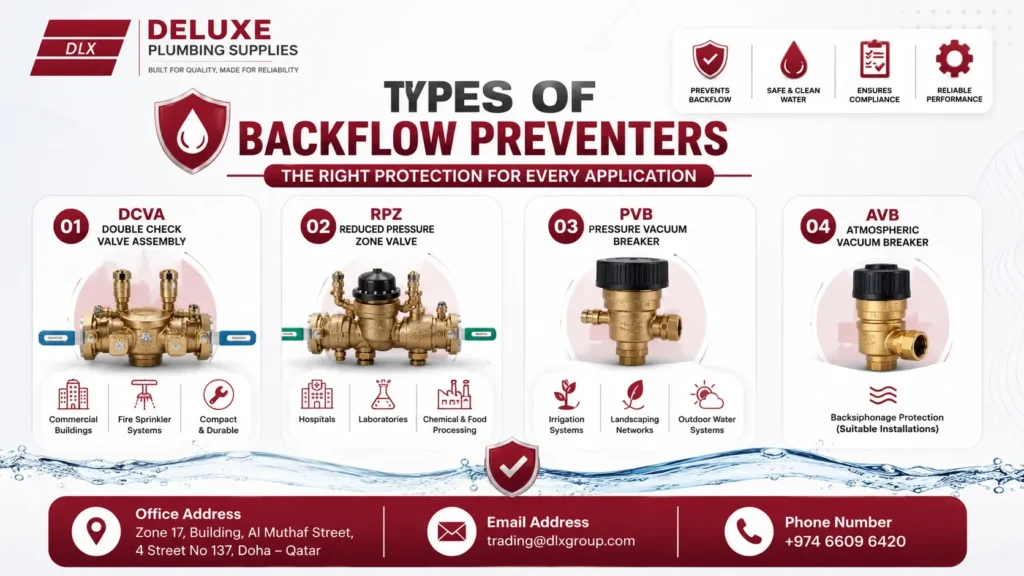
The main types of backflow preventers include Double Check Valve Assemblies (DCVA), Reduced Pressure Zone (RPZ) valves, Pressure Vacuum Breakers (PVB), and Atmospheric Vacuum Breakers (AVB). Each type serves a different purpose and level of protection.
What Is a Double Check Valve Assembly (DCVA)?
A Double Check Valve Assembly, or DCVA, uses two check valves to help prevent reverse water flow. It is commonly associated with lower-hazard applications where a basic mechanical barrier is appropriate.
DCVA devices can be useful in commercial buildings, fire sprinkler systems, and other applications where the backflow risk is considered suitable for this type of protection.
The supplied Deluxe Plumbing Supplies materials also position DCVA products around commercial buildings, fire sprinkler systems, compact design, lower maintenance, and durability.
What Is a Reduced Pressure Zone (RPZ) Valve?
A Reduced Pressure Zone (RPZ) valve provides a higher level of backflow protection by using check valves and a pressure-controlled zone with relief capability.
RPZ assemblies are commonly considered for applications where the potential contamination risk is higher. The supplied product material associates RPZ valves with hospitals, laboratories, and chemical and food processing environments, highlighting high contamination protection and automatic pressure relief.
Because application requirements can vary, the correct RPZ configuration should be selected according to the system, local requirements, and professional plumbing guidance.
What Is a Pressure Vacuum Breaker (PVB)?
A Pressure Vacuum Breaker, or PVB, is designed primarily to protect against backsiphonage by using an air inlet and pressure-based protection.
PVB devices are commonly associated with irrigation, landscaping, and outdoor water systems. The supplied Deluxe Plumbing Supplies material specifically connects PVB applications with irrigation systems, landscaping networks, and outdoor water systems.
This makes PVB protection particularly relevant where irrigation lines could create a potential connection between the water supply and outdoor systems.
What Is an Atmospheric Vacuum Breaker (AVB)?
An Atmospheric Vacuum Breaker, or AVB, uses an air inlet to help prevent backsiphonage. It is generally used in applications where the device and installation conditions meet the required protection criteria.
AVB selection depends heavily on installation design and local plumbing requirements, so it should not automatically be treated as a substitute for other backflow prevention devices.
How Do Different Backflow Preventers Compare?
The main difference between backflow preventers is the type of protection they provide and the application for which they are designed.
| Type | Main Protection Principle | Typical Application Context |
| DCVA | Double check valves | Commercial buildings, suitable lower-hazard systems |
| RPZ | Check valves + reduced-pressure zone | Higher-risk commercial applications |
| PVB | Pressure vacuum protection | Irrigation and outdoor systems |
| AVB | Atmospheric vacuum protection | Suitable for backsiphonage applications |
The best choice depends on the hazard level, plumbing design, pressure conditions, installation requirements, and applicable local codes. A professional should confirm the correct device before installation.
Where Are Backflow Preventers Used?
Backflow preventers are used wherever a water supply could potentially connect with a system that may introduce unwanted water back into the supply.
Commercial applications can include:
- Hotels and commercial towers
- Hospitals and healthcare facilities
- Industrial facilities
- Shopping malls
- Laboratories
- Fire sprinkler systems
- Irrigation and landscaping networks
- Outdoor water systems
- Food and chemical processing environments
The supplied Deluxe Plumbing Supplies materials highlight hotels and towers, hospitals and healthcare, industrial facilities, shopping malls, and irrigation and landscaping among relevant commercial applications.
For large properties, backflow prevention should be considered as part of the wider plumbing design rather than as an isolated valve purchase.
How Do You Choose the Right Backflow Preventer?
Choosing the right backflow preventer starts with identifying the hazard, water connection, pressure conditions, and required protection level.
Consider these factors before purchasing:
- Application — Determine whether the device will serve potable water, irrigation, fire protection, industrial equipment, or another system.
- Backflow risk — Understand whether the primary concern is backpressure, backsiphonage, or both.
- Hazard level — Higher-risk applications may require stronger protection than standard mechanical check-valve arrangements.
- System size — Select a device that matches the pipe connection and flow requirements.
- Installation conditions — Available space, orientation, drainage, and access can affect product suitability.
- Compliance requirements — Check applicable plumbing codes, project specifications, and local requirements.
- Maintenance access — Choose a configuration that can be inspected and serviced appropriately.
For commercial projects, buying from a knowledgeable plumbing supplier can make product selection easier because the supplier can help match the device to the intended application.
What Should You Check Before Buying a Backflow Preventer?
Before buying a backflow preventer, confirm the application, required protection, connection size, operating conditions, and compliance requirements.
Avoid choosing a product based only on price or appearance. A correctly selected device needs to work with the plumbing system it is protecting.
A practical purchasing checklist includes:
- Identify the water system.
- Identify possible contamination sources.
- Determine the required protection level.
- Confirm pipe size and connection type.
- Check operating pressure requirements.
- Review installation requirements.
- Confirm maintenance and testing access.
- Verify relevant project or local requirements.
- Ask the supplier whether the selected model matches the application.
If you are sourcing commercial backflow prevention equipment, Deluxe Plumbing Supplies can be part of the supplier evaluation process, particularly when you need to compare different backflow prevention solutions for commercial plumbing applications.
How Can a Backflow Preventer Protect a Commercial Water System?
A backflow preventer protects a commercial water system by creating a controlled barrier against unwanted reverse flow. This helps reduce the risk of water from connected systems entering the clean supply.
For facility managers and contractors, the value is not only the valve itself. The complete solution includes correct selection, proper installation, accessibility, inspection, and ongoing maintenance.
That is especially important in buildings with multiple water connections. Hotels, healthcare facilities, industrial sites, shopping centers, and irrigation networks can have different backflow risks, so the prevention strategy should match the system.
What Maintenance Does a Backflow Preventer Need?
Backflow preventers need appropriate inspection, testing, and maintenance to help ensure they continue to operate as intended.
The exact maintenance schedule depends on the device, application, local requirements, and manufacturer instructions. Check valves, relief components, seals, and other internal parts can require attention over time.
Maintenance planning should include:
- Routine visual inspection
- Testing where required
- Checking for leaks or unusual discharge
- Inspecting accessible components
- Cleaning or servicing when appropriate
- Replacing worn components when necessary
Always follow the product manufacturer’s instructions and applicable local requirements rather than using one maintenance schedule for every type of device.
What Are Common Backflow Preventer Problems?
Common problems can include leaking connections, damaged internal components, blocked passages, incorrect installation, pressure-related issues, or failure to maintain the assembly.
A backflow preventer that shows unusual leakage, discharge, damage, or performance problems should be inspected by a qualified plumbing professional.
Importantly, replacing a faulty device with a different model without checking the application may create another problem. The replacement should provide the protection required by the plumbing system.
Does Every Plumbing System Need a Backflow Preventer?
Not every plumbing connection necessarily uses the same type of backflow preventer, but backflow protection may be required wherever a potential cross-connection or contamination risk exists.
Requirements vary by application, system design, jurisdiction, and applicable plumbing regulations. Commercial properties often have more complex connections, which can create additional backflow considerations.
If you are unsure whether a system requires backflow protection, consult a qualified plumbing professional and review the applicable local requirements.
What Should You Ask a Plumbing Supplier Before Buying One?
Ask the supplier which backflow preventer type matches your application, what protection it provides, whether the size and connections are suitable, and what installation and maintenance requirements apply.
Useful questions include:
- Which type is suitable for my application?
- Is the system primarily at risk of backpressure or backsiphonage?
- What size and connection configuration do I need?
- What operating pressure should the device support?
- What testing or maintenance is required?
- Are there project or local compliance requirements to consider?
- Is professional installation recommended?
For commercial buyers, these questions can help turn a product search into a complete backflow prevention decision.
Frequently Asked Questions
Is a backflow preventer the same as a check valve?
No. A check valve is a basic one-way flow device, while a backflow preventer is a broader category of devices designed to provide backflow protection. Some backflow preventers use check valves as part of their internal design.
What is the most common type of commercial backflow preventer?
There is no single best type for every commercial property. DCVA, RPZ, PVB, and other devices serve different applications and protection needs. The correct choice depends on the hazard, plumbing design, pressure conditions, and applicable requirements.
What is the difference between DCVA and RPZ?
A DCVA uses two check valves to prevent reverse flow, while an RPZ assembly adds a reduced-pressure zone and relief function for stronger protection in higher-risk applications. The correct device should be selected according to the specific system and required level of protection
Where are PVB backflow preventers used?
PVB devices are commonly associated with irrigation, landscaping, and outdoor water systems where protection against backsiphonage is required. Their suitability depends on the installation and applicable requirements.
Can a backflow preventer stop contaminated water?
A properly selected and installed backflow preventer is designed to help prevent reverse flow that could introduce unwanted water into the protected supply. It does not clean contaminated water; its role is to help stop the contamination from flowing backward.
How often should a backflow preventer be tested?
Testing frequency depends on the device, application, local regulations, and project requirements. Follow the manufacturer’s instructions and applicable local rules, and use qualified professionals where testing or certification is required.
Can I install a backflow preventer myself?
Installation requirements vary by device and jurisdiction. Because correct orientation, placement, drainage, pressure conditions, and testing can matter, commercial installations should generally be handled or verified by a qualified plumbing professional.
How do I buy the right backflow preventer?
Start with the application and the required protection level. Then confirm the hazard, flow conditions, pipe size, connection type, operating pressure, installation requirements, and applicable codes. A knowledgeable plumbing supplier can help you compare suitable options.
Why Choose Deluxe Plumbing Supplies for Backflow Prevention?
Choosing backflow protection is easier when product selection is supported by practical application knowledge. Deluxe Plumbing Supplies focuses on plumbing supply solutions for commercial environments and presents backflow prevention products around safe water, reliable performance, compliance, and different application needs.
When comparing options, look for:
- Commercial backflow prevention solutions
- Multiple valve types for different applications
- Guidance on product selection
- Products suited to commercial plumbing systems
- Support for reliable, long-term plumbing performance
If you are also reviewing other commercial plumbing supplies, consider linking this guide to the relevant product category so buyers can move naturally from education to product selection.
What Is the Main Takeaway About Backflow Preventers?
A backflow preventer is a plumbing device that helps stop water from flowing backward into a protected water supply. It works through check valves, pressure control, vacuum protection, or related mechanisms depending on the device type.
The right choice depends on the application. DCVA, RPZ, PVB, and AVB devices are not interchangeable in every situation, so the system’s hazard, pressure conditions, installation design, and applicable requirements should guide selection.
For commercial projects, understanding the difference between backflow prevention types is the first step. The next is choosing a suitable product from a reliable commercial plumbing supplies source and ensuring it is correctly installed, tested, and maintained.