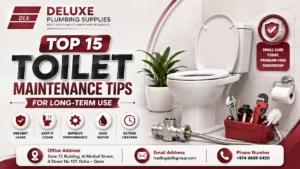
A well-maintained toilet can provide reliable performance for many years. Regular care helps prevent common problems such as clogs, leaks, mineral buildup, weak flushing, unpleasant odors, and worn components. It also makes small problems easier to find before they become costly repairs.
Good toilet maintenance is more than cleaning the bowl. It includes checking the tank, flush valve, fill valve, flapper, handle, supply line, base, seal, and drain. The following 15 toilet maintenance tips explain how to protect your toilet, improve everyday performance, and choose the right plumbing supplies when replacement parts are needed.
What Are the Top 15 Toilet Maintenance Tips for Long-Term Use?
The best toilet maintenance routine combines regular cleaning, careful flushing habits, leak checks, component inspections, and timely replacement of worn parts. Keeping the toilet clean and checking its working components can help maintain proper flushing, reduce water waste, prevent avoidable damage, and extend the useful life of the fixture.
1. How Often Should You Clean Your Toilet?
Clean your toilet regularly to prevent dirt, stains, mineral deposits, and odors from building up. A routine cleaning should include the bowl, rim, seat, lid, tank exterior, and other accessible surfaces.
Regular cleaning also gives you a chance to notice changes in the toilet. A new stain, crack, loose fitting, or unusual moisture may point to a developing problem. Consistent cleaning is therefore both a hygiene practice and a simple inspection routine.
2. How Can You Use the Right Toilet Cleaning Products?
Use suitable, non-abrasive cleaning products to protect toilet surfaces and components. Harsh cleaners or abrasive tools may damage finishes or affect certain parts when used incorrectly.
Follow the product instructions and use appropriate brushes or soft cleaning materials. Avoid mixing different cleaning chemicals. A simple, consistent cleaning method is usually better than using increasingly strong products to remove buildup.
3. How Do You Prevent Hard Water and Mineral Buildup?
Prevent mineral buildup by cleaning water-contact areas regularly and removing deposits before they become difficult to remove. Hard water can leave white, yellow, or brown deposits around the bowl, rim, and flushing areas.
Mineral deposits can also affect water flow and make the toilet harder to clean. If buildup is common in your area, regular inspection and suitable cleaning products can help keep the fixture in better condition.
4. How Do You Keep the Toilet Drain and Trap Clear?
Keep the toilet drain clear by flushing only suitable waste and avoiding materials that can block the trap or drainage system. Repeated slow flushing or incomplete drainage should not be ignored.
Do not use the toilet as a disposal system for items that can expand, collect, or resist breaking down in water. If a blockage keeps returning, investigate the cause instead of repeatedly treating the symptom.
5. How Can You Check for Toilet Leaks?
Check for leaks around the tank, supply connection, base, and other visible plumbing points. Look for water on the floor, damp fittings, dripping connections, or a toilet that seems to refill when it has not been used.
A leak that appears small can still cause water waste or damage to nearby surfaces. Inspecting the toilet periodically makes it easier to identify problems early and arrange a repair before the condition worsens.
6. How Should You Inspect the Toilet Fill Valve?
Inspect the fill valve when the toilet takes too long to refill, makes unusual sounds, or continues running after flushing. The fill valve controls the flow of water into the tank after the toilet is flushed.
Check whether the tank is filling and stopping normally. If the valve is worn or malfunctioning, the toilet may waste water or fail to maintain normal flushing performance. Replacing a faulty component with a compatible part can restore proper operation.
7. How Can You Maintain the Flush Valve and Flapper?
Check the flush valve and flapper to make sure the tank releases and seals water correctly. A worn flapper may allow water to escape continuously from the tank into the bowl, causing the toilet to run.
Watch for repeated refilling, weak flushing, or water movement after the flush cycle has finished. These signs can indicate that a flush component needs adjustment, cleaning, or replacement.
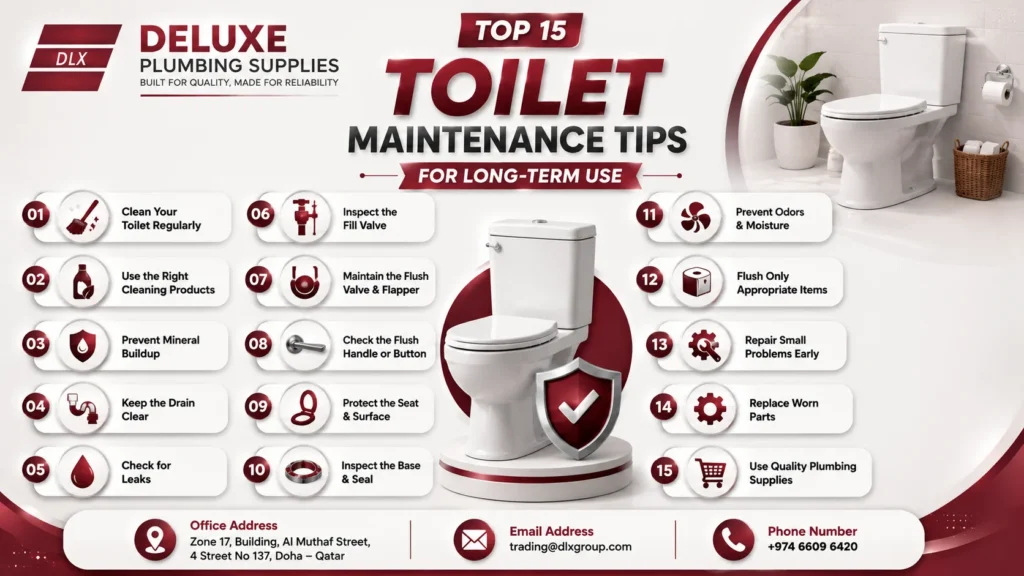
8. How Do You Check the Toilet Flush Handle or Button?
Check the flush handle or button for smooth and consistent operation. A loose, sticking, or unresponsive control can prevent the flushing mechanism from working correctly.
Do not force the handle when it feels stuck. Inspect the connection and internal mechanism if accessible. Replacing a worn control or related component may be a simple way to restore normal operation.
9. How Can You Protect the Toilet Seat and Ceramic Surface?
Protect the toilet seat and ceramic surface by avoiding unnecessary impact, excessive pressure, and abrasive cleaning tools. Small scratches or damage can make surfaces harder to clean and may affect their appearance.
Keep the seat securely attached and check for loose fittings. If a seat becomes cracked, unstable, or difficult to clean, replacing it can improve both comfort and everyday bathroom maintenance.
10. How Do You Inspect the Toilet Base and Seal?
Inspect the toilet base and seal for movement, moisture, unpleasant odors, or visible gaps. A toilet should remain stable on the floor and should not rock when used.
Moisture around the base can indicate a sealing or plumbing problem. Because a base leak can affect the surrounding floor, do not ignore repeated dampness. A qualified plumber may be needed if the source is unclear or the toilet needs to be removed.
11. How Can You Prevent Toilet Odors and Moisture Problems?
Prevent toilet odors and excess bathroom moisture through regular cleaning, good ventilation, and early attention to plumbing problems. Persistent odors should not simply be covered with air fresheners.
A properly ventilated bathroom helps reduce moisture that can contribute to mold, mildew, and surface damage. If an unusual plumbing odor continues after cleaning, investigate the toilet, drain, and surrounding plumbing for a possible underlying issue.
12. How Do You Avoid Flushing Items That Cause Clogs?
Avoid flushing anything that can create a blockage or interfere with the drainage system. The toilet should be used only for materials that are appropriate for normal flushing.
Simple habits can reduce unnecessary drain problems:
- Flush toilet waste and suitable toilet paper only.
- Keep wipes, paper products, and other unsuitable materials out of the toilet.
- Do not use repeated flushing to force a suspected blockage through.
- Address slow drainage before it becomes a complete clog.
Good flushing habits protect both the toilet and the connected drainage system.
13. Why Should You Repair Small Toilet Problems Early?
Repair small toilet problems as soon as practical because minor faults can develop into larger maintenance issues. A dripping connection, loose handle, weak flush, running toilet, or slow drain is easier to address when the problem is first noticed.
Early maintenance can also help reduce water waste and protect surrounding bathroom surfaces. Regular inspection is especially useful in busy homes, rental properties, commercial washrooms, and other spaces where toilets receive frequent use.
14. When Should You Replace Worn Toilet Parts?
Replace worn toilet components when they no longer operate reliably, cannot maintain a proper seal, or repeatedly cause the same problem. Common serviceable components include flappers, fill valves, flush valves, handles, seals, and supply connections.
Before buying a replacement, check the toilet type, component size, connection, and intended application. The correct part should fit the existing system rather than being selected by appearance alone.
15. How Do Quality Plumbing Supplies Support Long-Term Toilet Performance?
Quality plumbing supplies support long-term toilet performance by providing suitable replacement components for maintenance and repair. The right valve, fitting, seal, connector, or other part should be compatible with the toilet and appropriate for its application.
When sourcing replacement components, consider compatibility, material, durability, correct sizing, and intended use. Deluxe Plumbing Supplies can be considered when looking for plumbing products and replacement components that support routine toilet maintenance and repair needs.
Why Does Regular Toilet Maintenance Matter for Long-Term Use?
Regular toilet maintenance helps protect performance, hygiene, water efficiency, and the surrounding bathroom area. Simple checks can identify worn components, leaks, buildup, and drainage problems before they become more disruptive.
A useful maintenance routine includes:
- Cleaning the toilet regularly.
- Checking for leaks and moisture.
- Inspecting flush and fill components.
- Keeping the drain clear.
- Repairing small problems early.
- Replacing worn components when necessary.
This approach makes toilet care more preventive than reactive.
What Are the Signs That a Toilet Needs Maintenance?
Common signs include continuous running, weak flushing, slow refilling, repeated clogs, unusual tank sounds, water around the base, loose components, mineral buildup, and persistent odors.
Do not assume every problem requires a complete toilet replacement. Many toilet issues are related to individual components that can be inspected, adjusted, repaired, or replaced.
Which Toilet Problems Can You Fix Yourself and Which Need a Plumber?
Some basic toilet maintenance tasks are suitable for homeowners, while plumbing problems involving hidden leaks, drainage, damaged seals, or major components may require professional help.
| Toilet problem | Basic maintenance possible? | Professional help may be needed when |
| Bowl cleaning | Yes | — |
| Mineral buildup | Often | Deposits are severe |
| Loose handle | Often | Internal mechanism is damaged |
| Worn flapper | Often | Replacement does not solve the problem |
| Fill valve issue | Often | The valve or connection continues to fail |
| Repeated clogging | Sometimes | Blockages keep returning |
| Leak at toilet base | Limited | The seal or flange may need repair |
| Cracked toilet | No | Replacement is required |
| Major drain problem | No | The blockage is beyond the fixture |
If you are unsure about the source of a leak or drainage problem, professional inspection is the safer option.
How Can You Choose the Right Plumbing Supplies for Toilet Maintenance?
Choose toilet plumbing supplies based on compatibility, size, material, durability, and application. A component that looks similar may not necessarily work correctly with your existing toilet.
Before purchasing a replacement part, identify the toilet and the component that needs attention. Check measurements and connection requirements where applicable. Choosing the correct replacement part can make maintenance easier and help restore reliable operation.
For broader repair needs, related plumbing fittings and replacement components should also be selected according to the actual application rather than price alone.
Why Choose Deluxe Plumbing Supplies for Toilet Maintenance Products?
Deluxe Plumbing Supplies provides a natural commercial resource for readers who need plumbing products for maintenance and replacement work. The focus should be on choosing suitable components that match the application and support dependable plumbing performance.
When maintaining a toilet, the goal is not simply to replace a worn part. It is to select the right component, install or service it correctly, and maintain the system so it continues working reliably.
What Are the Most Common Toilet Maintenance Mistakes?
The most common mistakes are often simple habits that can be avoided with regular inspection.
- Ignoring a toilet that keeps running.
- Delaying repairs for visible leaks.
- Using unsuitable or abrasive cleaning products.
- Flushing inappropriate materials.
- Ignoring repeated clogs.
- Forcing a stuck flush handle.
- Choosing replacement parts without checking compatibility.
- Waiting until a small problem causes visible damage.
Preventive care is usually easier than dealing with a major plumbing problem after it develops.
Frequently Asked Questions
How often should you clean a toilet?
A toilet should be cleaned regularly as part of normal bathroom care. Routine cleaning helps control dirt, stains, mineral buildup, and odors while making it easier to spot leaks or damaged components. The exact frequency depends on household use, but toilets in busy homes and commercial washrooms generally need more frequent attention.
How can you make a toilet last longer?
You can help a toilet last longer by cleaning it regularly, avoiding inappropriate flushing materials, checking for leaks, inspecting valves and seals, and replacing worn components promptly. Good maintenance prevents small problems from becoming larger ones and helps the flushing and drainage systems continue working as intended.
What causes a toilet to keep running?
A toilet may keep running when the flapper does not seal properly, the fill valve continues allowing water into the tank, or another part of the flushing mechanism is not operating correctly. Inspect the tank components first. If the problem continues after basic maintenance, a replacement component or professional inspection may be necessary.
When should toilet parts be replaced?
Toilet parts should be replaced when they are worn, damaged, leaking, or no longer operating reliably. Flappers, fill valves, flush valves, handles, seals, and supply connections can all require replacement over time. Always check compatibility before purchasing a new component so the replacement is suitable for the existing toilet system.
When should you call a plumber for a toilet problem?
Call a plumber when you cannot identify the source of a leak, the toilet is leaking at its base, clogs repeatedly, has a damaged seal or flange, or has a drainage problem that basic maintenance does not resolve. Professional help is also appropriate when a repair requires removing the toilet or accessing hidden plumbing.
Can hard water affect toilet maintenance?
Yes. Hard water can leave mineral deposits on water-contact surfaces and make stains more difficult to remove. Regular cleaning can help control buildup. If deposits are persistent, use a suitable cleaning method and avoid abrasive tools that may damage the fixture. Severe buildup may require more specialized maintenance.