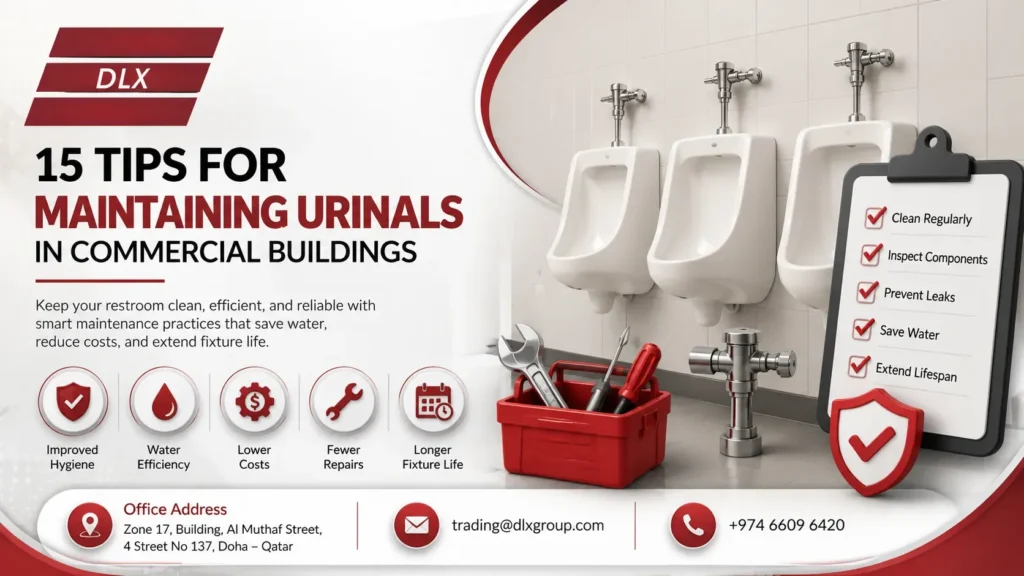
Commercial restrooms are one of the busiest areas in office buildings, shopping centers, schools, hospitals, hotels, airports, and other public facilities. Because urinals are used frequently throughout the day, they require consistent maintenance to stay clean, hygienic, and fully operational. Neglecting routine care can lead to unpleasant odors, clogged drains, water leaks, expensive plumbing repairs, and a poor experience for employees and visitors.
A proactive maintenance plan helps facility managers reduce downtime, extend the lifespan of plumbing fixtures, and improve water efficiency. Simple tasks like daily cleaning, inspecting flush valves, and removing mineral buildup can prevent larger issues before they disrupt daily operations.
In this guide, you’ll learn why commercial urinal maintenance matters, the problems caused by poor upkeep, recommended cleaning schedules, and 15 practical maintenance tips to help keep your commercial washrooms running smoothly.
Why Is Regular Urinal Maintenance Important in Commercial Buildings?
Regular urinal maintenance keeps commercial restrooms clean, hygienic, and functional. It helps prevent plumbing issues, reduces water waste, minimizes unpleasant odors, extends fixture lifespan, and lowers long-term maintenance costs. Consistent care also creates a better experience for employees, customers, and visitors.
Commercial buildings often serve hundreds or even thousands of people each day. Every flush contributes to wear on plumbing components such as flush valves, sensors, seals, and drain connections. Without regular inspections and cleaning, small issues can quickly develop into costly repairs.
Routine maintenance also supports workplace hygiene. Clean, odor-free restrooms reflect positively on your business while helping maintain health and safety standards. Additionally, well-maintained fixtures use water more efficiently, reducing utility costs over time.
Benefits of regular urinal maintenance include:
- Improved restroom hygiene
- Reduced plumbing emergencies
- Lower maintenance costs
- Better water efficiency
- Longer fixture lifespan
- Improved customer and employee satisfaction
- Fewer restroom closures for repairs
What Problems Can Poor Urinal Maintenance Cause?
Ignoring routine maintenance doesn’t just create an unpleasant restroom—it can also lead to expensive plumbing issues and operational disruptions.
Some of the most common problems include:
- Persistent Odors: Urine scale, bacteria, and clogged drain traps often create unpleasant smells that regular surface cleaning cannot eliminate.
- Mineral Buildup: Hard water deposits gradually collect inside flush valves, drain lines, and urinal surfaces. Over time, these deposits reduce water flow and increase the risk of blockages.
- Frequent Clogs: Debris, uric acid crystals, and mineral scale can restrict drainage, leading to slow-draining or completely blocked urinals.
- Water Leaks: Damaged seals, worn gaskets, or faulty flush valves can cause continuous leaks that waste significant amounts of water and increase utility bills.
- Sensor Malfunctions: Automatic flush systems may stop working correctly because of dirty sensors, battery failure, or electronic faults.
- Higher Operating Costs: Small maintenance issues often become major plumbing repairs when left unattended. Emergency service calls, replacement parts, and restroom downtime can significantly increase facility management costs.
- Negative Customer Experience: Cleanliness influences how visitors perceive your business. Dirty or malfunctioning restrooms can damage your company’s professional image.
Addressing these problems early through preventive maintenance is far more cost-effective than waiting until equipment fails.
How Often Should Commercial Urinals Be Cleaned?
The ideal cleaning schedule depends on building occupancy and restroom traffic. High-traffic facilities such as airports, stadiums, shopping malls, and hospitals require more frequent cleaning than smaller office buildings.
| Maintenance Task | Recommended Frequency |
| Surface cleaning | Daily |
| Disinfect interior and exterior | Daily |
| Flush valve inspection | Weekly |
| Deep cleaning and descaling | Weekly |
| Leak inspection | Monthly |
| Drain inspection | Monthly |
| Professional plumbing inspection | Quarterly |
| Review aging components | Annually |
Daily cleaning removes bacteria, stains, and odors before they become larger problems. Weekly inspections help identify worn components, while scheduled plumbing inspections ensure the entire restroom system continues operating efficiently.
Following a structured maintenance schedule not only improves cleanliness but also helps facility managers plan repairs before they become emergencies.
15 Tips for Maintaining Urinals in Commercial Buildings
1. Clean Urinals Every Day
Daily cleaning is the foundation of every successful restroom maintenance program. Use a non-abrasive restroom cleaner and disinfect both the interior and exterior surfaces of each urinal. Pay special attention to the rim, flush area, and drain opening where bacteria and mineral deposits commonly accumulate.
Regular cleaning prevents stains, reduces odors, and maintains a professional appearance throughout the facility. It also makes weekly deep cleaning faster and more effective.
2. Use Non-Abrasive Cleaning Products
Choosing the right cleaning products is just as important as cleaning regularly. Harsh chemicals and abrasive scrubbers can damage porcelain surfaces, chrome finishes, rubber seals, and flush valve components over time. This damage may lead to leaks, corrosion, or premature fixture replacement.
Instead, use neutral-pH or manufacturer-approved commercial restroom cleaners along with soft brushes or microfiber cloths. These products effectively remove dirt, bacteria, and stains without harming the fixture. Using the correct cleaning solutions also helps preserve the appearance and performance of urinals in high-traffic commercial environments.
3. Remove Mineral and Hard Water Deposits
Commercial buildings in hard water areas often experience mineral buildup inside urinals and plumbing components. Calcium, lime, and uric acid deposits can gradually restrict water flow, reduce flushing performance, and increase the risk of clogs.
Schedule weekly descaling using a commercial descaling solution designed for restroom fixtures. Pay close attention to the drain opening, flush rim, and interior bowl where deposits accumulate most frequently. Removing mineral buildup before it hardens keeps the drainage system operating efficiently and reduces long-term maintenance costs.
4. Inspect Flush Valves Regularly
Flush valves are among the hardest-working components in a commercial restroom. Continuous daily use can eventually wear out diaphragms, seals, springs, and internal parts, leading to inconsistent flushing or continuous water flow.
Inspect flush valves weekly for signs of leaks, slow flushing, unusual noises, or inconsistent performance. Early detection allows maintenance teams to replace inexpensive internal components before complete valve failure occurs. Routine inspections also help improve water efficiency by preventing unnecessary water loss.
5. Check for Leaks and Water Waste
Even a small leak can waste thousands of gallons of water over the course of a year. Leaks commonly develop around flush valves, supply lines, fittings, or worn seals and often go unnoticed in busy commercial facilities.
During routine inspections, check for dripping water, moisture around connections, continuously running flush valves, or unexplained increases in water bills. Prompt repairs help reduce utility expenses while preventing water damage to restroom floors and surrounding building materials.
6. Keep Drain Traps Clear
Slow-draining urinals are usually an early warning sign of developing blockages. Urine scale, mineral deposits, paper waste, and other debris can gradually accumulate inside drain traps and waste lines, restricting water flow.
Regularly inspect and clean drain openings to remove visible debris before it creates a blockage. If drainage begins slowing despite routine cleaning, schedule professional drain maintenance instead of relying on harsh chemical drain cleaners, which may damage plumbing components. Keeping drain traps clear helps prevent unpleasant odors, backups, and costly emergency repairs.
7. Maintain Sensor Flush Systems
Touchless urinals improve hygiene and conserve water, but their electronic components require routine maintenance. Dirty sensor lenses, depleted batteries, loose wiring, or incorrect sensor settings can cause false activations or prevent flushing altogether.
Clean sensor surfaces regularly using a soft cloth and inspect battery-powered units according to the manufacturer’s recommendations. Test each sensor periodically to ensure reliable operation. Proper maintenance helps maintain user convenience while maximizing water efficiency and reducing unnecessary service calls.
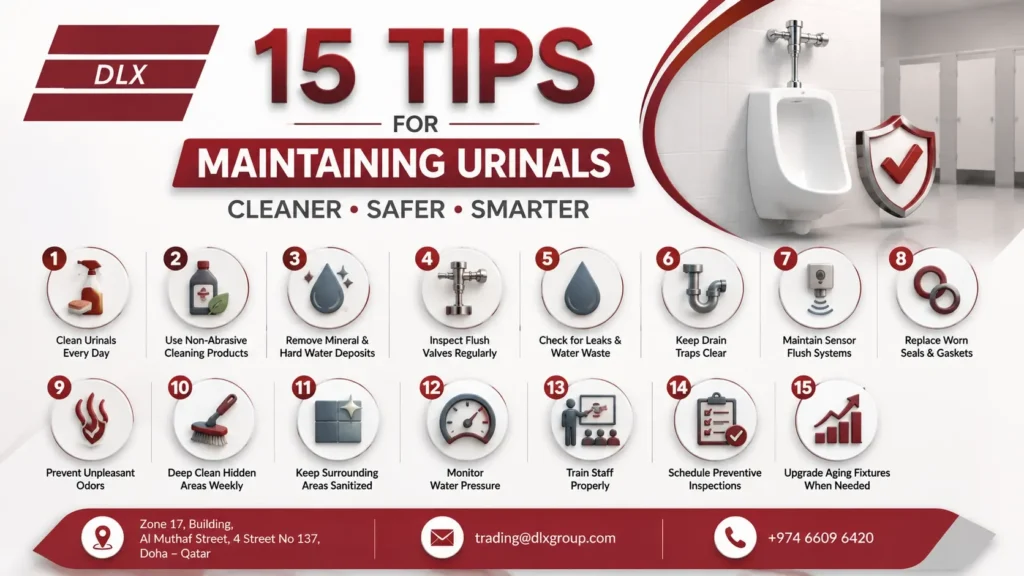
8. Replace Worn Seals and Gaskets
Rubber seals, O-rings, and gaskets naturally wear out after years of repeated flushing. As these components deteriorate, they may allow water to leak around flush valves or supply connections, increasing water consumption and creating maintenance issues.
Include seals and gaskets in routine preventive maintenance inspections. Replacing inexpensive wear parts before they fail completely is far more cost-effective than repairing water damage or replacing larger plumbing assemblies. Keeping these components in good condition also helps maintain consistent flushing performance and extends the lifespan of commercial restroom fixtures.
9. Prevent Unpleasant Odors Before They Start
Persistent restroom odors are often a sign of deeper maintenance issues rather than poor cleaning alone. Urine scale, bacteria, clogged drain traps, dried-out trap seals, and inadequate ventilation can all contribute to unpleasant smells.
To prevent odors, disinfect urinals daily, descale drains weekly, and ensure each fixture flushes properly. Check nearby floor drains and plumbing traps to confirm they contain water, as dry traps can allow sewer gases to enter the restroom. Improving ventilation and addressing odor sources promptly creates a cleaner, more comfortable environment for building occupants.
10. Deep Clean Hidden Areas Weekly
While daily cleaning keeps visible surfaces sanitary, hidden areas require regular deep cleaning to prevent long-term buildup. Dirt, bacteria, and mineral deposits often collect beneath the urinal rim, around flush valves, behind fixtures, and in hard-to-reach corners.
Set aside time each week to thoroughly clean these overlooked areas using appropriate commercial cleaning products. Removing hidden grime improves restroom hygiene, eliminates odor sources, and helps maintenance teams identify developing plumbing issues before they become costly repairs.
11. Keep Surrounding Walls and Floors Sanitized
Maintaining the urinal alone isn’t enough to ensure a clean restroom. Splashback can contaminate nearby walls, partitions, flooring, and baseboards, creating bacteria buildup and unpleasant odors if these surfaces are ignored.
Include surrounding areas in every cleaning routine. Disinfect walls, partitions, floors, and touchpoints such as door handles and dispensers. Clean flooring also reduces slip hazards while improving the overall appearance of the restroom, leaving a positive impression on employees and visitors.
12. Monitor Water Pressure
Proper water pressure is essential for effective flushing. Low pressure may leave waste behind, while excessive pressure can place unnecessary stress on flush valves and plumbing connections.
Regularly monitor flushing performance and investigate sudden changes in water flow. If multiple fixtures experience pressure problems, inspect the building’s water supply system or consult a licensed commercial plumber. Maintaining the correct pressure helps improve cleaning performance while reducing unnecessary wear on plumbing components.
13. Train Cleaning and Maintenance Staff Properly
Even the best maintenance plan is only effective when staff understand how to perform inspections and cleaning correctly. Improper cleaning techniques or overlooked maintenance tasks can shorten fixture lifespan and increase repair costs.
Provide regular training on proper cleaning procedures, approved chemicals, inspection checklists, and reporting processes. Encourage staff to identify leaks, unusual noises, damaged components, or slow drainage during routine cleaning. Early reporting allows facility managers to resolve minor issues before they become major plumbing failures.
14. Schedule Preventive Plumbing Inspections
Routine professional inspections are one of the most effective ways to prevent unexpected plumbing emergencies. While daily cleaning addresses surface-level cleanliness, qualified plumbing technicians can inspect internal components that are not easily visible.
Quarterly inspections should include flush valves, water supply connections, drain lines, sensors, seals, and shut-off valves. Preventive maintenance helps identify worn components early, extends equipment lifespan, and reduces costly emergency repairs that can disrupt business operations.
15. Upgrade Aging Urinals and Flush Systems When Needed
Even with excellent maintenance, commercial urinals eventually reach the end of their service life. Older fixtures may consume more water, require frequent repairs, or use discontinued replacement parts that are difficult to source.
If your facility experiences recurring leaks, frequent flush valve failures, or rising maintenance costs, replacing outdated fixtures may provide better long-term value. Modern commercial urinals often feature water-efficient designs, improved sensor technology, and durable components that lower operating costs while supporting sustainability goals.
Which Urinal Components Need Regular Inspection?
Routine inspections should focus on the plumbing components most likely to experience wear in high-traffic commercial restrooms.
| Component | Why It Should Be Inspected |
| Flush valve | Ensures consistent flushing and prevents water waste |
| Sensor (automatic models) | Maintains reliable hands-free operation |
| Control stop | Regulates water flow and operating pressure |
| Vacuum breaker | Prevents backflow and protects water quality |
| Tailpiece and fittings | Checks for leaks and loose connections |
| Drain connection | Prevents clogs and drainage issues |
| Water supply line | Detects corrosion, leaks, or pressure problems |
Creating a preventive maintenance checklist helps ensure these components are inspected on a regular schedule, reducing the risk of unexpected failures.
What Cleaning Products Are Safe for Commercial Urinals?
Using the right cleaning products protects both the fixture and its plumbing components.
Recommended products include:
- Neutral-pH commercial restroom cleaners
- Non-abrasive disinfectants
- Commercial descaling solutions for hard water deposits
- Soft nylon brushes
- Microfiber cleaning cloths
Avoid using:
- Strong acidic cleaners that may damage porcelain or chrome finishes
- Steel wool or abrasive scrub pads
- Harsh scouring powders
- Bleach mixed with other chemicals
- Unapproved drain chemicals that may damage plumbing components
Selecting manufacturer-approved cleaning products helps extend the lifespan of commercial restroom fixtures while maintaining their appearance and performance.
Common Urinal Maintenance Mistakes to Avoid
Even with a regular cleaning schedule, certain maintenance mistakes can reduce the performance and lifespan of commercial urinals. Avoiding these common errors helps minimize repair costs, improve hygiene, and keep restrooms operating efficiently.
Ignoring Small Leaks
A minor leak may seem insignificant, but it can waste thousands of gallons of water annually and increase utility costs. Address leaks as soon as they are detected to prevent water damage and larger plumbing problems.
Using Harsh Cleaning Chemicals
Strong acids, abrasive powders, and steel wool can damage porcelain finishes, chrome components, and rubber seals. Always use manufacturer-approved, non-abrasive cleaning products designed for commercial restroom fixtures.
Skipping Descaling
Hard water minerals and uric acid deposits gradually build up inside urinals and drain lines. Without regular descaling, these deposits can restrict water flow, reduce flushing performance, and cause recurring blockages.
Delaying Flush Valve Repairs
Ignoring inconsistent flushing or continuously running flush valves often leads to increased water consumption and more extensive repairs. Replacing worn diaphragms or seals early is usually quicker and less expensive than replacing the entire valve.
Neglecting Sensor Maintenance
Automatic flush systems require periodic cleaning and inspection. Dirty sensor lenses, depleted batteries, or incorrect settings can result in missed flushes or unnecessary water use.
Overlooking Preventive Inspections
Waiting until something breaks often results in emergency repairs that are more disruptive and expensive. Scheduled inspections help identify worn components before they fail.
Forgetting Surrounding Surfaces
Restroom hygiene extends beyond the urinal itself. Walls, floors, partitions, and nearby fixtures should be cleaned regularly to prevent bacteria buildup and eliminate odor sources.
When Should You Repair vs. Replace a Commercial Urinal?
Not every plumbing issue requires a complete fixture replacement. Knowing when to repair or replace a commercial urinal can help facility managers control maintenance costs while ensuring reliable performance.
| Repair When… | Replace When… |
| Minor leaks are present | The fixture is cracked or damaged |
| Flush valve components are worn | Repairs become frequent and costly |
| Sensors require calibration or battery replacement | Replacement parts are obsolete or unavailable |
| Seals and gaskets have deteriorated | The fixture wastes excessive amounts of water |
| Drain issues can be cleared | The urinal has reached the end of its service life |
In many cases, replacing worn internal components can restore performance at a relatively low cost. However, if a fixture experiences repeated failures or no longer meets modern water-efficiency standards, upgrading to a newer commercial urinal may provide better long-term value.
How Deluxe Plumbing Supplies Helps Keep Commercial Washrooms Running Efficiently
Maintaining commercial urinals becomes much easier when you use high-quality plumbing products designed for demanding environments. Deluxe Plumbing Supplies offers a wide selection of commercial plumbing solutions that help facility managers, contractors, and maintenance professionals keep restrooms operating efficiently.
Whether you’re replacing worn flush valves, upgrading to water-efficient fixtures, or sourcing durable plumbing components, choosing reliable products can reduce downtime and extend the lifespan of your restroom systems.
Deluxe Plumbing Supplies provides commercial-grade solutions, including:
- Commercial flush valves
- Urinal repair parts
- Water-efficient plumbing fixtures
- Sensor flush system components
- Plumbing fittings and accessories
- Replacement seals, diaphragms, and valves
With dependable products and expert support, maintaining commercial washrooms becomes simpler, more cost-effective, and more reliable.
Frequently Asked Questions
How often should commercial urinals be cleaned?
Commercial urinals should be cleaned daily to maintain hygiene and prevent stains and odors. High-traffic facilities may require multiple cleanings each day, while deep cleaning and descaling should typically be performed weekly.
What causes unpleasant odors in commercial urinals?
Common causes include urine scale buildup, clogged drains, bacteria growth, dry drain traps, poor ventilation, and inadequate cleaning. Addressing these issues promptly helps eliminate persistent restroom odors.
Can hard water damage commercial urinals?
Yes. Hard water leaves mineral deposits that restrict water flow, reduce flushing efficiency, and increase the risk of clogs. Regular descaling helps prevent these problems and extends fixture lifespan.
How often should flush valves be inspected?
Flush valves should be visually inspected every week and professionally serviced during scheduled preventive maintenance. Early inspections help detect worn components before major failures occur.
Are automatic sensor urinals easier to maintain?
Sensor-operated urinals improve hygiene and water efficiency, but they still require regular maintenance. Cleaning the sensor, checking batteries, and inspecting electronic components helps ensure reliable operation.
What is the best cleaner for commercial urinals?
Neutral-pH commercial restroom cleaners and approved descaling products are generally the safest choices. Avoid abrasive cleaners and harsh chemicals that can damage porcelain finishes and plumbing components.
When should a commercial urinal be replaced?
Replacement is usually recommended when fixtures develop cracks, experience repeated plumbing failures, consume excessive water, or require repairs that exceed the cost of installing a new unit.
Why is preventive plumbing maintenance important?
Preventive maintenance helps identify minor issues before they become expensive repairs. Regular inspections improve fixture reliability, reduce downtime, lower operating costs, and extend the lifespan of commercial restroom equipment.
Conclusion
Proper urinal maintenance is essential for keeping commercial restrooms clean, efficient, and reliable. From daily cleaning and regular descaling to inspecting flush valves and scheduling preventive plumbing inspections, a proactive maintenance program helps reduce repair costs, conserve water, and improve the experience for everyone who uses your facility.
By following these 15 maintenance tips, facility managers can extend the life of their plumbing fixtures, prevent common restroom issues, and maintain a professional, hygienic environment. Investing in quality plumbing components and routine maintenance today can help avoid costly disruptions in the future.
If you’re looking for dependable commercial plumbing products, Deluxe Plumbing Supplies offers a comprehensive range of flush valves, repair parts, fittings, and water-efficient solutions designed to support the long-term performance of commercial washrooms.