

A bathtub can provide years of comfort when it receives regular care. Simple maintenance helps protect the surface, keep drains working properly, reduce leaks, and prevent small plumbing problems from becoming expensive repairs.
The best bathtub maintenance routine combines regular cleaning, proper products, drain care, fixture inspection, sealant checks, and good bathroom ventilation. These steps can also help maintain the appearance and performance of your bathtub for longer.
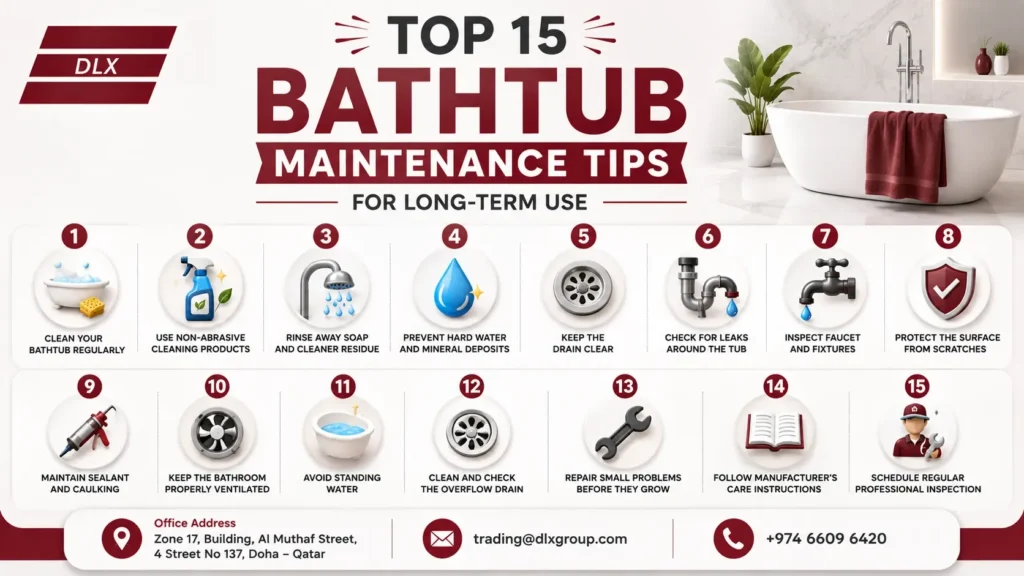
In this guide, you will learn 15 practical bathtub maintenance tips, including how to clean the tub, prevent mineral deposits, protect the surface, maintain drains and faucets, control moisture, and know when professional help is needed. For homeowners and property managers, these habits can support better long-term bathroom performance and help protect your plumbing investment.
Why Is Regular Bathtub Maintenance Important for Long-Term Use?
Regular bathtub maintenance helps keep the fixture clean, functional, and protected from avoidable damage. It can reduce problems such as stains, clogged drains, leaking fixtures, damaged sealant, and moisture-related deterioration.
A bathtub is exposed to water, soap, cleaning chemicals, minerals, and frequent use. Without routine care, these factors can affect both the bathtub surface and connected plumbing components.
Good maintenance can help you:
- Keep the bathtub looking clean and presentable
- Reduce soap scum and mineral buildup
- Protect the bathtub surface
- Keep drains flowing properly
- Detect leaks earlier
- Reduce unnecessary repair costs
- Extend the useful life of bathroom fixtures
How Can You Keep a Bathtub Clean and in Good Condition?
The best way to maintain a bathtub is to clean it regularly, protect its surface, keep drainage clear, inspect plumbing fixtures, and address small problems before they become major ones. A simple routine is usually more effective than waiting for visible damage.
1. Clean Your Bathtub Regularly
Regular cleaning prevents soap residue, body oils, dirt, and other buildup from becoming difficult to remove. A quick cleaning after frequent use can reduce the amount of deep cleaning needed later.
Use a suitable bathroom cleaner and a soft cloth or sponge. Pay attention to corners, edges, the area around the drain, and places where water tends to collect.
For busy homes, cleaning the bathtub at least once a week is a practical starting point. More frequent cleaning may be useful when the bathtub receives heavy daily use.
2. Use Non-Abrasive Cleaning Products
Non-abrasive cleaners help protect the bathtub’s finish from unnecessary scratches and surface wear. Harsh products or rough scrubbing materials can damage some bathtub surfaces over time.
Before using a cleaner, check whether it is suitable for your bathtub material. Avoid automatically using strong chemicals simply because a stain looks difficult.
Choose cleaning tools that are gentle enough for the surface while still removing normal bathroom buildup.
3. Rinse Away Soap and Cleaner Residue
Rinsing the bathtub after cleaning helps remove leftover product and loosened dirt. If cleaner or soap residue remains on the surface, it can contribute to dullness and buildup.
After washing the tub, rinse the walls and floor with clean water. Then remove excess water with a soft cloth if practical.
This small step can help keep the bathtub surface cleaner between deeper cleaning sessions.
4. Prevent Hard Water and Mineral Deposits
Hard water can leave mineral deposits around the bathtub, faucet, drain, and other wet surfaces. These deposits may appear as white, cloudy, or rough patches.
Deal with mineral buildup early rather than allowing thick deposits to develop. Use a cleaner appropriate for your bathtub material and follow its instructions.
Regularly wiping wet surfaces can also reduce the amount of mineral residue left behind after water evaporates.
5. Keep the Bathtub Drain Clear
A clear drain is essential for proper bathtub performance. Hair, soap residue, and debris can gradually restrict water flow and eventually contribute to a clogged drain.
Remove visible debris around the drain regularly. If drainage becomes noticeably slower, investigate the problem rather than continuing to use the tub normally.
Avoid forcing unsuitable objects into the drain because they may damage plumbing components or push the blockage deeper into the system.
6. Check for Leaks Around the Tub
Checking for leaks can help you identify plumbing problems before they cause more serious water damage. Look around the faucet, drain, overflow area, connections, and bathtub edges.
Watch for unexplained water pooling, damp areas, staining, or persistent moisture outside the tub.
If you notice a suspected plumbing leak that cannot be safely identified or repaired, contact a qualified professional. Early attention is usually better than waiting for visible damage to spread.
7. Inspect the Faucet and Shower Fixtures
Faucets and shower fixtures are used every time the bathtub is operated, so they deserve regular attention. Check for dripping, loose connections, unusual water flow, or visible corrosion.
A dripping faucet may indicate a worn component or another plumbing issue. Loose fittings can also become a source of leaks.
Keeping these fixtures in good condition supports both water control and the overall performance of the bathtub area.
8. Protect the Bathtub Surface From Scratches
Protecting the surface helps preserve the bathtub’s appearance and finish. Avoid dragging heavy containers, sharp objects, metal tools, or abrasive accessories across the tub.
Use suitable bath mats and storage accessories where appropriate, but make sure they do not trap moisture against the surface for long periods.
If the bathtub develops a deep scratch, crack, chip, or other visible damage, assess it early. Small surface problems can become more difficult to manage if they are ignored.
9. Maintain the Bathtub Sealant and Caulking
Caulking around the bathtub helps prevent water from entering gaps between the tub and surrounding surfaces. Damaged or deteriorated sealant can allow moisture to reach areas that are difficult to dry.
Inspect the caulking periodically for cracking, gaps, peeling, discoloration, or separation.
If the seal has clearly failed, remove and replace it using a suitable bathroom-grade product. The surface should be properly cleaned and prepared before new sealant is applied.
10. Keep the Bathroom Properly Ventilated
Good ventilation helps control moisture around the bathtub. Excess humidity can encourage mold growth and contribute to deterioration of sealants and surrounding materials.
Use an exhaust fan during and after bathing when available. Opening a window can also improve airflow when practical.
Keeping the bathroom drier is not only useful for the bathtub. It can also help protect nearby walls, ceilings, cabinets, and other plumbing-related areas.
11. Avoid Standing Water in the Bathtub
Standing water should not remain in the bathtub longer than necessary. Persistent water can contribute to surface deposits, soap buildup, unpleasant odors, and moisture problems.
After bathing, make sure water drains properly. If water remains because of slow drainage, check the drain rather than repeatedly ignoring the problem.
A properly draining bathtub is easier to clean and less likely to develop avoidable buildup.
12. Clean and Check the Overflow Drain
The overflow drain is an important part of the bathtub drainage system and should not be overlooked during cleaning.
Check the overflow cover for dirt, soap residue, and visible buildup. Keep the surrounding area clean and inspect it for signs of moisture or damage.
Because the overflow connects to the bathtub’s drainage system, unusual leakage or persistent moisture around this area may require professional inspection.
13. Repair Small Problems Before They Grow
Small bathtub problems are often easier to address when they are first noticed. A slow drain, dripping faucet, damaged caulking, loose fitting, or small surface defect should not automatically be treated as harmless.
Create a simple maintenance habit: identify the problem, determine whether it is a basic maintenance task, and arrange professional service when the issue involves plumbing or structural damage.
This approach can help reduce the chance of minor problems developing into larger repairs.
14. Follow the Manufacturer’s Care Instructions
Every bathtub may have specific cleaning and maintenance requirements depending on its material, finish, and construction. Manufacturer instructions should therefore guide your choice of cleaners, tools, and maintenance methods.
Before trying a new chemical, abrasive product, or repair method, check the manufacturer’s recommendations.
Following the correct care instructions can help protect the warranty where applicable and reduce the risk of accidental surface damage.
15. Schedule Regular Professional Inspection
Professional inspection can help identify plumbing or fixture problems that are not always obvious during normal cleaning. This is especially useful for older bathrooms, heavily used properties, and bathtubs showing repeated drainage or leakage problems.
A qualified plumbing professional can check relevant connections, drainage, fixtures, and other components based on the condition of the installation.
Routine professional attention does not replace everyday cleaning. Instead, it complements basic maintenance by addressing issues that require specialist knowledge or tools.
Which Bathtub Maintenance Problems Should You Fix Early?
You should investigate bathtub problems early when you notice leaks, slow drainage, damaged caulking, persistent stains, cracks, unusual odors, dripping fixtures, or water remaining after drainage.
A useful rule is simple:
- Clean normal dirt and residue.
- Inspect anything unusual.
- Repair minor problems where appropriate.
- Call a professional when plumbing or structural work is involved.
- Replace severely damaged components when repair is no longer practical.
This approach helps prevent routine maintenance from turning into an unexpected major repair.
When Should You Repair or Replace a Bathtub?
A bathtub may need repair when the problem is limited to a serviceable fixture, drain, seal, fitting, or minor surface issue. Replacement becomes more reasonable when the bathtub has serious structural damage, repeated failures, extensive deterioration, or repair costs that no longer make practical sense.
The decision should consider the bathtub’s condition, age, frequency of use, repair requirements, and the condition of related plumbing components.
For replacement or renovation projects, choosing compatible and durable plumbing products is equally important.
How Can the Right Plumbing Supplies Make Bathtub Maintenance Easier?
The right plumbing supplies can make routine bathroom maintenance, repairs, and fixture upgrades more reliable. Products should be selected according to the bathtub system, installation requirements, material compatibility, and intended use.
For homeowners, contractors, property managers, and maintenance teams, working with a dependable plumbing supplier can simplify product selection and help avoid unsuitable components.
Deluxe Plumbing Supplies provides a commercial point of reference for customers looking for quality plumbing products and bathroom-related solutions. When selecting products, focus on compatibility, durability, installation requirements, and long-term performance rather than choosing only by appearance or initial cost.
You can naturally connect this section to your internal bathroom plumbing supplies, bathtub fixtures, and plumbing maintenance products pages.
What Are the Benefits of Maintaining a Bathtub for the Long Term?
Long-term bathtub maintenance helps protect cleanliness, appearance, drainage, fixtures, and surrounding bathroom surfaces. It can also help identify problems before they become more expensive or disruptive.
The biggest benefits include:
- Better bathtub cleanliness
- Fewer avoidable plumbing problems
- Reduced surface wear
- Better drainage performance
- Earlier leak detection
- Longer fixture service life
- Lower risk of major repair costs
- A cleaner and more comfortable bathroom
A bathtub does not need complicated care to remain useful for many years. Consistent cleaning, careful product use, drain maintenance, fixture checks, moisture control, and timely repairs can make a significant difference.
For bathroom maintenance and renovation projects, choosing suitable plumbing products from a reliable supplier can further support long-term performance. With the right care and the right components, you can protect your bathtub investment and keep your bathroom working well for years to come.
Frequently Asked Questions
How often should you clean a bathtub?
A bathtub should generally be cleaned at least once a week, with quick rinsing or wiping after frequent use. Regular cleaning helps prevent soap scum, dirt, mineral deposits, and residue from becoming difficult to remove. Homes with heavy bathtub use may benefit from more frequent cleaning.
What is the best way to clean a bathtub?
The best approach is to use a cleaner that is suitable for the bathtub material and a soft cloth or non-abrasive sponge. Clean the surface, corners, drain area, and edges regularly, then rinse away cleaner residue. Avoid rough tools or unsuitable chemicals that could damage the finish.
How can I prevent bathtub stains and mineral buildup?
Regularly wiping away water and rinsing the bathtub can help reduce mineral deposits and stains. Hard water can leave visible residue around the tub, faucet, and drain. Using a suitable cleaner and addressing buildup early can make the surface easier to maintain over time.
How do I keep my bathtub drain from getting clogged?
Keep hair, soap residue, and debris from entering the drain whenever possible. Remove visible debris regularly and pay attention to slower-than-normal drainage. If the drain continues to slow down or becomes blocked, investigate the cause rather than repeatedly using the bathtub without addressing the problem.
How often should bathtub caulking be checked?
Bathtub caulking should be inspected periodically for cracks, gaps, peeling, discoloration, or separation. Damaged sealant can allow moisture into surrounding areas. If the caulking has deteriorated, it should be properly removed and replaced with a suitable bathroom-grade sealant to help maintain a watertight seal.
How can I prevent scratches on my bathtub?
Avoid dragging heavy containers, sharp objects, metal tools, or abrasive accessories across the bathtub surface. Use soft cleaning materials and products appropriate for the tub’s finish. Protecting the surface from unnecessary impact and abrasion helps preserve its appearance and reduces premature surface wear.