
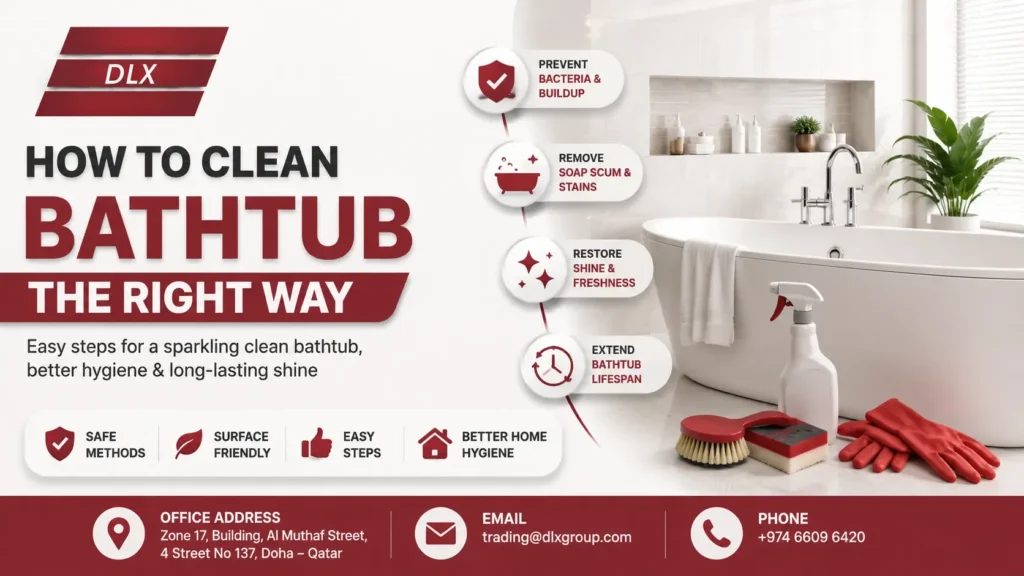
A clean bathtub should look fresh, feel smooth, and be free from soap scum, grime, stains, and unpleasant buildup. The right method is simple: remove loose dirt, use a suitable cleaner, scrub gently, rinse thoroughly, and dry the surface.
This guide explains what you need, how to clean a bathtub step by step, how to handle common stains, and how to care for different bathtub materials. It also covers cleaning mistakes, maintenance, and when your bathtub plumbing fixtures may need attention.
What Is the Right Way to Clean a Bathtub?
The right way to clean a bathtub is to rinse away loose dirt, apply a surface-safe cleaner, scrub the tub and fixtures, rinse everything well, and dry the surfaces. Regular cleaning prevents soap scum, mineral deposits, and grime from becoming harder to remove.
Start by clearing the bathtub of bottles, mats, toys, and other items. Rinse the entire surface with warm water so loose hair, dust, and residue are easier to remove. Next, apply a cleaner that is suitable for your bathtub material. Allow it to sit for the recommended time, then scrub gently with a non-abrasive sponge or soft brush. Pay extra attention to corners, the drain area, and places where soap collects.
Rinse the bathtub completely. Any remaining cleaner can leave a film or dull the surface. Finish by wiping the tub dry with a clean microfiber cloth.
What Do You Need to Clean a Bathtub Properly?
You need a few basic cleaning supplies to clean a bathtub properly, including a suitable bathroom cleaner, a soft sponge or brush, warm water, microfiber cloths, and protective gloves. The exact products depend on the bathtub’s surface.
A simple bathtub cleaning kit can include:
- Surface-safe bathroom cleaner
- Soft sponge or non-abrasive scrub pad
- Soft cleaning brush
- Microfiber cloths
- Rubber cleaning gloves
- Bucket or container
- Old toothbrush for small gaps
- Clean water for rinsing
Avoid choosing a cleaner only because it is strong. A product that works well on one surface may damage another. Always follow the product label and the bathtub manufacturer’s care instructions when available. Quality bathroom supplies can also make routine maintenance easier. When choosing new fixtures or accessories, consider how easy they are to clean, how accessible the components are, and whether the materials suit your bathroom.
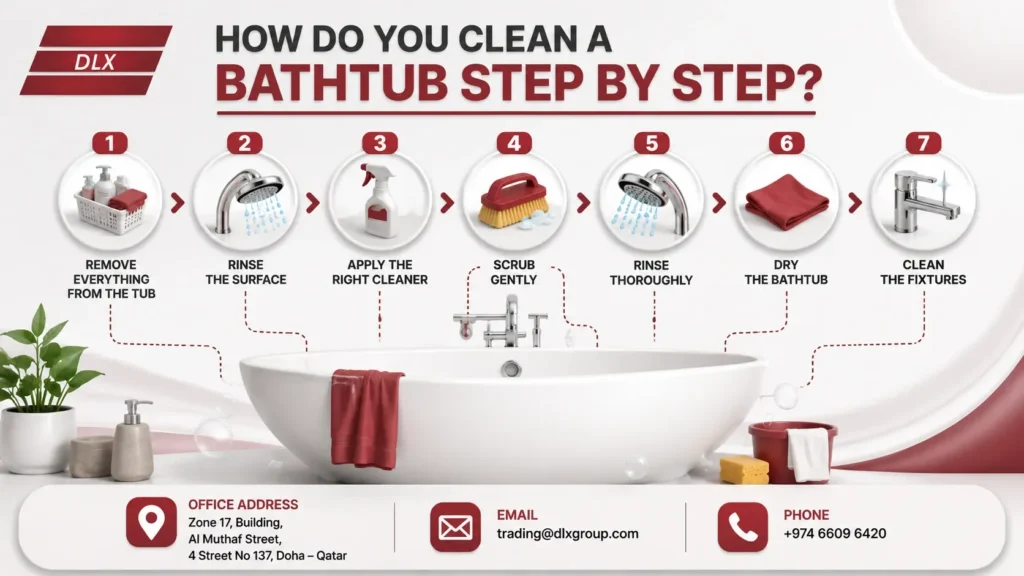
How Do You Clean a Bathtub Step by Step?
Cleaning a bathtub properly takes several simple steps, but the order matters because each stage prepares the surface for the next one.
1. Remove Everything From the Tub
Take out bottles, soap dishes, bath mats, and other items. Clean these separately so dirt is not transferred back onto the bathtub.
2. Rinse the Surface
Use warm water to rinse the tub from top to bottom. This removes loose dirt and softens some soap residue.
3. Apply the Right Cleaner
Spread a suitable bathtub cleaner across the surface. Follow the label instructions for how long it should remain on the tub. Do not mix cleaning chemicals. Some combinations can create dangerous fumes or damage the surface.
4. Scrub Gently
Use a soft sponge or suitable brush. Work in small sections, paying attention to the edges, corners, drain, and areas around the tap. For stubborn buildup, let the appropriate cleaner work for its recommended time instead of using excessive force.
5. Rinse Thoroughly
Rinse the bathtub until no visible cleaner or residue remains. Check corners and seams because cleaning products can collect there.
6. Dry the Bathtub
Use a clean microfiber cloth to remove remaining water. Drying reduces moisture and helps prevent fresh mineral spots and residue.
7. Clean the Fixtures
Wipe the tap, handles, shower fittings, and overflow area with a suitable cleaner. These components collect water marks and soap residue just like the tub itself.
How Do You Remove Soap Scum, Grime, and Hard-Water Stains?
Soap scum, general grime, and hard-water deposits need slightly different cleaning approaches. Identifying the buildup first helps you choose an effective method without using unnecessarily harsh products.
| Problem | What to Focus On | Best Approach |
| Soap scum | Sticky white or dull film | Surface-safe cleaner + gentle scrubbing |
| General grime | Dirt and residue | Warm rinse + bathroom cleaner |
| Hard-water deposits | Mineral marks | Suitable mineral-deposit treatment |
| Mold or mildew | Dark growth in damp areas | Appropriate bathroom treatment and moisture control |
| Hair and debris | Drain area | Remove manually and clean the drain surroundings |
For stubborn marks, do not immediately switch to a more abrasive pad. Excessive scrubbing can scratch or dull some bathtub surfaces. If the buildup keeps returning, check the surrounding fixtures and drainage. Persistent water problems may require attention beyond ordinary cleaning.
How Should You Clean Different Bathtub Materials?
Different bathtub materials require different levels of care, so the safest approach is to use products and tools approved for the specific surface.
Acrylic and Fiberglass Bathtubs
Acrylic and fiberglass surfaces can scratch or lose their finish when cleaned with harsh abrasives. Use a suitable non-abrasive cleaner and a soft sponge. Avoid aggressive scrubbing, especially when removing marks near corners and fittings.
Porcelain or Enamel Bathtubs
Porcelain and enamel surfaces can be durable, but damaged or worn areas may need extra care. Use an appropriate cleaner and avoid tools that could scratch the finish. If the surface has chips, cracks, or exposed areas, cleaning alone will not solve the underlying problem.
Natural Stone Around the Bathtub
If stone is used around the bathtub, follow the care requirements for that material. A cleaner suitable for the bathtub may not be suitable for every surrounding surface. Always separate the needs of the bathtub from those of nearby tile, stone, metal, glass, and plumbing components.
What Bathtub Cleaning Mistakes Should You Avoid?
The most common bathtub cleaning mistakes are using the wrong cleaner, scrubbing too aggressively, mixing chemicals, and failing to rinse or dry the surface properly.
Avoid these habits:
- Do not mix different cleaning chemicals.
- Do not use abrasive tools on surfaces that can scratch.
- Do not leave cleaner on the surface longer than directed.
- Do not ignore corners, drains, and overflow areas.
- Do not clean fixtures with products that may damage their finish.
- Do not leave heavy moisture sitting on the surface after cleaning.
The goal is not simply to make the bathtub look clean. It is to clean it without damaging the surface or plumbing fixtures.
How Often Should You Clean a Bathtub?
A bathtub should receive light cleaning regularly and a deeper clean as needed. How often you need to clean it depends on how frequently the tub is used, how much soap residue builds up, and the condition of your water.
A practical routine is:
- After use: Rinse away heavy soap residue and remove visible debris.
- Weekly: Clean the complete bathtub surface and fixtures.
- As needed: Treat hard-water marks, stubborn soap scum, or mildew.
- Periodically: Inspect the drain, overflow, taps, seals, and other visible plumbing components.
Regular maintenance is easier than waiting until thick buildup develops.
When Should You Replace or Upgrade Bathtub Plumbing Fixtures?
You should consider replacing or upgrading bathtub plumbing fixtures when they leak, become difficult to operate, show significant corrosion or damage, or no longer perform properly. Cleaning cannot fix every bathroom problem. A dripping tap, damaged drain fitting, loose component, or persistent drainage issue may indicate that a plumbing fixture needs repair or replacement.
When selecting replacement components, consider:
- Correct size and connection type
- Material and finish
- Compatibility with the existing plumbing
- Ease of maintenance
- Durability
- Availability of replacement parts
If you are already upgrading a bathroom, choosing quality plumbing supplies can help create a system that is easier to maintain over time. For related information, consider linking this section to your internal pages about bathroom plumbing fixtures, bathtub and shower supplies, and bathroom maintenance essentials.
How Can Better Bathroom Supplies Make Cleaning Easier?
Better bathroom supplies can make cleaning easier when they are durable, compatible with the installation, easy to access, and designed for regular maintenance. A bathtub is not an isolated product. It works with taps, drains, shower fittings, overflow components, seals, and other plumbing parts. Each component affects how easy the bathroom is to use and maintain.
For homeowners, contractors, and property managers, choosing suitable plumbing supplies can reduce maintenance problems and support longer-lasting bathroom installations. Deluxe Plumbing Supplies can be positioned here as a practical source for bathroom and plumbing products, while the article remains focused on helping readers solve their cleaning problem first.
How Can You Keep a Clean Bathtub Clean for Longer?
The easiest way to keep a bathtub clean is to remove soap residue regularly, keep the surface dry, and avoid allowing stains or mineral deposits to build up.
Use these simple habits:
- Rinse the tub after bathing.
- Remove visible hair and debris.
- Wipe excess water from the surface.
- Keep bottles and accessories clean.
- Clean the drain area regularly.
- Treat stains before they become heavy buildup.
- Inspect taps and fittings for leaks.
Small maintenance habits reduce the amount of deep cleaning required later.
Frequently Asked Questions
Can I clean a bathtub every day?
Yes. Daily rinsing and light wiping are generally useful for preventing soap residue and water spots. A full cleaning does not need to happen every day unless the bathtub receives heavy use. Regular light maintenance can make the weekly cleaning faster and reduce stubborn buildup.
What is the best way to remove bathtub soap scum?
Use a cleaner that is suitable for your bathtub material and allow it to work according to the product instructions. Then scrub gently with a non-abrasive sponge and rinse thoroughly. Avoid excessive force because some bathtub finishes can scratch or become dull.
Can strong cleaners damage a bathtub?
Yes. Some strong or abrasive cleaners can damage certain bathtub finishes. Always use a product appropriate for the material and follow its instructions. Never mix cleaning chemicals, and avoid assuming that a product suitable for one bathtub material is automatically safe for another.
Is cleaning enough if my bathtub keeps getting dirty?
Not always. Repeated buildup can sometimes be linked to moisture, drainage, leaking fixtures, damaged seals, or other bathroom conditions. If the same problem returns quickly after proper cleaning, inspect the surrounding plumbing and consider whether a repair or replacement is needed.
Should I clean the bathtub drain too?
Yes. The drain area should be part of regular bathtub maintenance. Remove visible hair and debris, clean the surrounding surface, and watch for slow drainage. If the drain repeatedly becomes slow or blocked despite basic maintenance, a plumbing issue may require professional attention.
Why Choose Deluxe Plumbing Supplies?
A clean bathtub is easier to maintain when the surrounding plumbing components are reliable, compatible, and suited to the bathroom environment. Deluxe Plumbing Supplies can support bathroom projects with quality plumbing products for installation, replacement, and maintenance needs.
When choosing bathroom supplies, consider:
- Quality Products – Select components designed for reliable everyday use.
- Compatible Solutions – Match products to your existing plumbing system.
- Bathroom Applications – Choose supplies suited to the fixture and installation.
- Maintenance-Friendly Design – Prioritize components that are practical to inspect and maintain.
- Project Support – Consider product availability and technical guidance when planning a bathroom upgrade.
For readers who are cleaning an existing bathtub, the priority is simple maintenance. For those replacing worn fixtures or planning a bathroom project, the same process can also be a useful opportunity to review the condition of the plumbing system.
Final Thoughts
Knowing how to clean a bathtub the right way helps protect the surface, reduce stubborn buildup, and keep the bathroom looking fresh. The basic process is simple: rinse, apply a suitable cleaner, scrub gently, rinse again, and dry.
Regular cleaning should also include visible plumbing fixtures, the drain area, and other components around the bathtub. When cleaning no longer solves a problem, check whether the underlying issue is a damaged or aging plumbing fixture. If you are upgrading or replacing bathroom components, explore the relevant bathroom plumbing fixtures and plumbing supplies available from Deluxe Plumbing Supplies.