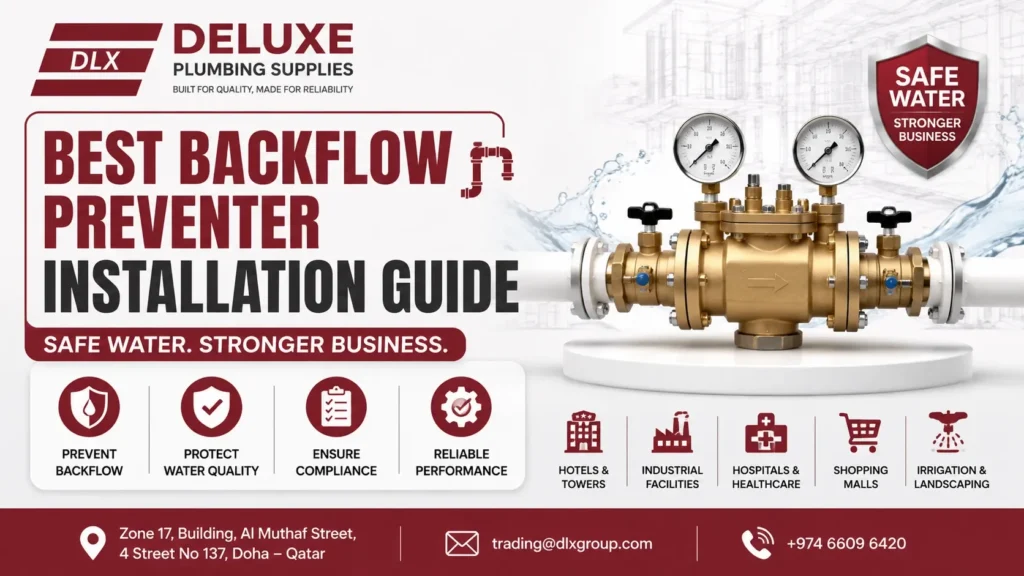
Backflow preventer installation is the process of fitting a protective plumbing device that helps stop unwanted water flow from moving back into a clean water supply. Correct installation supports water quality, system safety, and reliable performance.
For commercial buildings, the right device and installation method depend on the plumbing system, backflow risk, application, and applicable requirements. Common options include Double Check Valve Assemblies (DCVA), Reduced Pressure Zone (RPZ) valves, and Pressure Vacuum Breakers (PVB). Deluxe Plumbing Supplies materials position these products for commercial buildings, hospitals, industrial facilities, hotels, shopping malls, irrigation, and landscaping systems.
What Is a Backflow Preventer and Why Is Installation Important?
A backflow preventer is a plumbing device designed to help prevent contaminated or unwanted water from flowing backward into a potable water system. Correct installation is important because the device must work with the direction, pressure, and application of the connected plumbing system.
A poorly selected or incorrectly installed device may not provide the protection the system needs. Installation should therefore begin with risk assessment and product selection, followed by careful preparation, connection, inspection, and testing.
For commercial projects, backflow prevention is especially important where water systems serve hotels, hospitals, factories, commercial towers, shopping malls, or irrigation networks. These applications are highlighted in Deluxe Plumbing Supplies’ commercial backflow materials.
What Types of Backflow Preventers Should You Install?
The best backflow preventer depends on the hazard, plumbing application, and required level of protection. The main product categories highlighted in the supplied materials are DCVA, RPZ, and PVB.
| Type | Typical application | Main protection focus |
| DCVA | Commercial and lower-hazard applications | Protection against backflow |
| RPZ | Higher-risk commercial systems | Higher contamination protection |
| PVB | Irrigation and outdoor systems | Protection against siphon-based backflow |
A DCVA, or Double Check Valve Assembly, is commonly associated with commercial buildings, fire sprinkler systems, and lower-hazard applications. An RPZ, or Reduced Pressure Zone valve, provides stronger protection for applications where contamination risk is higher. A PVB, or Pressure Vacuum Breaker, is associated with irrigation, landscaping, and outdoor water systems.
Choosing between these devices should not be based on price alone. The application and required protection level should come first.
How Do You Choose the Right Backflow Preventer?
The right backflow preventer is the device that matches the system’s hazard level, application, pressure conditions, connection requirements, and applicable installation rules.
Start by identifying what the water system supplies. A commercial building may need a different solution from an irrigation network. Hospitals, laboratories, industrial facilities, and chemical or food-processing environments can require stronger protection than a lower-risk application.
Consider these factors:
- Application: Identify whether the device serves a building, irrigation system, fire protection system, or another water application.
- Backflow risk: Determine the potential consequence of contaminated water entering the clean supply.
- Device type: Compare DCVA, RPZ, and PVB based on the required protection.
- Connection: Confirm pipe size, connection style, and product compatibility.
- Installation environment: Check whether the proposed location provides suitable access and protection.
- Compliance: Confirm applicable local authority, project, and manufacturer requirements.
Deluxe’s commercial materials emphasize correct sizing and selection, durable performance, and expert guidance as important buying considerations.
What Should You Check Before Installing a Backflow Preventer?
Before installation, check the selected product, pipework, flow direction, connections, access, and installation requirements.
First, confirm that the backflow preventer is suitable for the intended application. Then inspect the device and connected pipework for visible damage, debris, or unsuitable fittings.
A practical pre-installation checklist includes:
- Confirm the correct device type and size.
- Check the manufacturer’s installation instructions.
- Verify the flow-direction arrow.
- Inspect pipework and connection points.
- Confirm compatible fittings and seals.
- Make sure the installation location allows inspection and servicing.
- Isolate the water supply before beginning work.
- Remove debris from the pipework before final connection.
- Confirm that required testing can be performed after installation.
Do not assume that every backflow preventer installs in the same way. Manufacturer instructions and project requirements take priority over a general guide.
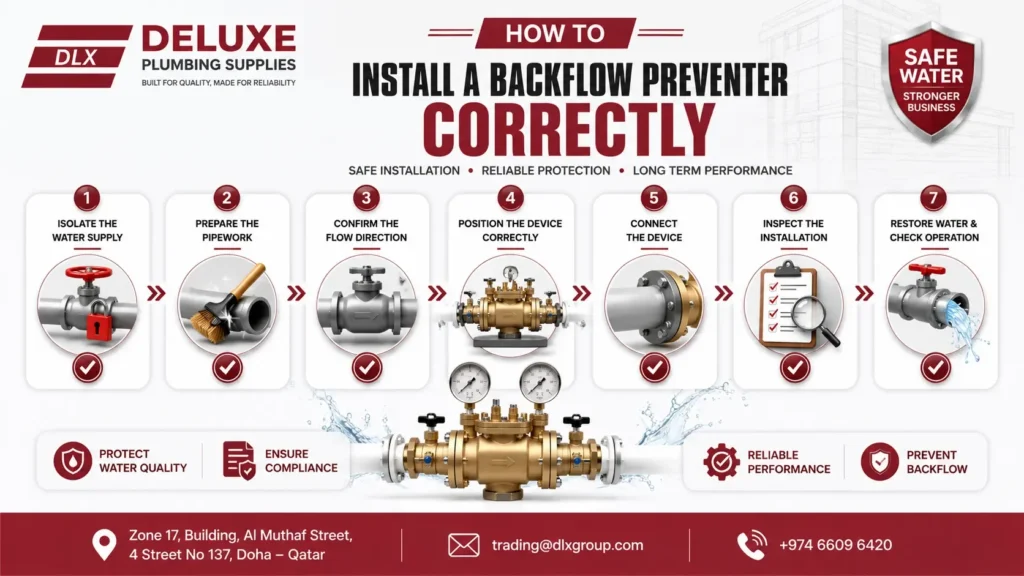
How Do You Install a Backflow Preventer Correctly?
A backflow preventer should be installed by preparing the pipework, confirming flow direction, making secure connections, and completing inspection and testing according to the product instructions.
1. Isolate the Water Supply
Shut off and isolate the relevant water supply before removing or installing plumbing components. Make sure the system is safe to work on, and that pressure has been relieved where required.
2. Prepare the Pipework
Inspect the pipe ends and connection points. Remove dirt, debris, damaged material, or other conditions that could affect the connection.
Clean pipework helps reduce installation problems and supports reliable valve operation.
3. Confirm the Flow Direction
Check the arrow marked on the backflow preventer body. The arrow should match the intended direction of water flow through the system.
This is a simple step, but it is essential. Installing a device against its intended flow direction can prevent it from operating as designed.
4. Position the Device Correctly
Place the backflow preventer in the orientation and location specified by the manufacturer. The installation should provide suitable access for inspection, testing, maintenance, and future replacement.
Do not select a location simply because it is convenient to connect. Service access is part of good installation planning.
5. Connect the Device
Connect the device using the correct fittings and connection method for the product. Avoid forcing, misaligning, or stressing the valve body during installation.
Follow the manufacturer’s specifications for connection details, sealing materials, tightening, and pipe support. Exact torque values and installation clearances should not be guessed.
6. Inspect the Completed Installation
Before restoring full service, inspect the connections, device orientation, pipe support, valves, and surrounding area.
Check that the installation is secure and that there are no obvious leaks or mechanical stresses.
7. Restore Water and Check Operation
Restore the water supply gradually. Observe the installation for leakage or abnormal conditions.
The system should then be tested according to the requirements for the specific backflow preventer and installation. Testing procedures vary by device and jurisdiction, so use the applicable manufacturer’s instructions and qualified testing requirements.
Where Should a Backflow Preventer Be Installed?
A backflow preventer should be installed in a location that is suitable for the device, accessible for inspection and maintenance, and appropriate for the connected water system.
The exact location depends on the system design and applicable requirements. Consider:
- Accessibility for servicing
- Protection from damage
- Suitable pipe support
- Correct flow direction
- Environmental conditions
- Drainage requirements where applicable
- Space for testing and maintenance
For commercial facilities, installation planning should also consider how the device will be accessed during routine maintenance without creating unnecessary disruption.
How Do DCVA, RPZ, and PVB Installation Requirements Differ?
DCVA, RPZ, and PVB devices differ because they provide different forms and levels of backflow protection.
A DCVA is suited to applications identified as lower hazard in the supplied Deluxe material. An RPZ is intended for applications requiring stronger contamination protection. A PVB is associated with irrigation and outdoor systems and protects against siphon-based backflow.
The installation should therefore start with the application rather than the product name. Select the required protection first, then confirm the specific installation requirements for that device.
What Installation Mistakes Can Reduce Backflow Protection?
Common installation mistakes include choosing the wrong device, reversing the flow direction, ignoring manufacturer instructions, creating inaccessible installations, and failing to test the completed system.
Avoid these problems:
- Installing a device without confirming the application.
- Ignoring the flow-direction arrow.
- Using incompatible fittings.
- Leaving debris inside the pipework.
- Installing the device where maintenance is difficult.
- Guessing connection or torque requirements.
- Failing to inspect for leaks.
- Treating testing as optional.
- Using one installation method for every backflow device.
Good installation is not only about connecting the valve. It is about creating a complete, serviceable protection point within the water system.
How Do You Test and Maintain a Backflow Preventer?
Backflow preventer testing and maintenance should follow the manufacturer’s instructions, device requirements, and applicable local rules.
Regular inspection can help identify leaks, damaged components, corrosion, unusual operating conditions, or other problems before they affect system performance.
Commercial facilities should maintain records of inspections and required testing where applicable. A planned maintenance approach is especially useful for hotels, hospitals, industrial facilities, shopping malls, and other buildings where uninterrupted water service is important.
How Can Businesses Choose Reliable Backflow Preventers?
Businesses should choose backflow preventers by matching protection level, application, product quality, installation requirements, and long-term service needs.
Deluxe Plumbing Supplies’ commercial materials emphasize safe water, contamination protection, compliance, reliable performance, and commercial suitability. The supplied buying-guide material also highlights product selection support and a range of commercial backflow preventers.
For a commercial project, ask:
- What hazard level must the system address?
- Which backflow device is appropriate?
- What size and connection type are required?
- Can the device be inspected and maintained easily?
- What testing is required?
- Does the product meet the project’s specifications?
- Is technical guidance available before purchase?
This approach helps buyers avoid selecting a device based only on initial cost.
How Can You Make the Final Installation Decision?
The best backflow preventer installation combines the correct device, correct application, correct installation method, accessible location, and required testing.
For commercial projects, start by identifying the water-system risk and application. Then compare DCVA, RPZ, and PVB options, confirm the product specifications, prepare the pipework, install according to the manufacturer’s instructions, and complete the required inspection and testing.
If you are sourcing commercial backflow protection, Deluxe Plumbing Supplies can be positioned as a practical supply partner for businesses seeking reliable plumbing products for commercial applications. The supplied brand materials specifically present backflow preventers for hotels, hospitals, industrial facilities, shopping malls, irrigation, landscaping, and other business environments.
Backflow Preventer Installation Checklist
- Confirm the application and backflow risk.
- Select the appropriate device type.
- Verify product size and specifications.
- Check the manufacturer’s installation instructions.
- Confirm flow direction.
- Prepare and clean the pipework.
- Install with suitable connections and support.
- Provide access for inspection and maintenance.
- Check for leaks after restoring service.
- Complete required testing.
- Maintain inspection and service records.
Frequently Asked Questions
What is the best backflow preventer?
The best backflow preventer depends on the application and required protection level. DCVA, RPZ, and PVB devices serve different purposes. DCVA is associated with lower-hazard applications, RPZ provides stronger contamination protection, and PVB is commonly associated with irrigation and outdoor systems.
Can I install any backflow preventer on any water line?
No. Backflow preventers should be selected according to the system application, hazard, pressure conditions, product specifications, and applicable requirements. A device designed for irrigation should not automatically be treated as suitable for every commercial plumbing system.
Why is the flow arrow important?
The flow arrow identifies the intended direction of water movement through the device. Confirming the arrow before connection helps prevent incorrect installation and supports the device’s intended operation.
Does every backflow preventer install the same way?
No. Installation requirements vary between DCVA, RPZ, PVB, and other devices. Always follow the specific manufacturer’s instructions for the selected product.
Where should a commercial backflow preventer be installed?
It should be installed in an appropriate, accessible location that supports inspection, maintenance, testing, and protection from damage. The exact location depends on the system design and applicable requirements.
Do backflow preventers require maintenance?
Yes. Inspection and required testing help confirm that the device continues to provide the intended protection. Maintenance frequency and testing requirements depend on the device, installation, and applicable rules.
Are RPZ valves suitable for high-risk applications?
RPZ valves are presented in the supplied Deluxe materials as providing maximum or stronger contamination protection and are associated with applications such as hospitals, laboratories, and chemical and food processing.
Are PVB devices used for irrigation?
PVB devices are identified in the supplied Deluxe material for irrigation systems, landscaping networks, and outdoor water systems. Their stated protection focus is siphon-based backflow.