Choosing the right toilet is an important part of any bathroom renovation or new construction project. Two of the most popular options available today are wall-mounted toilets and floor-mounted toilets. While both serve the same purpose, they differ significantly in design, installation, maintenance, cost, and overall appearance.
Homeowners often choose between these options based on bathroom size, budget, and design preferences. Understanding the strengths and weaknesses of each type can help you make a more informed decision. In this guide, Deluxe Plumbing Supplier compares wall-mounted and floor-mounted toilets to help you determine which option best suits your needs.
What Is the Difference Between a Wall-Mounted Toilet and a Floor-Mounted Toilet?
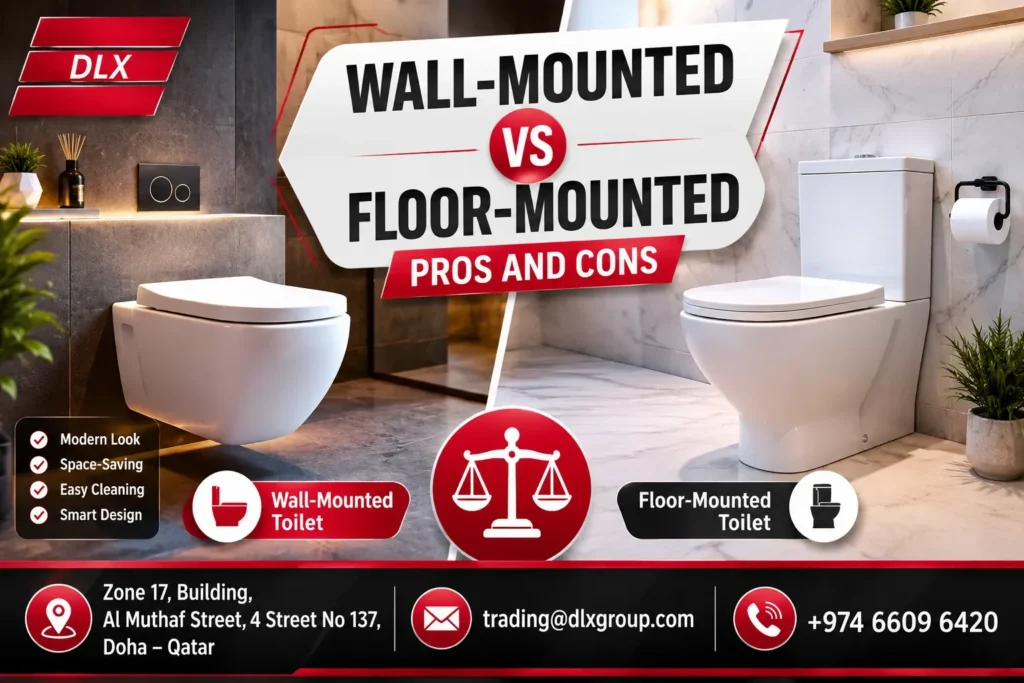
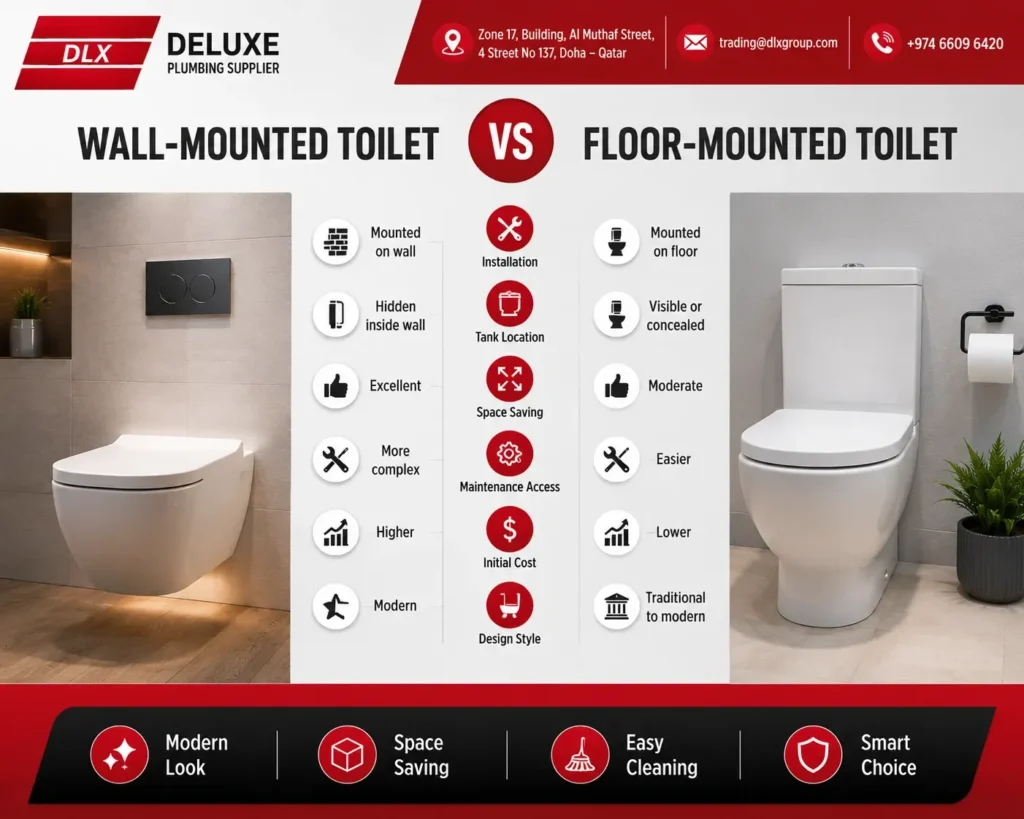
A wall-mounted toilet is attached directly to the wall with a concealed tank hidden inside the wall cavity. A floor-mounted toilet sits on the bathroom floor with either a visible or concealed tank. Wall-mounted toilets offer a modern appearance and save space, while floor-mounted toilets are generally easier to install and maintain.
| Feature | Wall-Mounted Toilet | Floor-Mounted Toilet |
| Installation | Mounted on wall | Mounted on floor |
| Tank Location | Hidden inside wall | Visible or concealed |
| Space Saving | Excellent | Moderate |
| Maintenance Access | More complex | Easier |
| Initial Cost | Higher | Lower |
| Design Style | Modern | Traditional to modern |
How Does a Wall-Mounted Toilet Work?
A wall-mounted toilet uses a steel carrier frame installed inside the wall. The toilet bowl is attached to this frame, while the flushing tank remains hidden behind the wall surface.
The support system is designed to handle significant weight and is securely anchored to the building structure. The result is a clean, minimalist appearance that is popular in contemporary bathrooms.
Benefits of the Concealed System
- Cleaner aesthetic
- More visible floor space
- Easier floor cleaning
- Adjustable installation height
How Does a Floor-Mounted Toilet Work?
A floor-mounted toilet is the traditional design found in most homes. The bowl is secured directly to the floor, and the tank may be attached to the bowl or installed separately.
Because the plumbing connections are easily accessible, installation and repairs are typically more straightforward than with wall-mounted models.
What Are the Pros and Cons of Wall-Mounted Toilets?
Pros
- Space-Saving Design: Wall-mounted toilets can make small bathrooms appear larger because the floor remains visible beneath the fixture.
- Modern Appearance: These toilets are often associated with luxury hotels, upscale residences, and modern bathroom designs.
- Easier Cleaning: Since the toilet does not touch the floor, cleaning underneath becomes much easier.
- Adjustable Height: Installers can customize the height for improved comfort and accessibility.
Cons
- Higher Installation Cost: The hidden carrier frame and in-wall tank increase both material and labor costs.
- More Complex Repairs: Accessing internal components may require removing sections of the wall or access panels.
- Structural Requirements: Some bathrooms may require wall reinforcement before installation.
What Are the Pros and Cons of Floor-Mounted Toilets?
Pros
- Lower Upfront Cost: Floor-mounted toilets are generally more affordable to purchase and install.
- Easy Maintenance: Most plumbing components are accessible without opening walls.
- Wide Product Selection: Homeowners can choose from a wide range of styles, sizes, and price points.
- Proven Reliability: This design has been used successfully for decades in residential and commercial applications.
Cons
- Takes Up More Visual Space: The exposed base and tank can make smaller bathrooms feel more crowded.
- More Cleaning Around the Base: Dust and dirt may accumulate around floor connections and hard-to-reach areas.
Which Toilet Type Saves More Space?
Wall-mounted toilets are the clear winner for compact bathrooms.
Because the tank is hidden inside the wall and the bowl projects less into the room, they can save several inches of valuable floor space. This makes them especially useful for:
- Powder rooms
- Apartment bathrooms
- Guest bathrooms
- Urban living spaces
For homeowners seeking space-saving bathroom solutions, wall-mounted models are often the preferred choice.
Which Toilet Is Easier to Install and Maintain?
Floor-mounted toilets are generally easier to install.
Floor-Mounted Installation Advantages
- Simpler plumbing connections
- Faster installation process
- Lower labor costs
- Easier future repairs
Wall-Mounted Installation Challenges
- Requires an in-wall carrier frame
- May need structural modifications
- Longer installation time
- More specialized labor
For maintenance, floor-mounted toilets also have the advantage because replacement parts and plumbing connections are easier to access.
Which Toilet Offers Better Durability and Stability?
Both toilet types are highly durable when installed correctly.
Modern wall-mounted toilets are engineered to support substantial weight through reinforced steel carrier systems. However, many homeowners still perceive floor-mounted models as more stable because they rest directly on the floor.
In practice, durability depends more on installation quality than on the toilet type itself.
How Do Wall-Mounted and Floor-Mounted Toilets Compare in Cost?
Cost is one of the biggest deciding factors.
| Expense Category | Wall-Mounted Toilet | Floor-Mounted Toilet |
| Product Cost | Higher | Lower |
| Installation Cost | Higher | Lower |
| Repair Cost | Moderate to High | Low to Moderate |
| Renovation Impact | Greater | Minimal |
While wall-mounted toilets require a larger initial investment, some homeowners feel the modern appearance and space savings justify the additional expense.
What Factors Should You Consider Before Choosing a Toilet?
Before making a purchase, consider:
- Bathroom size
- Renovation budget
- Design preferences
- Maintenance expectations
- Installation requirements
- Long-term ownership costs
If you are already planning a full bathroom remodel and exploring modern bathroom fixtures, a wall-mounted toilet may fit perfectly into your design vision.
If budget and simplicity are priorities, a floor-mounted model may be the better option.
Are Wall-Mounted Toilets Worth the Investment?
For many homeowners, the answer is yes.
Wall-mounted toilets offer:
- Contemporary style
- Improved cleaning access
- Better use of small spaces
- Customizable installation height
However, the higher installation cost means they are best suited for major renovations or new construction projects.
Can a Floor-Mounted Toilet Fit Modern Bathroom Designs?
Absolutely.
Many modern floor-mounted toilets feature sleek lines, concealed trapways, and minimalist styling. They can complement contemporary bathrooms while maintaining the installation and maintenance advantages of traditional models.
Frequently Asked Questions
How much weight can a wall-mounted toilet support?
Most professionally installed wall-mounted toilets can support several hundred pounds due to reinforced steel carrier systems.
Which toilet is easier to clean?
Wall-mounted toilets are typically easier to clean because there is no base touching the floor.
Which option is more affordable?
Floor-mounted toilets generally cost less to purchase, install, and repair.
Which toilet is better for small bathrooms?
Wall-mounted toilets usually provide better space efficiency in compact bathrooms.
Conclusion
When comparing wall-mounted toilets and floor-mounted toilets, there is no universal winner. The best choice depends on your bathroom layout, budget, and design goals.
Choose a wall-mounted toilet if you want a sleek modern appearance, easier floor cleaning, and maximum space efficiency. Choose a floor-mounted toilet if you prioritize affordability, simple installation, and easier maintenance.
At Deluxe Plumbing Supplier, we offer a wide range of high-quality toilet solutions to match every bathroom style and budget. Whether you’re planning a luxury renovation or a practical upgrade, selecting the right toilet can improve both comfort and functionality for years to come.