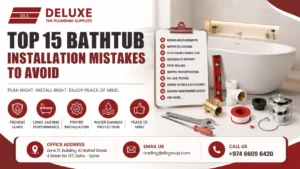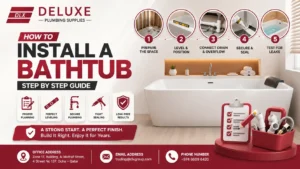
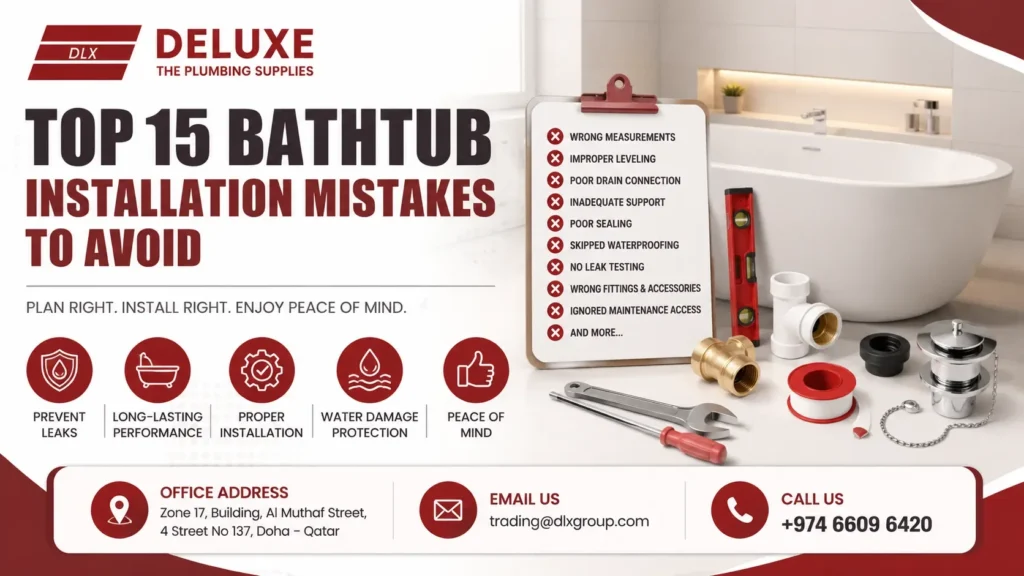
Installing a bathtub correctly is important for preventing leaks, drainage problems, movement, cracked finishes, and expensive bathroom repairs. A good installation depends on accurate measurements, proper support, correct plumbing connections, effective waterproofing, and thorough testing.
Many bathtub installation mistakes happen before the tub is even fixed in place. Choosing the wrong size, ignoring drain locations, using poor-quality fittings, or failing to plan maintenance access can create problems that are difficult to correct later. The 15 mistakes below cover the key areas homeowners, installers, and contractors should check before completing a bathtub installation.
Whether you are replacing an old tub or fitting a bathtub in a new bathroom, using the right plumbing supplies can make the installation more reliable. Deluxe Plumbing Supplies can help you choose suitable bathroom plumbing products and accessories for your project.
What are the most common bathtub installation mistakes?
The most common bathtub installation mistakes include incorrect measurements, poor support, improper leveling, wrong drain connections, inadequate sealing, skipped waterproofing, and failure to test for leaks. Avoiding these problems helps protect the bathroom structure and improves the bathtub’s long-term performance.
1. Why is measuring the bathtub space incorrectly a problem?
Incorrect measurements can leave too little room for the bathtub, plumbing connections, wall finishes, or access panels. Measure the length, width, height, and available clearance before purchasing or positioning the tub. Do not measure only the open floor area. Check doorways, wall thickness, pipe positions, and the manufacturer’s required installation clearances. A few centimeters of error can turn a straightforward installation into a costly adjustment.
2. Why is choosing the wrong bathtub a common mistake?
Choosing a bathtub based only on appearance can create installation and usability problems. The tub must suit the available space, plumbing layout, floor structure, and intended use.
Check the manufacturer’s specifications before buying. Consider the bathtub dimensions, drain position, mounting method, material, weight, and required accessories. Choosing the right product at the start is easier than modifying plumbing later.
3. Why should water supply and drain locations be checked first?
Existing water and waste connections must match the bathtub’s installation requirements. If the drain outlet does not align correctly, installers may need additional pipework, fittings, or structural changes. Before installation, identify the hot and cold water lines, waste outlet, overflow connection, and access points. Planning these connections early reduces unnecessary pipe bends and makes future servicing easier.
4. Why does a bathtub need proper structural support?
A bathtub needs stable support across the areas specified by its manufacturer. Without adequate support, the tub can move, flex, crack, or place stress on plumbing connections.
The correct support method depends on the bathtub design and material. Follow the manufacturer’s installation instructions and make sure the supporting surface is strong, stable, and properly prepared before the tub is fixed in place.
5. Why is skipping level alignment a serious mistake?
A bathtub that is not level can drain poorly and may leave standing water around the bathing surface. Uneven installation can also place stress on the tub and affect the final appearance.
Use a suitable spirit level during installation and check the tub in more than one direction. Do not assume the floor is level simply because it looks flat. Correct the support or base before completing the installation.
6. Why can an improper bathtub drain connection cause leaks?
An incorrectly fitted drain connection can leak underneath the bathtub, where water damage may remain hidden for a long time. Poor alignment can also put unnecessary strain on seals and pipe joints. Use compatible waste fittings and follow the manufacturer’s connection requirements. Make sure seals are correctly positioned and connections are aligned without forcing components into place.
7. Why should the waste and overflow system never be overlooked?
The waste and overflow assembly is an essential part of bathtub plumbing. If either connection is incorrectly installed, water can escape into areas that are difficult to inspect.
Check the waste outlet, overflow fitting, seals, and connected pipework before closing access areas. A complete bathtub installation should treat drainage and overflow protection as one connected system.
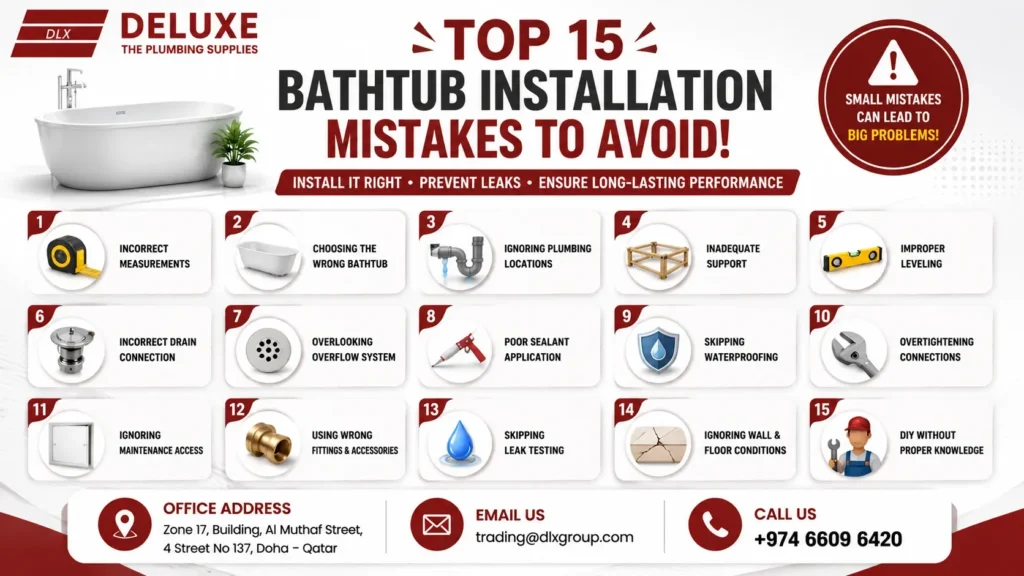
8. Why is using too little or too much sealant a mistake?
Incorrect sealant application can allow water to reach gaps around the bathtub. Too little sealant may leave openings, while excessive sealant can create an untidy finish and make future removal more difficult. Use a suitable bathroom-grade sealant and apply it according to the product instructions. The surface should be clean, dry, and properly prepared before sealing.
9. Why should bathtub waterproofing never be skipped?
Waterproofing protects the surrounding structure from moisture that may pass beyond the visible bathtub edge. Sealant alone should not be treated as a substitute for proper bathroom waterproofing.
Pay particular attention to wall and floor junctions, wet areas, penetrations, and other locations where water could enter the building structure. Good waterproofing provides an additional layer of protection behind the finished bathroom.
10. Why is overtightening plumbing connections dangerous?
Overtightening can damage threads, seals, fittings, or plastic components. It may also create stress that eventually causes a connection to leak. Connections should be tightened correctly for the fitting and manufacturer’s requirements rather than simply being tightened as much as possible. Using compatible, good-quality plumbing fittings also helps create dependable connections.
For larger bathroom projects, selecting reliable bathroom plumbing fittings before installation can reduce compatibility problems and unnecessary rework.
11. Why should maintenance access be planned during installation?
A bathtub may require future access to the waste, overflow, trap, valves, or nearby plumbing connections. If everything is permanently enclosed without an access solution, even a small repair can become disruptive. Plan access before installing the final panels or surrounding finishes. A practical access panel can save significant time and damage if maintenance is needed later.
12. Why should the wrong fittings and accessories be avoided?
Bathtub components must be compatible with the tub, pipework, connection sizes, and installation method. Using unsuitable fittings can cause poor alignment, weak connections, leaks, or premature component failure. Do not choose accessories based only on price. Check dimensions, materials, connection type, quality, and intended application. Reliable bathtub installation accessories can help create a more dependable installation.
13. Why is skipping leak testing one of the biggest mistakes?
Leak testing confirms that the bathtub, waste, overflow, and related plumbing connections are working correctly before the installation is closed up. Run the system and inspect accessible connections carefully. Check the waste outlet, overflow, seals, and surrounding areas for signs of water leakage. Testing before final finishing is much easier than discovering a leak after the bathroom is complete.
14. Why should wall and floor conditions be checked before installation?
A bathtub cannot be installed properly on a damaged, unstable, or unsuitable surface. Uneven floors, weak substrates, moisture damage, or poorly prepared walls can affect support and waterproofing. Inspect the installation area first. Repair structural or moisture problems before placing the tub. The finished result depends on the condition of the surfaces underneath and around the bathtub.
15. Why can DIY bathtub installation without proper knowledge become costly?
Bathtub installation involves several connected systems, including plumbing, drainage, sealing, waterproofing, support, and alignment. A mistake in one area can affect another and may remain hidden until water damage occurs.
DIY installation can work for experienced homeowners when the project is straightforward and local requirements allow it. However, complex plumbing changes, structural work, waterproofing, or difficult access are better handled by a qualified professional.
How can you avoid bathtub installation mistakes?
The best way to avoid bathtub installation mistakes is to plan the installation before buying components, follow the bathtub manufacturer’s instructions, use compatible plumbing fittings, provide proper support, waterproof the surrounding area, and test every connection before finishing the bathroom.
Use this simple checklist:
- Confirm bathtub dimensions and installation clearances.
- Check drain, waste, overflow, and water connections.
- Prepare the floor and surrounding walls.
- Provide the correct structural support.
- Level the bathtub carefully.
- Install compatible waste and overflow components.
- Apply suitable sealant correctly.
- Complete required waterproofing.
- Keep important plumbing connections accessible.
- Test for leaks before closing walls or panels.
If you are sourcing quality bathtubs and plumbing supplies, choosing a dependable supplier can also simplify product selection and reduce compatibility issues. Deluxe Plumbing Supplies can be a useful source for bathroom plumbing products, fittings, and installation accessories.
When should you use professional bathtub installation?
Professional bathtub installation is recommended when the project involves major plumbing changes, difficult drainage, structural modifications, waterproofing work, or limited access to existing pipework. Professional installation can also provide greater confidence that the bathtub is properly supported, connected, sealed, and tested. For a straightforward replacement, an experienced installer may be able to complete the work efficiently. The key is not simply fitting the bathtub into position. The complete installation must protect the bathroom from leaks and provide reliable access to the plumbing system.
A well-planned installation starts with the right products. From the bathtub itself to waste fittings, connectors, valves, sealants, and other bathroom plumbing accessories, every component should suit the application. Deluxe Plumbing Supplies can help customers identify suitable plumbing products for bathroom installation projects. Choosing quality components at the planning stage can help reduce installation problems and support a longer-lasting result.
Frequently Asked Questions
What is the most common bathtub installation mistake?
The most common bathtub installation mistakes include incorrect measurements, poor leveling, improper drain connections, inadequate support, poor sealing, and skipping leak testing. These issues can cause movement, drainage problems, water leaks, or damage to surrounding surfaces. Careful planning and following the manufacturer’s installation requirements can prevent most common problems.
How do you know if a bathtub is installed correctly?
A correctly installed bathtub should be stable, properly supported, level according to the installation requirements, securely connected to the waste and overflow system, and properly sealed. The plumbing should also be tested for leaks before access panels or surrounding finishes are closed.
Should a bathtub be perfectly level?
A bathtub should be installed according to the manufacturer’s specified level and support requirements. Proper alignment helps the tub remain stable and allows water to drain correctly. Use a suitable level during installation and check the tub in multiple directions rather than relying on the floor to be level.
Should you test a bathtub after installation?
Yes. Leak testing should be completed before the bathtub installation is considered finished. Run water through the tub and inspect the waste, overflow, drain connections, seals, and accessible pipework. Finding a leak before final finishes are installed makes repairs much easier and helps prevent hidden water damage.
What should you check before buying a bathtub?
Before buying a bathtub, check its dimensions, drain position, installation method, weight, plumbing requirements, available space, and required accessories. The product should suit the existing bathroom layout and supporting structure. Planning these details before purchase can prevent compatibility problems during installation and help you select the right plumbing supplies from Deluxe Plumbing Supplies.