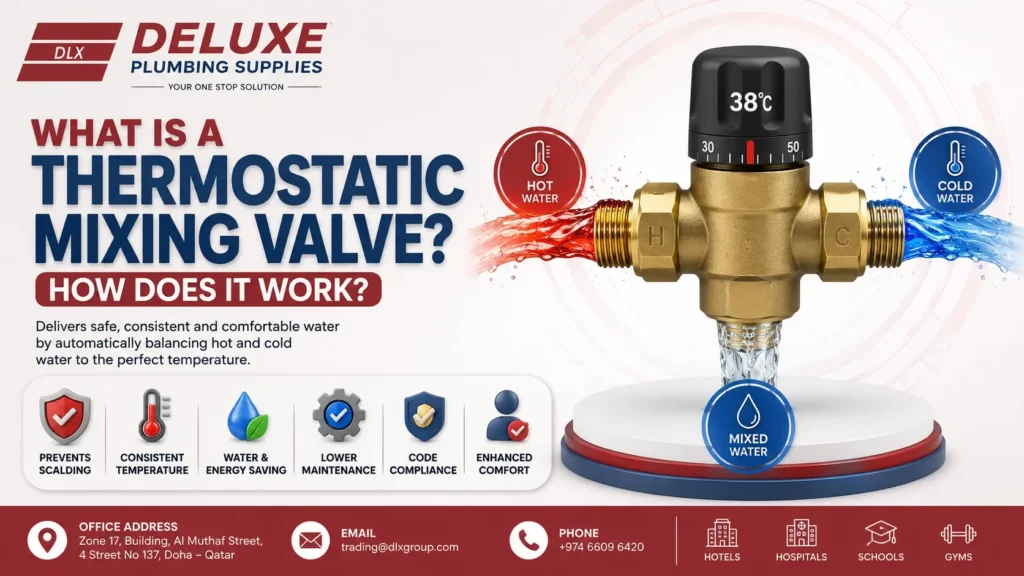
A thermostatic mixing valve (TMV) is a plumbing device that mixes hot and cold water and helps maintain a controlled outlet temperature. It is designed to provide safer, more consistent water for showers, taps, washrooms, and other water outlets.
A TMV works by sensing the temperature of mixed water and automatically adjusting the hot and cold water flow. This helps reduce sudden temperature changes and the risk of scalding. It can also improve comfort, water efficiency, and temperature control in commercial and institutional plumbing systems.
In this guide, we will explain what a thermostatic mixing valve is, how it works, its main parts, key benefits, common applications, how it compares with a standard mixing valve, and what to consider when choosing one.
What Is a Thermostatic Mixing Valve?
A thermostatic mixing valve is a temperature-control valve that blends hot and cold water to deliver water at a controlled temperature. Unlike a basic manual mixer, it can automatically respond when the water temperature or supply conditions change.
The main purpose of a TMV is to make hot water safer and more comfortable at the point of use. This is especially useful where water temperature needs to remain stable for users.
A typical TMV has separate hot and cold water inlets and a mixed-water outlet. Inside the valve, a temperature-sensitive element reacts to changes in the mixed water temperature and adjusts the balance of hot and cold water.
For commercial plumbing systems, this makes the TMV more than a simple mixing device. It becomes part of the building’s water safety and temperature-management system.
How Does a Thermostatic Mixing Valve Work?
A thermostatic mixing valve works by sensing mixed-water temperature and automatically changing the flow of hot and cold water to maintain the selected outlet temperature.
The basic operating process is:
- Hot water enters the hot inlet.
- Cold water enters the cold inlet.
- The two water supplies meet inside the valve.
- A temperature-sensitive element detects the mixed-water temperature.
- The valve adjusts the hot and cold flow as needed.
- Water leaves through the mixed-water outlet at a controlled temperature.
For example, suppose the hot-water supply becomes hotter than normal. The sensing element responds to that change and reduces the hot-water contribution while allowing more cold water into the mix. If the mixed water becomes too cool, the valve can adjust in the opposite direction.
This automatic response is the key difference between a thermostatic mixing valve and a simple manual mixer. The user does not have to constantly adjust the handle to compensate for changing supply temperatures.
This temperature-control principle supports the main benefits associated with TMVs, including consistent water temperature, improved comfort, scald protection, and more efficient water use.
What Are the Main Parts of a Thermostatic Mixing Valve?
A thermostatic mixing valve contains several important components that work together to control water temperature.
Hot and Cold Water Inlets
The hot inlet receives heated water from the hot-water system, while the cold inlet receives the cold-water supply. Correct connection of these inlets is important because the valve must receive the correct water flows to operate as intended.
Mixed-Water Outlet
The mixed-water outlet delivers water after the hot and cold supplies have been blended. This is the controlled outlet that supplies the fixture or downstream plumbing system.
Thermostatic Sensing Element
The temperature-sensitive element is one of the most important parts of the valve. It reacts to changes in water temperature and moves the internal mechanism to regulate the hot and cold water balance.
Adjustment Mechanism
The adjustment mechanism allows the desired temperature to be selected or set. Depending on the valve design, this may include a temperature dial, adjustment feature, or calibrated control.
Valve Body
The valve body contains the internal working components and provides the connections between the hot supply, cold supply, and mixed-water outlet.
Together, these components create a simple entity-attribute-value relationship: TMV → controls → mixed-water temperature; hot inlet → supplies → hot water; cold inlet → supplies → cold water; and sensing element → regulates → water temperature.
Why Is a Thermostatic Mixing Valve Important for Water Safety?
A thermostatic mixing valve is important for water safety because it helps control the temperature of water delivered to users and can reduce the risk of excessively hot water at the outlet.
Very hot water can cause scalding. In buildings used by many people, controlling water temperature is therefore an important part of plumbing safety. A TMV helps by automatically responding to temperature changes rather than relying only on manual adjustment.
The uploaded Deluxe Plumbing Supplies material highlights scald prevention, consistent temperature, water efficiency, user comfort, and safety as major TMV benefits.
Temperature control is particularly valuable in environments such as hospitals, hotels, schools, gyms, and other commercial buildings where many different users may access the same water system. The right valve, installation method, and temperature setting should always be selected according to the application and applicable local requirements.
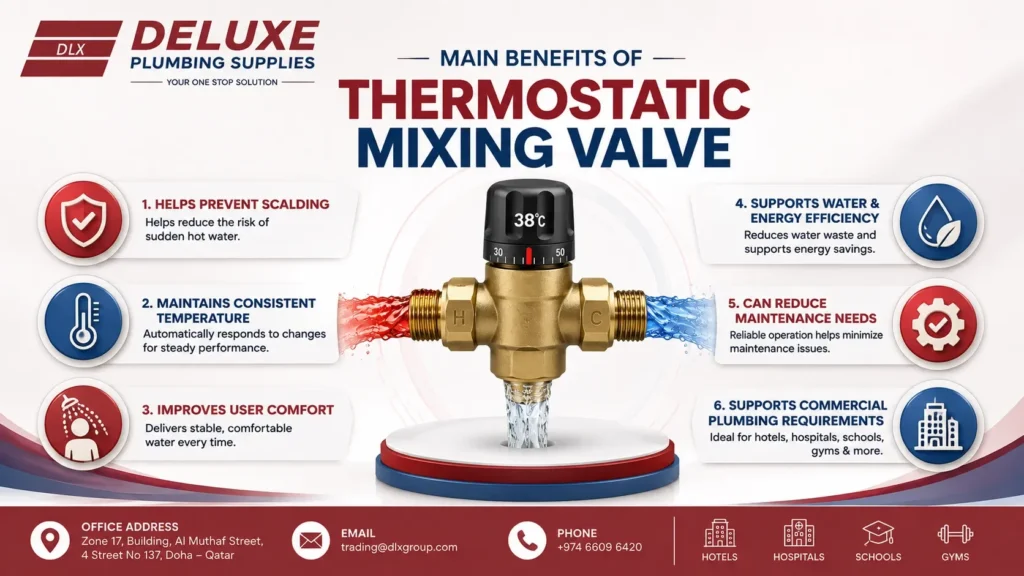
What Are the Main Benefits of a Thermostatic Mixing Valve?
The main benefits of a thermostatic mixing valve include safer water temperatures, better comfort, improved temperature consistency, potential water and energy savings, and easier temperature management.
- Helps Prevent Scalding: By controlling the mixed-water temperature, a TMV can help reduce the risk of water being delivered at an unexpectedly high temperature.
- Maintains Consistent Temperature: A TMV continuously responds to temperature changes. This helps provide a more stable user experience, even when supply conditions change.
- Improves User Comfort: Stable water temperature is useful for showers, washrooms, healthcare facilities, hospitality spaces, and other areas where comfort matters.
- Supports Water and Energy Efficiency: Better temperature control can help reduce unnecessary adjustments and water waste. The Deluxe material also associates thermostatic mixing valves with water and energy savings.
- Can Reduce Maintenance Needs: Consistent operation and appropriate valve selection can support reliable plumbing performance and help reduce avoidable maintenance issues.
- Supports Commercial Plumbing Requirements: TMVs are useful where temperature control, user safety, reliability, and system performance are important. These include many commercial and institutional applications.
Where Are Thermostatic Mixing Valves Used?
Thermostatic mixing valves are used in residential, commercial, institutional, and other plumbing systems where controlled water temperature is important.
Common applications include:
- Hotels and hospitality: Help provide consistent water temperature across guest facilities.
- Hospitals and healthcare: Supports controlled water delivery where safety and user comfort are especially important.
- Schools and educational buildings: Helps manage water temperature for shared washrooms and facilities.
- Gyms and fitness facilities: Useful for showers and high-use washroom areas.
- Commercial buildings: Supports temperature management across frequently used plumbing fixtures.
Deluxe Plumbing Supplies’ TMV-focused material specifically highlights applications and benefits connected with hotels, hospitals, schools, and gyms.
For larger projects, the valve should be selected according to the building’s water system, required flow, temperature range, connection requirements, and applicable standards.
What Is the Difference Between a Thermostatic Mixing Valve and a Standard Mixing Valve?
The main difference is automatic temperature response. A standard manual mixing valve generally requires the user or operator to adjust hot and cold water manually, while a thermostatic mixing valve uses a temperature-sensing mechanism to regulate the mixed-water temperature automatically.
| Feature | Thermostatic Mixing Valve | Standard Manual Mixer |
| Temperature sensing | Automatic | Usually manual |
| Temperature adjustment | Controlled automatically | User adjusts it |
| Response to temperature changes | Automatic | Requires adjustment |
| Scald protection | Designed to help control outlet temperature | Depends more on manual control |
| User comfort | More consistent | Can vary |
| Commercial applications | Strong fit where temperature control matters | Suitable for simpler applications |
This does not mean a TMV is automatically the right choice for every installation. The best option depends on the plumbing design, intended use, performance requirements, and local regulations.
How Do You Choose the Right Thermostatic Mixing Valve?
Choosing the right thermostatic mixing valve starts with the application, required temperature, flow rate, connection size, water pressure, and installation requirements.
Consider these factors before purchasing:
- Application: Identify whether the valve is for a home, hotel, hospital, school, gym, or another commercial facility.
- Temperature range: Confirm that the valve can provide the required mixed-water temperature.
- Flow rate: Select a valve that can handle the expected demand without restricting the system.
- Connection size: Check that the valve connections match the existing or planned pipework.
- Water pressure: Confirm that the valve is suitable for the operating pressure of the system.
- Installation requirements: Review the manufacturer’s installation instructions and flow direction.
- Safety and compliance: Check relevant local plumbing requirements and project specifications.
- Maintenance: Consider access for inspection, servicing, and future replacement.
For commercial projects, it is also useful to work with a plumbing supplier that can help match the valve to the application rather than choosing only by size or price.
When Should You Consider a Thermostatic Mixing Valve?
You should consider a thermostatic mixing valve when stable water temperature, user safety, comfort, and controlled hot-water delivery are important.
A TMV can be a strong option for buildings with frequent water use, multiple users, or applications where temperature fluctuations could create safety or comfort problems. It is particularly relevant to commercial environments such as hotels, hospitals, schools, and gyms.
If you are planning a new plumbing installation or replacing an existing mixing valve, review the required temperature, flow rate, pressure, connection type, and project standards before selecting a model.
Why Choose Deluxe Plumbing Supplies for Thermostatic Mixing Valves?
Deluxe Plumbing Supplies positions its plumbing range around quality, reliability, efficiency, safety, and practical commercial applications. Its TMV-focused materials also highlight consistent temperature, scald prevention, reduced maintenance, water and energy savings, and commercial use.
When sourcing a thermostatic mixing valve, look for:
- Quality plumbing products suited to the intended application.
- Commercial-focused solutions for demanding building environments.
- A broad plumbing supply range for different project requirements.
- Product guidance to help match valve specifications with system needs.
- Reliable performance with safety and temperature control in mind.
- Application support for facilities such as hotels, hospitals, schools, and gyms.
For related information, consider linking this article internally to thermostatic mixing valves, commercial plumbing solutions, and water safety and backflow prevention resources.
Frequently Asked Questions
What temperature should a thermostatic mixing valve be set to?
The correct TMV setting depends on the application, fixture, plumbing system, and applicable local requirements. There is no single temperature that is suitable for every installation. The valve should be adjusted according to the project specification and manufacturer’s instructions, with safety and user comfort considered.
Does a thermostatic mixing valve save energy?
A TMV can support water and energy efficiency by providing controlled water temperature and reducing unnecessary adjustment or water waste. However, actual savings depend on the complete plumbing system, water-heating method, usage patterns, and valve settings.
Can a thermostatic mixing valve prevent scalding?
A TMV is designed to help control mixed-water temperature and can reduce the risk of excessively hot water reaching an outlet. It should not be treated as the only safety measure. Correct selection, installation, adjustment, inspection, and maintenance are also important.
Are thermostatic mixing valves suitable for commercial buildings?
Yes. TMVs are commonly considered for commercial and institutional applications where temperature stability and user safety are important. Hotels, hospitals, schools, gyms, and other high-use buildings can benefit from controlled hot-water delivery.
How often should a thermostatic mixing valve be checked?
Inspection frequency depends on the valve, building type, water system, usage, and applicable requirements. Commercial installations may require a defined inspection and maintenance schedule. Always follow the manufacturer’s recommendations and relevant local plumbing requirements.
Final Takeaway
A thermostatic mixing valve mixes hot and cold water while automatically responding to temperature changes to help maintain a controlled outlet temperature. Its main value is safer, more consistent, and more comfortable hot-water delivery.
For commercial plumbing projects, the right TMV should be selected based on application, flow, pressure, temperature, connections, safety requirements, and maintenance needs. A suitable valve can become an important part of a reliable water-temperature control strategy.