Installing a wash basin may seem like a straightforward task, but even small mistakes can lead to water leaks, poor drainage, damaged fixtures, and costly repairs. Whether you’re renovating a bathroom, building a new home, or upgrading a commercial washroom, proper wash basin installation is essential for long-term performance, hygiene, and convenience.
From selecting the right basin type to ensuring proper plumbing connections, every installation step plays a crucial role. A well-installed wash basin not only enhances the appearance of your bathroom but also prevents common issues such as water damage, unpleasant odors, and maintenance problems. Choosing high-quality plumbing products and installation accessories is equally important for achieving reliable, long-lasting results.
In this guide, we’ll explore the 15 most common mistakes to avoid when installing a wash basin, explain how to prevent them, and share practical tips to help you achieve a professional-quality installation. Whether you’re a homeowner, contractor, or property manager, these insights will help you make informed decisions while selecting products from trusted suppliers like Deluxe Plumbing Supplies.
Why Is Proper Wash Basin Installation Important?
Proper wash basin installation ensures reliable water flow, efficient drainage, and long-term durability. A correctly installed basin reduces the risk of leaks, structural damage, mold growth, and expensive repairs while providing a comfortable and hygienic bathroom experience.
A wash basin is more than just a bathroom fixture. It works together with the faucet, drain system, waste fitting, bottle trap, flexible hoses, and water supply lines. If one component is installed incorrectly, it can affect the entire plumbing system.
Proper installation also helps:
- Prevent water leakage
- Improve drainage performance
- Extend the lifespan of the basin and plumbing fixtures
- Reduce maintenance costs
- Enhance bathroom aesthetics
- Ensure safe daily use
Whether you’re installing a countertop basin, wall-hung basin, pedestal basin, or vanity basin, following the correct installation practices makes a significant difference.
Mistake #1: Choosing the Wrong Type of Wash Basin
Choosing the wrong wash basin is one of the most common installation mistakes because every bathroom has different space, plumbing, and design requirements. Installing an unsuitable basin can create functional problems and increase installation costs.
Before purchasing a basin, consider:
- Bathroom size
- Available countertop space
- Existing plumbing layout
- User requirements
- Storage needs
- Interior design style
For example:
- Wall-hung basins work well in compact bathrooms.
- Countertop basins create a luxurious modern appearance.
- Pedestal basins hide plumbing neatly.
- Vanity basins provide additional storage.
- Under-mount basins offer a seamless countertop finish.
Selecting the correct basin before installation reduces modifications and ensures a smoother installation process.
Pro Tip: If you’re unsure which basin best suits your project, consult the product specialists at Deluxe Plumbing Supplies to compare different styles and compatible installation accessories.
Mistake #2: Ignoring Bathroom Measurements
Incorrect measurements can result in an oversized basin, limited movement, or plumbing alignment issues. Measuring the available space before installation helps ensure both functionality and visual balance.
Many homeowners focus only on basin width while overlooking important dimensions such as:
- Countertop depth
- Basin projection
- Faucet clearance
- Mirror position
- Door swing
- Cabinet dimensions
- User standing space
A basin that is too large may make the bathroom feel cramped, while one that is too small may reduce usability.
Always measure:
- Wall-to-wall space
- Countertop dimensions
- Drain outlet location
- Water supply position
- Installation height
Taking accurate measurements before purchasing products minimizes costly adjustments during installation.
Mistake #3: Installing Without Checking Water Supply and Drain Locations
Every wash basin should align correctly with the existing plumbing system before installation begins. Ignoring the location of supply lines and drain pipes often results in unnecessary modifications and additional labor costs.
Before installing the basin, verify:
- Hot and cold water supply lines
- Drain outlet position
- Waste pipe alignment
- Bottle trap clearance
- Shut-off valve accessibility
Poor alignment can lead to:
- Slow drainage
- Pipe stress
- Continuous leaks
- Difficult maintenance
- Reduced cabinet space
If plumbing locations need adjustment, complete those modifications before fixing the basin permanently.
Mistake #4: Using Poor-Quality Mounting Hardware
A wash basin is only as secure as the hardware supporting it. Low-quality brackets, anchors, screws, or fixing bolts may loosen over time and compromise the basin’s stability.
Quality mounting hardware helps:
- Support heavy ceramic basins
- Prevent movement
- Reduce wall damage
- Improve installation safety
- Extend service life
For wall-mounted installations especially, always use hardware designed for the wall material and basin weight.
Choosing premium installation accessories from Deluxe Plumbing Supplies helps ensure every component works together for a secure, long-lasting installation.
Mistake #5: Applying Too Little or Too Much Silicone Sealant
Silicone sealant creates a waterproof barrier between the basin and surrounding surfaces. Incorrect application can cause leaks, mold growth, or an untidy finish.
Common sealant mistakes include:
- Applying too little sealant
- Using excessive silicone
- Skipping surface cleaning
- Using low-quality products
- Not allowing proper curing time
For the best results:
- Clean all surfaces thoroughly.
- Apply a continuous, even bead of silicone.
- Smooth the seal neatly.
- Allow the recommended curing time before using the basin.
Proper sealing protects countertops, cabinets, and walls from moisture damage while maintaining a professional appearance.
Mistake #6: Installing the Basin at the Wrong Height
Wash basin height directly affects user comfort and accessibility. Installing it too high or too low can make everyday use uncomfortable and reduce functionality.
For most residential bathrooms, the standard installation height is typically around 800–850 mm (31–34 inches) from the finished floor to the basin rim. However, the ideal height may vary depending on:
- User height
- Children or elderly users
- Accessibility requirements
- Basin type
- Vanity design
In commercial washrooms or accessible bathrooms, always follow the relevant building codes and accessibility guidelines.
Correct basin height improves comfort, reduces strain during daily use, and creates a more ergonomic bathroom design.
Mistake #7: Improper Drain and Waste Pipe Connection
A properly connected drain system ensures smooth water flow and prevents leaks, unpleasant odors, and frequent plumbing issues. Incorrect drain installation is one of the leading causes of post-installation maintenance problems.
Common mistakes include:
- Loose waste fittings
- Misaligned drain pipes
- Incorrect bottle trap installation
- Poor P-trap sealing
- Inadequate pipe slope
These mistakes can cause slow drainage, standing water, foul smells, or water leakage inside vanity cabinets. Before finishing the installation, make sure every connection is securely tightened and correctly aligned without putting unnecessary stress on the pipes.
Using quality waste fittings, bottle traps, and drainage accessories improves long-term performance and reduces maintenance costs.
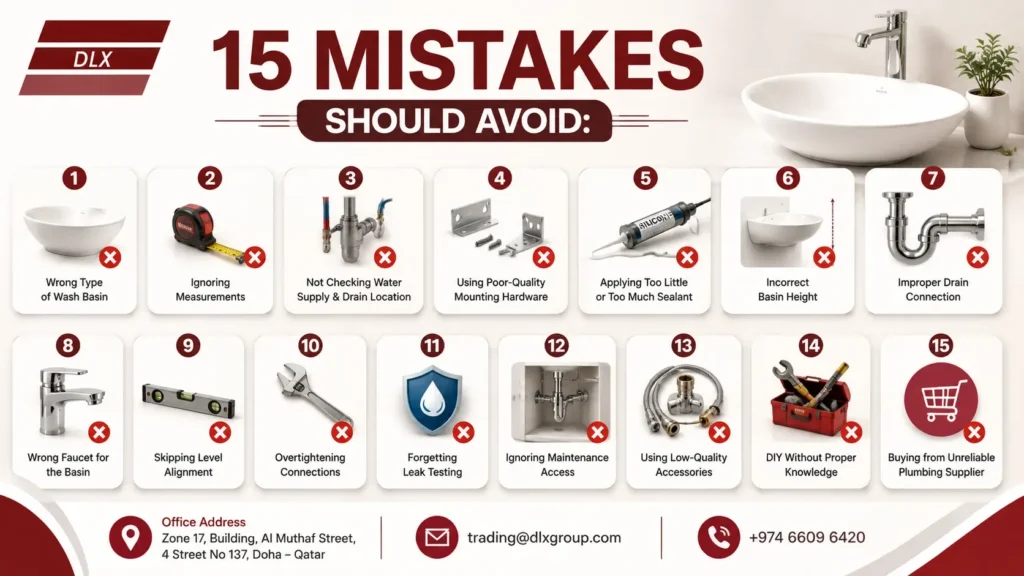
Mistake #8: Installing the Wrong Faucet for the Basin
Not every faucet is compatible with every wash basin. Choosing the wrong basin mixer can lead to water splashing, poor functionality, and an unbalanced bathroom design.
Before selecting a faucet, check:
- Basin tap hole configuration
- Faucet height
- Spout reach
- Water pressure
- Basin depth
For example, countertop vessel basins typically require tall basin mixers or wall-mounted faucets, while under-mount and inset basins usually work best with deck-mounted mixers.
Matching the faucet to the basin ensures comfortable daily use while preventing unnecessary water splashes.
Mistake #9: Skipping Level Alignment
A wash basin should always be installed perfectly level. Even a slight tilt can affect drainage performance and reduce the overall appearance of the installation.
An uneven basin may result in:
- Water collecting on one side
- Slow drainage
- Uneven silicone joints
- Additional stress on mounting brackets
- A visibly crooked installation
Always use a spirit level before permanently securing the basin. Double-check the alignment after tightening the mounting hardware to ensure the basin remains level.
This simple step significantly improves both performance and aesthetics.
Mistake #10: Overtightening Plumbing Connections
Tightening fittings too much can be just as damaging as leaving them loose. Excessive force may crack ceramic basins, damage threaded fittings, or deform rubber washers.
Components that are commonly overtightened include:
- Waste fittings
- Flexible connectors
- Basin mixers
- Bottle traps
- Supply valves
Instead of applying excessive force, tighten each connection until it is secure and then perform a leak test. If leakage occurs, adjust the fitting gradually rather than forcing it tighter.
Proper installation protects both the plumbing components and the wash basin itself.
Mistake #11: Forgetting to Perform a Leak Test
Every wash basin installation should be thoroughly tested before regular use. Leak testing helps identify hidden issues before they become expensive repairs.
A simple installation checklist includes:
- Turn on both hot and cold water.
- Check every water supply connection.
- Inspect the waste fitting.
- Examine the bottle trap.
- Run water continuously for several minutes.
- Fill the basin and drain it.
- Look underneath for slow leaks.
- Wipe every joint with a dry cloth to detect moisture.
Spending a few extra minutes on testing can prevent long-term water damage and unnecessary maintenance.
Mistake #12: Ignoring Future Maintenance Access
A good installation should make future maintenance easy, not difficult. Many installers focus only on appearance and forget that plumbing components occasionally require servicing.
Avoid blocking access to:
- Angle valves
- Flexible hoses
- Bottle traps
- Waste fittings
- Shut-off valves
If these components are difficult to reach, even a minor repair can become time-consuming and costly.
Planning for future maintenance helps homeowners and facility managers repair or replace components without removing the entire basin or vanity.
Mistake #13: Using Low-Quality Plumbing Accessories
High-quality installation accessories are just as important as the wash basin itself. Cheap components often wear out faster, increasing the likelihood of leaks and repeated repairs.
Important accessories include:
- Flexible water hoses
- Angle valves
- Waste fittings
- Bottle traps
- Silicone sealants
- Mounting brackets
- Fixing bolts
Investing in durable plumbing accessories improves reliability, extends service life, and minimizes future maintenance expenses.
For both residential and commercial projects, selecting premium plumbing components delivers better long-term value.
Mistake #14: Attempting DIY Installation Without Proper Knowledge
DIY installation can save money, but only when you have the right tools, skills, and understanding of plumbing systems. Complex installations often require professional expertise.
DIY installation may be suitable for simple basin replacements where plumbing already exists. However, professional installation is recommended when:
- Plumbing needs relocation
- Walls require reinforcement
- Countertops need cutting
- New water supply lines are required
- Drain systems require modification
Professional installers ensure proper alignment, leak-free connections, and compliance with local plumbing standards.
Choosing quality products also makes professional installation easier and more reliable.
Mistake #15: Buying from an Unreliable Plumbing Supplier
The quality of your installation depends heavily on the quality of the products you purchase. Low-grade basins and accessories may initially cost less but often result in higher maintenance and replacement expenses.
When selecting a plumbing supplier, consider:
- Product quality
- Range of wash basin styles
- Availability of compatible accessories
- Trusted brands
- Product warranties
- Technical support
- Reliable stock availability
Working with a trusted supplier ensures that every component—from the wash basin to the smallest fitting—is designed for long-lasting performance.
Why Choose Quality Plumbing Products for Wash Basin Installation?
Quality plumbing products play a vital role in the performance and lifespan of any wash basin installation. Durable materials, precision manufacturing, and compatible accessories help reduce leaks, improve drainage, and minimize maintenance requirements.
Using premium wash basins, faucets, waste fittings, bottle traps, and sealants also creates a cleaner finish and ensures the plumbing system continues to perform efficiently for years. Investing in quality products from the beginning often reduces repair costs and provides greater peace of mind throughout the life of the installation.
Why Choose Deluxe Plumbing Supplies?
A successful wash basin installation starts with choosing reliable products from a trusted plumbing supplier. Deluxe Plumbing Supplies offers a comprehensive range of premium bathroom fixtures and plumbing accessories designed to deliver long-lasting performance for residential, commercial, and hospitality projects.
Here’s why customers choose Deluxe Plumbing Supplies:
- Premium Wash Basin Collection – Explore countertop, wall-hung, pedestal, vanity, under-mount, and other modern wash basin styles.
- Complete Installation Solutions – Find compatible faucets, waste fittings, bottle traps, flexible hoses, angle valves, sealants, and installation accessories in one place.
- Quality You Can Trust – Every product is selected for durability, performance, and long-term reliability.
- Expert Product Guidance – Receive professional recommendations to help you choose the right basin and accessories for your project.
- Solutions for Every Project – Whether you’re renovating a home, fitting out a hotel, managing a commercial building, or completing a new construction project, you’ll find dependable plumbing products to match your requirements.
- Reliable Availability – Access a wide range of plumbing supplies to keep your project moving without unnecessary delays.
Choosing quality products from the beginning helps reduce maintenance costs, improves installation quality, and ensures your wash basin performs efficiently for years to come.
Frequently Asked Questions
Can I install a wash basin myself?
Yes, simple wash basin replacements can often be completed by experienced DIY homeowners. However, if the project requires new plumbing connections, countertop modifications, wall reinforcement, or drainage relocation, hiring a qualified installer is the safer and more reliable option.
What is the standard height for installing a wash basin?
Most residential wash basins are installed approximately 800–850 mm (31–34 inches) from the finished floor to the basin rim. The ideal height may vary depending on the basin type, user requirements, and accessibility standards.
Why does my wash basin leak after installation?
Leaks usually occur because of loose fittings, damaged washers, improperly installed waste fittings, poor silicone sealing, or incorrectly connected plumbing components. Performing a complete leak test before regular use helps identify these issues early.
Which type of wash basin is easiest to install?
Pedestal basins and vanity basins are generally easier to install because they provide convenient support and help conceal plumbing connections. However, the best choice depends on your bathroom layout, plumbing configuration, and design preferences.
What type of silicone should I use for wash basin installation?
Always use a high-quality waterproof sanitary silicone sealant designed specifically for bathrooms and wet areas. These products help prevent water penetration, mold growth, and long-term moisture damage.
How long does a wash basin installation usually take?
Replacing an existing wash basin with compatible plumbing typically takes 2–4 hours. More complex installations involving new plumbing lines, countertop modifications, or custom cabinetry may require additional time.
Can I reuse my existing plumbing accessories?
Some accessories, such as angle valves or supply lines, may be reusable if they remain in excellent condition. However, replacing worn waste fittings, flexible hoses, rubber seals, and bottle traps during installation is generally recommended to reduce future maintenance issues.
Conclusion
Installing a wash basin correctly is about much more than simply securing it to a wall or countertop. Proper planning, accurate measurements, quality plumbing components, and careful installation all contribute to better performance, improved durability, and lower maintenance costs.
By avoiding these 15 common wash basin installation mistakes, you can protect your bathroom from leaks, drainage issues, and unnecessary repairs while creating a cleaner, more functional, and visually appealing space.
Whether you’re upgrading a residential bathroom or managing a commercial plumbing project, choosing high-quality products is one of the smartest investments you can make. From modern wash basins and stylish faucets to dependable installation accessories, Deluxe Plumbing Supplies provides the quality solutions you need for a professional and long-lasting installation.
Ready to start your next bathroom project? Explore the premium range of wash basins and plumbing accessories from Deluxe Plumbing Supplies and build with confidence.