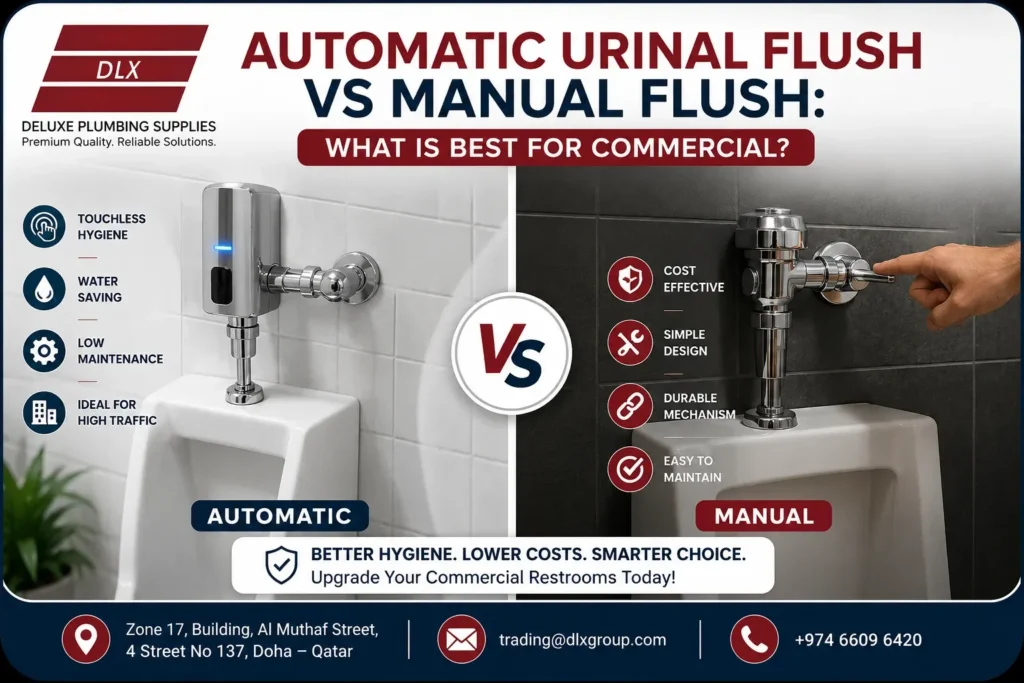
Commercial bathrooms must balance hygiene, water efficiency, maintenance, and operating costs. That is why many facility managers compare automatic urinal flush systems with traditional manual flush valves before upgrading restroom fixtures.
Automatic flush systems use motion sensors or infrared technology to activate flushing without physical contact. Manual systems rely on push handles or buttons operated by users. Both options have advantages, but the best choice depends on the building type, traffic volume, maintenance budget, and sanitation goals.
This guide explains how automatic and manual urinal flush systems compare in commercial environments and helps businesses choose the right solution for long-term performance.
What Is an Automatic Urinal Flush System?
An automatic urinal flush system is a touch-free flushing mechanism that uses sensors to detect user movement. Once the user steps away, the sensor triggers the flush automatically.
These systems are common in:
- Airports
- Hospitals
- Shopping malls
- Hotels
- Office buildings
- Restaurants
Most sensor-operated flush valves use:
- Infrared sensors
- Battery-powered electronics
- Hardwired electrical systems
- Programmable flush timing
The main purpose of automatic flushing is to improve hygiene while reducing unnecessary water use.
What Is a Manual Urinal Flush Valve?
A manual flush valve requires physical interaction to activate flushing. Users typically push a button or pull a handle after use.
Manual systems remain common in:
- Small retail stores
- Older office buildings
- Budget-focused facilities
- Low-traffic commercial bathrooms
These systems are mechanically simple and usually cost less to install. However, they depend on user behavior, which can create sanitation and water waste issues.
How Do Automatic and Manual Urinal Flush Systems Work?
The biggest difference between automatic and manual systems is activation.
| Feature | Automatic Flush | Manual Flush |
| Activation | Motion sensor | Handle/button |
| User Contact | None | Required |
| Water Control | Sensor-timed | User-dependent |
| Power Source | Battery or electrical | Mechanical |
| Hygiene Level | High | Moderate |
Automatic systems use electronic sensors to monitor restroom usage. When movement stops, the valve opens and flushes for a programmed duration.
Manual systems use mechanical pressure valves controlled directly by users.
This operational difference affects hygiene, maintenance, and water efficiency.
Which Flush System Is More Hygienic for Commercial Bathrooms?
Automatic urinal flush systems are generally more hygienic because they eliminate physical contact with flush handles. Touch-free operation helps reduce bacteria transfer and cross-contamination in high-traffic commercial bathrooms.
Public restrooms are high-contact environments. Every shared surface increases the risk of germ transmission.
Automatic flush systems improve sanitation by:
- Reducing touchpoints
- Encouraging consistent flushing
- Preventing user neglect
- Supporting touchless restroom design
This is especially important in:
- Healthcare facilities
- Restaurants
- Schools
- Airports
Manual flush systems can still maintain acceptable hygiene levels, but they rely heavily on user compliance and regular cleaning schedules.
Businesses focused on restroom sanitation often prefer sensor-operated plumbing fixtures because they align with modern hygiene expectations.
Which Option Saves More Water and Reduces Utility Costs?
Water conservation is one of the biggest reasons businesses upgrade to automatic flush systems.
Automatic valves use programmed flushing cycles to prevent:
- Double flushing
- Continuous flushing
- Missed flushing
- Excess water usage
Manual systems often waste water because users may:
- Hold the handle too long
- Flush multiple times
- Forget to flush completely
Many sensor-operated systems support low-flow technology and WaterSense standards.
Average Commercial Benefits of Automatic Flush Systems
- Lower monthly water bills
- Reduced wastewater output
- Better sustainability performance
- Improved environmental compliance
For high-traffic facilities, the long-term water savings can offset the higher installation costs.
If your facility prioritizes sustainability, touchless plumbing solutions from Deluxe Plumbing Supplies can help improve operational efficiency.
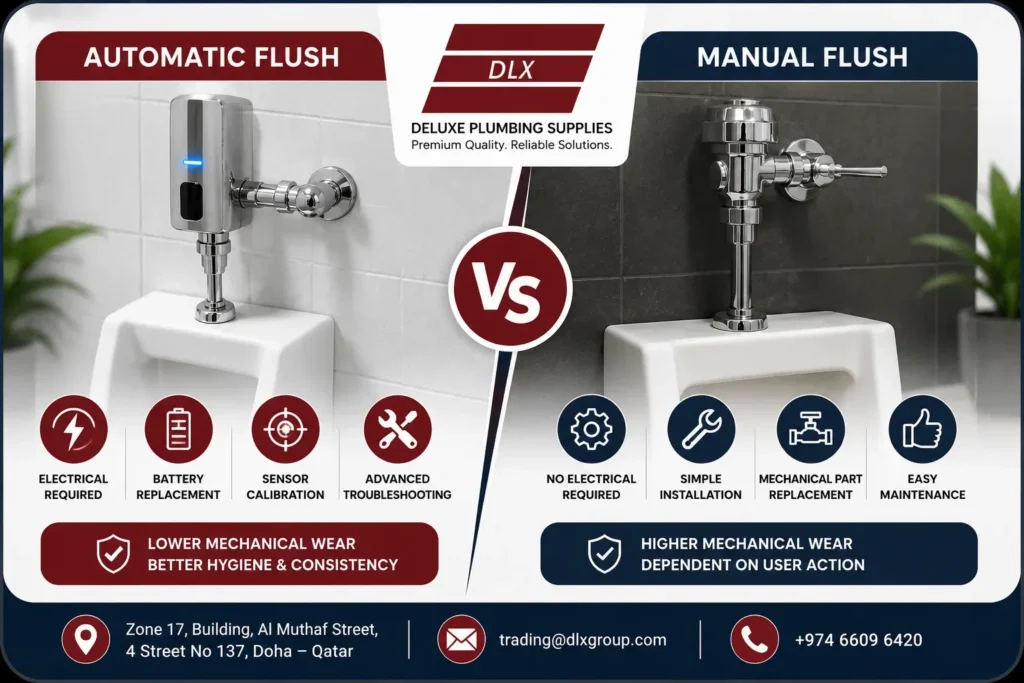
What Are the Installation and Maintenance Differences?
Automatic systems usually require:
- Electrical connections or batteries
- Sensor calibration
- Periodic battery replacement
- More advanced troubleshooting
Manual systems require:
- Basic plumbing installation
- Mechanical part replacement
- Minimal technical maintenance
| Maintenance Factor | Automatic Flush | Manual Flush |
| Installation Complexity | Moderate | Simple |
| Electrical Requirement | Yes | No |
| Battery Replacement | Sometimes | No |
| Sensor Calibration | Required | Not required |
| Mechanical Wear | Lower | Higher |
Manual flush valves are easier to repair because they contain fewer electronic components.
However, automatic systems often reduce overall cleaning demands because they improve restroom cleanliness and consistency.
Which Flush System Has Better Long-Term Cost Efficiency?
Automatic urinal flush systems usually provide better long-term cost efficiency in high-traffic commercial buildings because they reduce water waste, improve hygiene, and lower sanitation-related maintenance needs.
The total cost of ownership includes:
- Installation
- Water usage
- Repairs
- Maintenance labor
- Replacement parts
Automatic Flush Advantages
- Reduced water costs
- Better user experience
- Modern restroom appearance
- Lower cross-contamination risks
Manual Flush Advantages
- Lower upfront cost
- Simpler repairs
- No electrical dependency
- Easier installation
For large commercial properties, automatic systems often produce stronger ROI over time.
For smaller facilities with lower restroom traffic, manual systems may remain the more economical choice.
What Types of Commercial Buildings Benefit Most from Automatic Flush Systems?
Automatic flush systems work best in:
- Airports
- Hospitals
- Universities
- Stadiums
- Hotels
- Shopping malls
- Smart office buildings
These locations experience:
- Heavy restroom traffic
- Higher sanitation expectations
- Larger maintenance demands
- Greater water usage
Touchless restroom fixtures also improve customer perception and support modern commercial design standards.
When Is a Manual Flush Valve Still the Better Choice?
Manual flush valves still make sense in several situations.
Best Use Cases for Manual Systems
- Small businesses
- Older buildings
- Budget-conscious renovations
- Low-traffic restrooms
- Facilities without electrical infrastructure
Manual systems also work well where maintenance teams prefer mechanical simplicity over electronic components.
For some facilities, reliability and low upfront cost remain more important than automation.
Are Smart Sensor Flush Systems the Future of Commercial Restrooms?
Commercial restrooms are becoming smarter and more connected.
Modern sensor flush systems can integrate with:
- Smart building platforms
- Water monitoring systems
- Occupancy analytics
- Maintenance alerts
These technologies help facility managers:
- Track water consumption
- Detect leaks faster
- Improve maintenance scheduling
- Reduce operating costs
As touchless technology becomes more common, automatic flush systems will likely continue growing across commercial industries.
Automatic vs Manual Flush Comparison Table
| Category | Automatic Flush | Manual Flush |
| Hygiene | Excellent | Moderate |
| Water Efficiency | High | Moderate |
| Upfront Cost | Higher | Lower |
| Maintenance Complexity | Moderate | Low |
| User Experience | Modern | Traditional |
| Best for High Traffic | Yes | Limited |
| Electrical Need | Yes | No |
How Can Businesses Choose the Right Commercial Urinal Flush System?
The best commercial urinal flush system depends on building priorities.
Choose automatic flush systems if your business wants:
- Better hygiene
- Water conservation
- Modern restroom design
- Touchless technology
- Reduced sanitation risks
Choose manual flush systems if your business needs:
- Lower installation costs
- Simple maintenance
- Basic restroom functionality
- Reliable mechanical operation
Before upgrading, evaluate:
- Restroom traffic
- Water costs
- Maintenance capabilities
- Sustainability goals
- Plumbing compatibility
Working with trusted suppliers like Deluxe Plumbing Supplies helps businesses select reliable commercial restroom fixtures designed for long-term performance.
Frequently Asked Questions
Are automatic urinal flush systems worth it?
Yes. In high-traffic commercial buildings, automatic flush systems often reduce water waste and improve hygiene enough to justify the higher upfront investment.
Do automatic flush valves save water?
Yes. Sensor-operated systems help prevent over-flushing and unnecessary water use through timed flushing cycles.
Can manual urinal flush valves be upgraded to automatic?
In many cases, yes. Retrofit sensor kits can convert existing manual systems into touchless flush systems.
Which flush system lasts longer?
Manual systems may last longer mechanically because they have fewer electronic parts. However, modern commercial automatic systems are highly durable when properly maintained.
Final Thoughts
Both automatic and manual urinal flush systems offer benefits for commercial bathrooms. The best choice depends on your facility’s traffic volume, hygiene goals, maintenance strategy, and budget. Automatic flush systems deliver stronger hygiene performance, water savings, and modern restroom functionality. Manual systems remain practical for facilities that prioritize simplicity and lower upfront costs.
Businesses planning restroom upgrades should compare long-term operational value instead of focusing only on installation cost. With the right commercial plumbing products, companies can improve sanitation, reduce water waste, and create a better restroom experience for customers and employees alike.